Microsoft completes pre-training of 2.8-trillion-parameter MAI-Base-2
Microsoft said on 15 October it had completed pre-training of MAI-Base-2, a mixture-of-experts model with 2.8 trillion total parameters and 80 billion active, and plans to license its weights to partners.
 Grace OkonkwoAI, models and technology
What Microsoft built
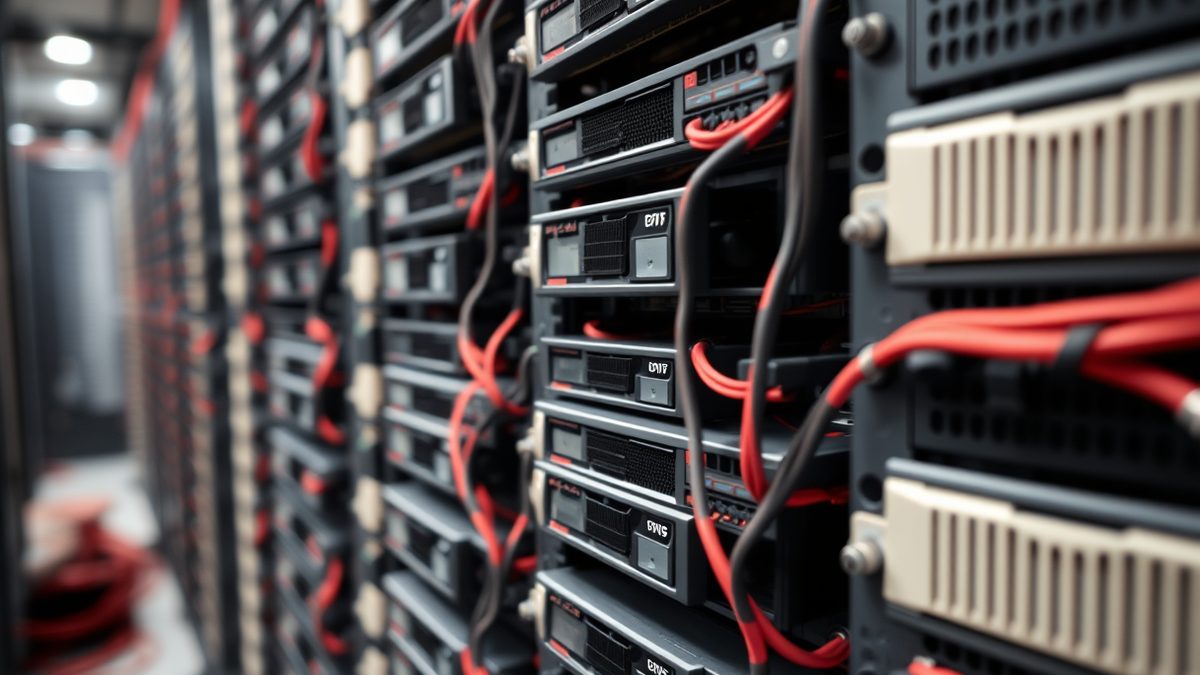
Microsoft trained MAI-Base-2 on 16,000 Nvidia GB200 GPUs over 38 days in August and September. The run processed 50 trillion tokens of text and visual data. The model holds 2.8 trillion parameters in total but activates 80 billion for each input, a mixture-of-experts design that lets it keep a large model without running every parameter for every operation.
Microsoft expanded unique training data by about 36% compared with MAI-Base-1, which it introduced earlier this year. Images made up 18% of the new training mixture, part of what Microsoft calls native vision training for chart interpretation, document analysis and spatial reasoning. Microsoft says the model learned from organic training data rather than by distilling knowledge from other AI models.
Efficiency claims and their limits
Microsoft estimates its training approach is 4.2 to 12.3 times more compute-efficient than DeepSeek-V4-Pro-Base when matching performance on selected tests. The company says MAI-Base-2 outperformed the open-weight models included in its internal evaluations. TechRepublic noted that the figures estimate the compute needed to reach comparable performance, rather than showing that MAI-Base-2 is universally superior.
The comparisons rely on held-out evaluations Microsoft chose, and the company has not published equivalent comparisons against every leading proprietary model. Business Insider reported that Mustafa Suleyman, Microsoft's AI chief, told employees the company had privately compared MAI-Base-2 with OpenAI's models. Microsoft has not publicly released those results for independent assessment.
Licensing, not open release
Microsoft plans to license MAI-Base-2's weights to trusted partners through Microsoft Foundry rather than release them publicly. Microsoft has not announced pricing or general availability. TechRepublic noted that access conditions and customization costs will influence whether companies choose Microsoft's offering over genuinely open-weight alternatives.
The model is still undergoing post-training. The report added that businesses should not expect immediate access to MAI-Base-2 through Copilot or other Microsoft services. Microsoft says preparations for MAI-Base-3 are already underway.
TechRepublic reported that the model's text and vision capabilities could eventually support enterprise applications involving documents, spreadsheets and charts, but Microsoft has not demonstrated how those capabilities will translate into commercial products.
Why Microsoft is building its own models
Microsoft has invested roughly $13 billion in OpenAI and continues to use OpenAI models for more demanding tasks, eWeek reported. The company has also begun using its own MAI models in some products to lower costs. Suleyman said MAI models are deployed in more than half of Microsoft's products, according to Bloomberg, and that the goal is to reduce and ultimately eliminate what Microsoft pays Anthropic.
Microsoft amended its OpenAI agreement in April, ending exclusive access to OpenAI's intellectual property and eliminating Microsoft's payments to OpenAI, while OpenAI continued paying Microsoft with a cap, Yahoo Finance reported. Microsoft still supplies the computing infrastructure for OpenAI's models, eWeek reported.
Sources
32- 01Microsoft Unveils 2.8 Trillion-Parameter AI Model, Claims Major Efficiency GainsEN
- 02Microsoft's In-House AI Replaces OpenAI Models in PowerPoint, Bing and OneDriveEN
- 03Microsoft Builds In-House AI to Cut Costs Across Office AppsEN
- 04Microsoft debuts in-house AI models as it looks to ease reliance on OpenAIEN
- 05Microsoft CEO Satya Nadella shares MAI AI strategy, says new models will cut costs and power Copilot, Outlook, ExcelEN
- 06The Two-Ledger Model: Transaction-Grain Cost Accounting for Multi-Agent AI Systems Across Clouds, Models, and Systems of RecordEN
- 07Open models can do 90 percent of agentic work at a twentieth of the costEN
- 08Protesters Break Into Microsoft Data Center in AmsterdamEN
- 09Microsoft ist kein Schicksal: Warum Europa jetzt handeln mussEN
- 10Sodium-ion batteries approach cost parity with LFP, with 70 GWh covered by supply agreementsEN
- 11Build World Models for Interactive Simulation with Nvidia CosmosEN
- 12New Nvidia Cosmos 3 Open Models for Interactive World SimulationEN
- 13For host Same model, 169x smaller prompt: cost per correct step fell 4.5xEN
- 14 Boost your Nintendo Switch 2's storage for Zelda: Ocarina of Time with these microSD Express deals, starting at $48 EN
- 15Fitting AI Models To Edge ApplicationsEN
- 16Microsoft Paint RCE Fix Now Available, but Windows Update Won't Deliver ItEN
- 17When Bigger Becomes Brittle: Why Compression Hurts More as Language Models ScaleEN
- 18Microsoft admits certifications can be a drag, launches creds that recognize skillsEN
- 19Synthesizing symbolic models of human and machine reasoning at scaleEN
- 20SAVeR$^2$: Reasoning-based Safety Alignment for Large Reasoning Models via Verifiable RewardsEN
- 21GuidedWAM: Training-Free Energy Guidance for World Action Models in Autonomous DrivingEN
- 22Big Models, Small Gains: Frozen Forecasters as Classifiers on MONSTEREN
- 23Stochastic Dynamics of Generative AI: From Autoregressive Models to Interacting LLM Networks and Neural SDEsEN
- 24Shaping & Monitoring Models through their Internal RepresentationsEN
- 25Compositional Unalignment: Auditing Safety in Large Vision-Language ModelsEN
- 26Adversarial Multiplicity: Cherry-Picked Models and the Limits of DisclosureEN
- 27Fake OpenAI, SpaceX events used to steal Microsoft, Google accountsEN
- 28The Wizard of Open Weights: Chris Alexiuk Makes AI Easy With Open ModelsEN
- 29Anthropic's FlashProve proves which model wrote a reply, and its 72x costEN
- 30As Diesel Costs Surge for Farmers & Rural Businesses, Solar Offers a LifelineEN
- 31New Research Tests Whether AI Models Know Their Own ThoughtsEN
- 32Launch HN: Rivet (YC W23) – Scale and Orchestrate Agents on S3EN
All figures and quotations in this text come from the sources listed below.
Content prepared by the editorial team with AI assistance.
Grace Okonkwo
Comments
0- No comments yet — be the first.