OpenAI and Synopsys sign multi-year deal for GPT-Synopsys chip design model
OpenAI and Synopsys have signed a multi-year strategic partnership to build a specialised AI model for chip design called GPT-Synopsys, The Decoder reported on 30 September.
 Rachel NwosuAI, models and technology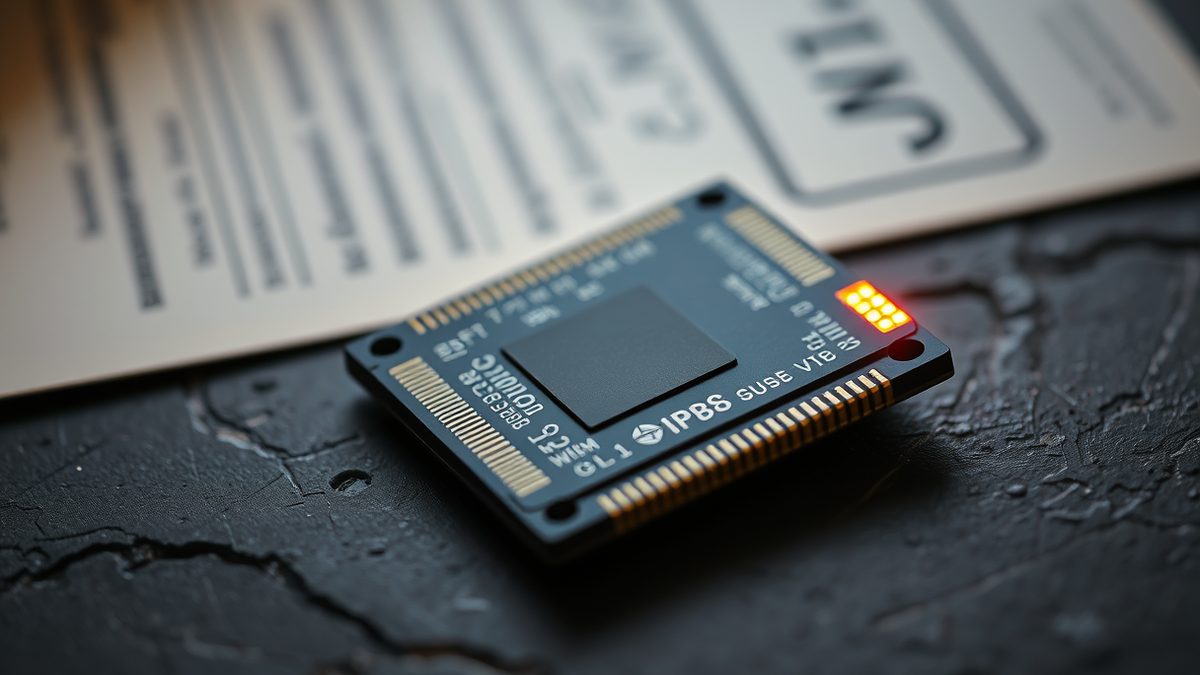
The Decoder reported the deal on 30 September, hours after OpenAI's developer day in San Francisco. Synopsys makes electronic design automation software, the tools engineers use to design chips and semiconductors. Under the partnership, OpenAI licenses those EDA tools and combines them with its own models.
The stated goal is a model that can "reason about chip design and verification, and to directly operate Synopsys' tools." Engineers would delegate design objectives, then review and approve the output. The model runs on OpenAI's infrastructure. Both companies say customer data will not be used for training and will be stored encrypted. Early tests with semiconductor customers are already underway. The two firms will market the product together and share revenue. The same week brought a cluster of open model releases, from speech recognition to tabular data, alongside enforcement news from regulators.
Open weights keep arriving
Fermion Research published Phonon-2 on 30 September, an English speech recognition model in a 164 MB download. Across the seven English sets on the Open ASR Leaderboard it averages 5.21 percent word error, the company says. Every open model scoring better is at least 5.8 times its size. Weights are released under CC-BY-4.0, the licence of NVIDIA's Parakeet TDT 0.6B v3, from which they derive.
NVIDIA put out Kumo Tabular on 29 September, an open foundation model for tabular classification and regression that predicts labels in a single forward pass with no training or feature engineering, released under the OpenMDW-1.1 licence for commercial use. The company says it ranks first on TabArena, BeyondArena, TALENT and ScoringBench. It comes in three sizes from 28M to 215M parameters.
Volunteers took a different route. The Coop project, updated on 30 September, trains a roughly 145M-parameter model from scratch on FineWeb-Edu using donated hardware and free tiers of Hugging Face and GitHub Actions. Gradients arrive as pull requests. A scheduled GitHub Actions job aggregates them every five minutes, though the project notes GitHub's shared scheduler can fire anywhere from minutes to hours apart. Stage 1, a 15M model on TinyStories, ran past its Chinchilla-optimal budget in six days with validation loss falling from 9.01 to 2.8.
Also on 30 September, the UK AI Security Institute and Meridian Labs detailed Inspect, an open-source evaluation framework that ships over 200 pre-built evaluations and supports running untrusted model code in Docker, Kubernetes and other sandboxes. On GitHub, a developer published PSSA, a non-transformer language model written in Rust with no ML framework underneath, claiming it learns faster than a transformer at matched parameters and generates about twelve times quicker on the same CPU.
Regulators move on agents
The Guardian reported on 30 September that the FTC has opened an industry-wide investigation into Anthropic, OpenAI and other labs, its first official enforcement action on rogue AI agents, and plans to compel testimony from executives including at the research group Metr. Ars Technica reported the same day that OpenAI will not go public until it can "make confident safety decisions," and that a non-profit, Legal Advocates for Safe Science & Technology, filed a lawsuit in California seeking better evaluation, monitoring and training practices.
Sources
8- 01OpenAI and Synopsys team up to build an AI model that designs chips like a seasoned engineerEN
- 02Phonon-2: most accurate open speech recognition model in a 164 MB downloadEN
- 03Nvidia Kumo Tabular: Open Foundation Model for Tabular PredictionEN
- 04Coop: A small language model pretrained by volunteersEN
- 05Inspect: An open-source framework for large language model evaluationsEN
- 06PSSA: A non-transformer language model written from scratch in RustEN
- 07US trade regulator opens investigation into AI giants including Anthropic and OpenAIEN
- 08OpenAI delays IPO over AI safety concernsEN
All figures and quotations in this text come from the sources listed below.
Content prepared by the editorial team with AI assistance.
Rachel Nwosu
Comments
0- No comments yet — be the first.