OpenAI sets voluntary rules for its data centers after midterm defeats
OpenAI published voluntary commitments for its data centers on 5 November, two days after US voters rejected new data centers in 40 of 41 local ballot measures. They cover future sites OpenAI owns and operates, not partner-built sites such as Oracle's.
 Dr. Amara PatelEconomy, business and world
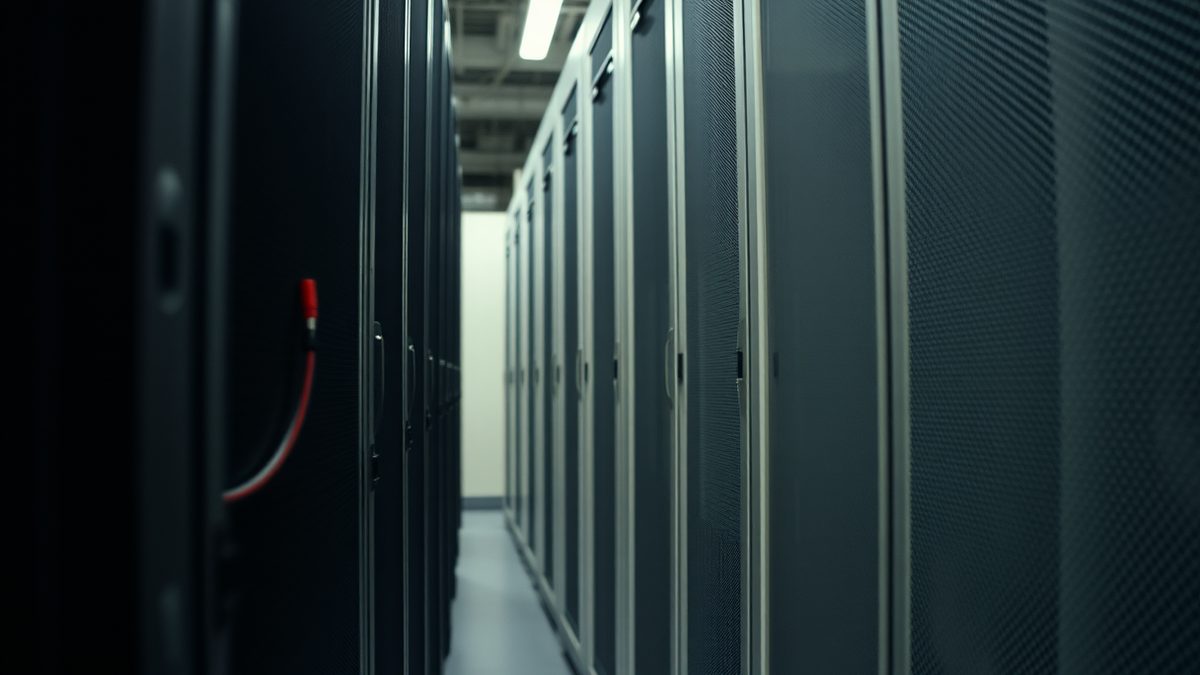
OpenAI's National Community Compact and Policy Blueprint say the company will stop requiring nondisclosure agreements in negotiations with local authorities, except for trade secrets, security concerns and competitively sensitive information. It promised to cover the full cost of electricity and grid upgrades, throttle consumption at peak hours and disclose construction plans, noise studies and water usage data. The company called on lawmakers to make the rules binding for the entire industry.
Why OpenAI acted
The announcement came two days after the 3 November midterms. The Decoder reported voters rejected new data centers in 40 of 41 local ballot measures. TechCrunch reported that Democrats won control of both chambers of Congress and that candidates in Texas, Maine, Michigan, Nevada, Georgia and South Carolina won seats after opposing rapid data center buildout.
Polling showed the scale of opposition. TechCrunch reported that almost 80% of respondents to an NBC exit poll opposed building data centers in their own neighborhoods, and almost 60% said data centers were a major factor in their vote. A Reuters/Ipsos poll released in October found 69% of Democratic registered voters back limits, against 43% of Republicans.
Local opposition has already stalled projects. Data Center Watch counted 45 projects worth $88 billion stalled by local opposition in the second quarter of 2026, The Decoder reported. TechCrunch reported that the Ohio county where Meta had planned a 700,000-square-foot facility passed a ban on data centers. Texas governor-elect Gina Hinojosa has proposed a statewide moratorium on new data center permits; CNBC reported projects already under construction would reportedly be exempt.
What the pledges do not cover
The commitments apply to future sites OpenAI owns and operates itself. A large share of OpenAI's data center infrastructure is built and held by partners such as Oracle, The Decoder reported. OpenAI has eyed a $500 billion data center in Ohio, backed by more than $100 billion in financing from Nvidia, TechCrunch reported.
OpenAI's policy chief Chris Lehane told Reuters that regular hardware upgrades would create permanent jobs and promised 2,500 positions for Ohio. The company also points to $4.8 million for school lunches in Georgia, against planned project costs of more than $30 billion in the state. Lehane acknowledged that OpenAI projects could face delays too, The Decoder reported.
Market split
The vote split AI stocks. The Decoder reported Hut 8 fell 23%, IREN 11% and Core Scientific 10%, while Microsoft rose 6.7%, Amazon 6.1% and Alphabet 3.2%. CNBC reported CoreWeave fell around 10%, Micron 7% and Nvidia 3.17%.
Borrowing costs are part of the divide. JPMorgan's James Sullivan told CNBC that borrowing spreads have widened significantly for neocloud companies, leaving their cost of additional capital substantially higher than hyperscalers'. JPMorgan Asset Management said in a 20 October note that hyperscalers have broader cloud businesses and more internally generated cash flow, while lower-rated neoclouds face greater exposure to borrowing costs, energy prices and refinancing conditions.
CNBC reported that CoreWeave's five-year credit default swap spread has pushed past 1,100 basis points and that CoreWeave, Nebius and IREN each fell at least 30% in October as credit markets tightened. Nomura said in a note on Wednesday that much of the capacity due online in 2027 is already under construction, limiting the near-term impact of new restrictions, while projects planned for 2028 face greater exposure to permitting delays.
What happens next
National legislation that would significantly stall data center construction looks unlikely, Reuters reported. Democratic leadership would more likely mean more hearings and investigations. TechCrunch reported that likely next steps include more construction moratoriums or requiring data centers to pay for their own power grid upgrades.
Democratic control of Congress could improve the odds for a bill introduced by Senator Bernie Sanders and Representative Alexandria Ocasio-Cortez earlier this year. It proposes a nationwide moratorium on new data centers until Congress adds guardrails, TechCrunch reported. Any such bill would still face a possible veto.
Sources
25- 01Democrats' win rattles Trump trades from AI stocks to cryptoEN
- 02Analysis-Investors see risk from US midterms to AI trade as data center backlash buildsEN
- 03After midterm rout, OpenAI tries to win over communities it needs for AI expansionEN
- 04A new bill could change how the US builds energy infrastructureEN
- 05How the midterms could fuel the K-shaped AI tradeEN
- 06After the midterms, a bigger clash over data centers could be comingEN
- 07What's next for US energy policy after the midterm elections?EN
- 08AI data centers comprehensively defeated at US midterm electionsEN
- 09US 2026 midterm elections explained: key dates and market implicationsEN
- 10US Midterms And Dollar Forecast: AI Investment, Congress Shape 2027 RisksEN
- 11Was Elon Musk the US midterms' biggest loser? – Stateside with Kai and CarterEN
- 12The US Midterm Election Results Remind Us To Focus On The “Foundation Of Our Democracy”EN
- 13STAT+: What the midterms could mean for the future of health AIEN
- 14Elon Musk’s nearly half a billion dollars in midterms spending was a flopEN
- 15Elon Musk's millions failed to deliver Republican wins in fierce midtermsEN
- 16Chipfertigung: EU investiert Hunderte Millionen in Chipdesign-PlattformEN
- 17‘Wellness is on the ballot’: why did so many pilates studios tell me to vote in the midterms?EN
- 18Sierra Club Response to Midterm Election ResultsEN
- 19Nvidia, Municipal Leaders Frame AI as Critical Urban InfrastructureEN
- 20Congress Is Cutting Off Transportation Investments that Help Families Save MoneyEN
- 21The ETS Investment Engine: Scaling Europe’s Strategic E-fuel Market for Shipping & AviationEN
- 22Russian Police Arrest 3 Suspected VasyGrek Hackers, Dismantle Criminal InfrastructureEN
- 23Elon Musk’s Attack Ads Are Backfiring As Midterms NearEN
- 24Xiaomi follows Li Auto with planned Sunwoda EVB investment to deepen battery tiesEN
- 25Media rights squeeze, US investment and AI tech: The sports business trends from Sportel 2026EN
All figures and quotations in this text come from the sources listed below.
Content prepared by the editorial team with AI assistance.
Dr. Amara Patel
Comments
0- No comments yet — be the first.