Opera adds a travel eSIM to its Android browser as the dossier's rail material stays thin
Opera put a travel eSIM inside its Android browser on 29 September, offering 3GB of free data valid for three days across 11 launch markets, according to techlomedia.in. The night train material the topic asks about exists only in context headlines the brief excludes from citable facts.
 Daniel FisherSport, cars and travel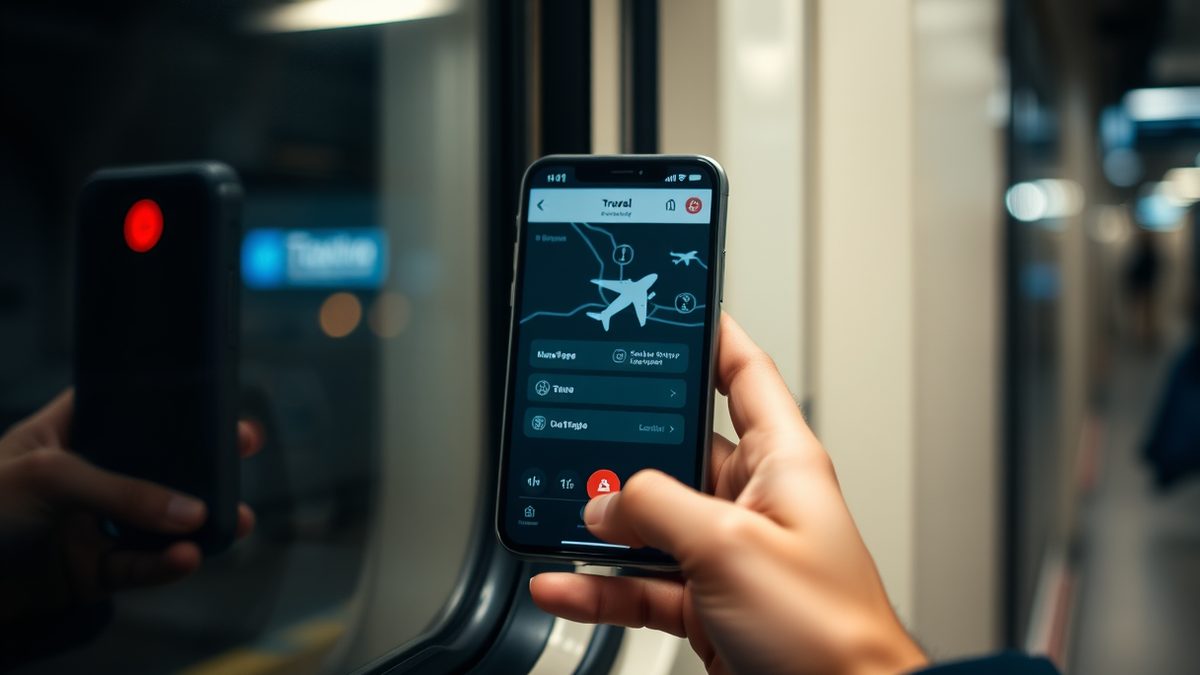
Opera's eSIM arrived on 29 September, techlomedia.in reported. It covers 47 destinations with 5G where local carriers support it. The free 3GB lasts three days in the US, UK, Germany, France, Canada, UAE, Brazil, the Netherlands, Norway, Sweden and Poland. Paid plans of 3GB, 5GB and 10GB remain valid for 30 days after activation, the same report says.
An eSIM-compatible handset on Android 10 or newer is required. The product is data-only, so it does not replace a phone number and does not carry calls or SMS. A user can install the eSIM before leaving home and switch it on after landing, but each country needs its own package. That last detail matters for anyone crossing several borders in one trip, since the free allowance is tied to a single market rather than to the journey, and the browser vendor is selling convenience rather than coverage. The 30-day validity on paid tiers is the part that makes the offer usable for longer stays, according to techlomedia.in, while the three-day free window looks aimed at short city breaks and stopovers.
What the numbered sources actually carry
The query behind this piece points at European night trains. No sourced article in the dossier covers a night train operator, a route, a timetable or a ticket price. The only rail material sits in a list of recent context headlines, which the brief explicitly rules out as citable facts. Those headlines name a Malmö to Oslo route (The Guardian, 29 September), an 11-day Vietnam rail trip (Travel + Leisure, 28 September), a European Sleeper plan for a first Nordic route (Business Travel News Europe, 28 September) and a piece on the Chairman's Train (The Times, 29 September). None of it appears among the 16 numbered sources, so none of it belongs in this article.
What the numbered sources do carry is European infrastructure and travel software. Light Reading reported on 29 September that Orange Business was picked as trusted network partner for TESTA-EIRIS, the EU's private communications backbone. The contract covers a Layer 2 / Layer 3 backbone linking at least 12 Points of Presence across five European regions, with 99.999% availability claimed. Orange will work alongside the European Commission's DG DIGIT. The platform is software-based and replaces dedicated hardware.
On the consumer side the dossier holds a private trip planner rather than a rail product. Trovelo, listed on the App Store on 29 September, organises flights, stays, places and expenses per day, syncing through the user's own iCloud with no account. It claims 46 card types, more than 4,300 handpicked places across 128 destinations, and 56 ready-made guides covering 45 cities and 11 road trips. It is free to start, with a one-time Pro purchase.
"The corner cases are the ones to actually get right," says Nicole Fraenkel, a partner at Khosla Ventures.
Two further 29 September items show where European and UK engineering attention is going. Basecamp published a Rust port of its ONCE Campfire app, claiming it serves pages, posts and real-time delivery 20 to 95 times faster than the Rails version and holds 10,000 connected clients in a fifth of the memory, according to the GitHub repository. Separately, a GitHub pull request by Deven Pietrzak reports training NanoGPT to a target loss in 39.914 seconds on 8 H100 GPUs, down from 73.889 seconds, a 46% cut. Hyperstition's own write-up, published on 28 September, puts the gain at 33.975 seconds and credits ANVIL II, sampled softmax and a larger sparse n-gram table.
There is a labour and policy layer as well. Bloomberg, via Business Standard on 28 September, reported that China widened overseas travel restrictions for top AI professionals at private firms to cover spouses and children, who now need Beijing's approval before going abroad. The same report notes exit-ban rules effective 15 September.
None of this amounts to a night train story. A reader hunting sleeper routes will not find one in this dossier, and the honest move is to say so rather than stretch a rail narrative out of headlines the brief excludes. The freshest verifiable rail-adjacent fact remains Opera's eSIM, dated 29 September, which at least speaks to the cross-border connectivity problem a rail traveller meets first.
Sources
10- 01Opera Adds Travel eSIM to Android Browser with 3GB Free DataEN
- 02Orange Business to provide European Union's backbone network for trusted data exchangeEN
- 03Trovelo - Private Travel AppEN
- 04Once Campfire in Rust: one binary, the Rails app's data, 19-44x fasterEN
- 05Training NanoGPT in 39.9 SecondsEN
- 06Training NanoGPT in 39.9 SecondsEN
- 07China broadens travel curbs to encompass family of top AI talentEN
- 08AI's next training data: your dodgy gaming skillsEN
- 09LLM makes decisions to raise its training scores, and ignore user directivesEN
- 10Startup Nights 2026 is comming up on 5-6 Nov. in SwitzerlandEN
All figures and quotations in this text come from the sources listed below.
Content prepared by the editorial team with AI assistance.
Daniel Fisher
Comments
0- No comments yet — be the first.