South Korea's $200B US investment plan puts LNG and nuclear back on the table
President Donald Trump is expected to unveil roughly $200 billion in South Korean investment in the United States on Wednesday, Bloomberg News reported, as cited by Seeking Alpha on 30 September. About $54 billion of that is tied to the long-delayed Alaska LNG project.
 Dr. Amara PatelEconomy, business and world
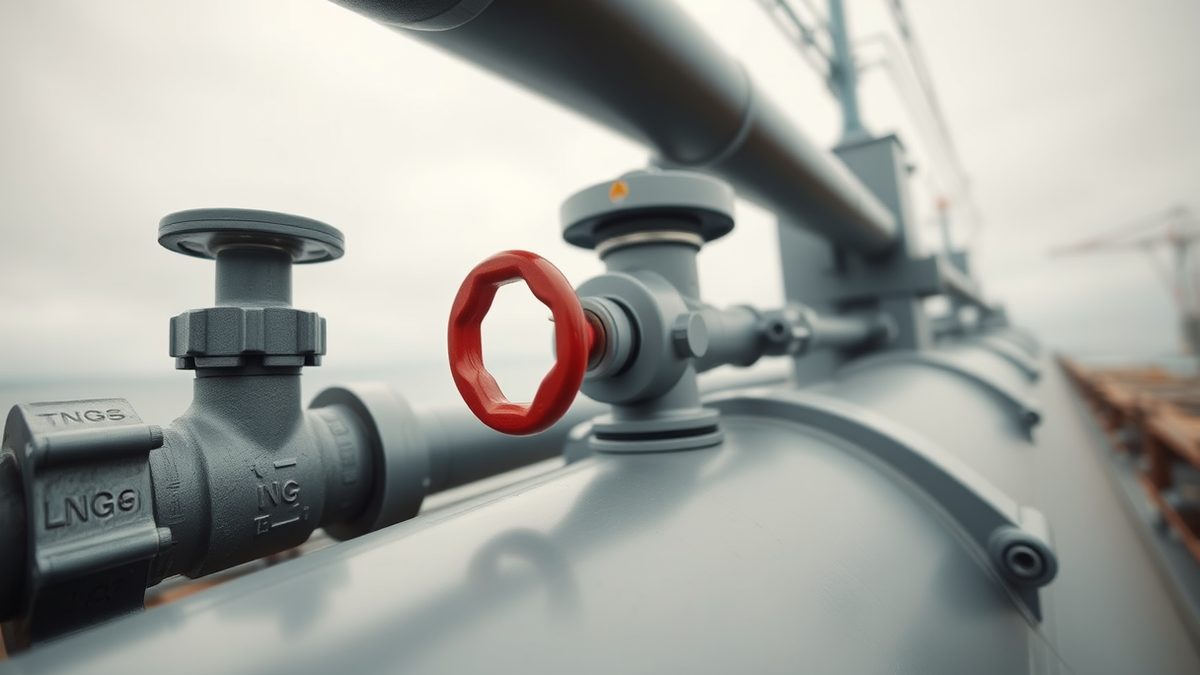
The figure is the headline. The detail matters more. About $54 billion of that money would go to Alaska LNG, a gas transport and export project planned for years and stalled for years. Seeking Alpha, citing Bloomberg and people familiar with the discussions, reported on 30 September that the package is expected to be announced on Wednesday.
Shipbuilding, energy infrastructure and nuclear plants are the named targets. Those are long-cycle, capital-heavy sectors. Financing and negotiation hurdles, not engineering, have been the blocker. That is the argument the report makes: the investments may advance large projects that stalled on financing.
What the record shows about operator capex
Telecom operators have run the same argument in a different sector. AT&T stepped up its fiber programme with a $3 billion Corning deal and a target of 60 million locations by 2030, TelecomLead reported on 29 September. That is a network commitment with a supplier contract attached, a structure investors can actually audit. Contrast that with the wider industry picture. Telecom AI investment is facing greater scrutiny over returns. The 6G investment race is already framed around preparing networks for 2030. Both are capital commitments made against revenues nobody has booked yet. The Alaska LNG comparison is not exact, but the financing logic rhymes: a big number, a long horizon, and a payback that depends on someone else's decision.
Operators that report results face pressure to show where the money went. Chunghwa Telecom posted unaudited consolidated results for the second quarter of 2026 on 4 August. It then reported strong August 2026 results on 11 September while flagging a conservative risk profile. It also boosted infrastructure investment alongside its July 2026 results on 11 August. Three disclosures in six weeks all point the same way: capex up, caution stated.
Smaller operators are in a harder spot. The NCC said on 28 October it would use a market study to protect smaller telecom operators. Weaccess Group reported revenue up 37% in the first half, with its net loss deepened by the termination of an R&D project, according to Idéal Investisseur on 30 September. Growth and losses in the same paragraph is a familiar combination.
Where the jobs and the money land
Not all investment announcements are about pipes. DoorDash opened a global capability centre in Hyderabad and plans to create 3,000 jobs in India, People Matters reported on 30 September. Pearson said it would acquire Workera to boost AI skills assessment and workforce intelligence, per People Matters on 29 September. Both are hiring and acquisition stories dressed as technology stories. Both are easier to verify than a memorandum of understanding.
The South Korea package, if it lands as reported, will be judged on the same test. Seeking Alpha notes the plan includes natural gas power and nuclear plants alongside Alaska LNG. Bloomberg's sourcing is people familiar with the discussions. The $200 billion figure and the $54 billion Alaska share should be treated as reported expectations until the announcement itself.
One data point belongs next to the headline. South Korean operator SK Telecom appears in coverage of telecom stocks. That is a reminder that the chaebol money behind these pledges is the same money that funds domestic networks. Capital is finite. A $200 billion commitment abroad has a domestic opportunity cost. Nobody in the Bloomberg reporting has yet said how that split was struck.
For telecom investors, the lesson from the fiber and 5G buildouts is that announcements are cheap and supplier contracts are not. Watch for the Corning-style detail in the Alaska LNG package: named counterparties, signed volumes, construction timelines. Without those, the number is a headline, not a plan.
Sources
6- 01Trump set to unveil $200B South Korean U.S. investment planEN
- 02Justice Department and FBI Seize Platforms Operated and Used by China State-Sponsored HackersEN
- 03Opsec Fail Leaks a Rare Look Inside a Media-Buy-Powered Scam OperationEN
- 04Would you use an AI agent instead of making your next operations hire?EN
- 05Floppy Emu Hardware Failure Analysis ResultsEN
- 06Operational HPC lessons learnt training the Tessera geospatial foundation modelsEN
All figures and quotations in this text come from the sources listed below.
Content prepared by the editorial team with AI assistance.
Dr. Amara Patel
Comments
0- No comments yet — be the first.