Sports analytics has no dedicated story in the dossier, so here is what the data actually shows
The freshest item in this dossier, published on 30 September, is not a sports story at all. It is a study showing that most European data centers refuse to disclose how much water and electricity they use, the same infrastructure that sports analytics increasingly depends on.
 Peter LindqvistSport, cars and travel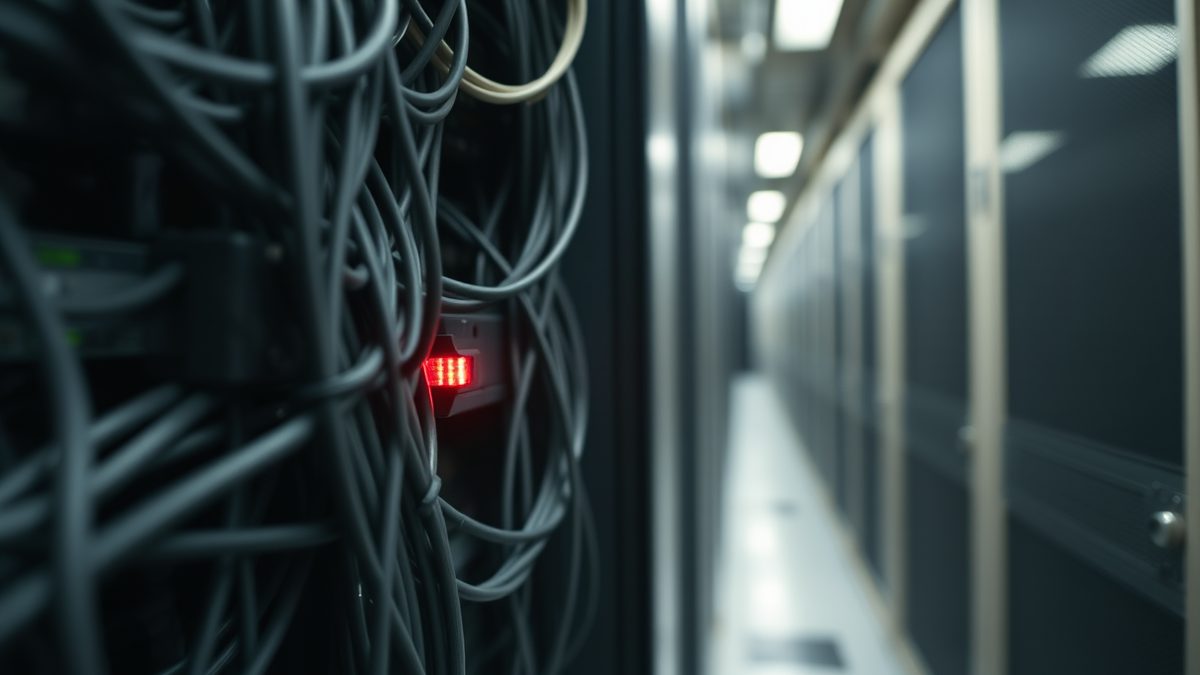
That study, by Lighthouse Report with Trouw and other European media, found that in the Netherlands fewer than a quarter of larger data centers publish figures on electricity and drinking water consumption. The researchers spent a year invoking freedom of information laws across Europe and came away with almost nothing. Reporting by NL Times on 30 September put the Dutch count at 186 commercial data centers of 500 kW or more at the end of last year. The national agency RVO holds data on only 104 of them.
Sports technology data analytics is the topic here. The dossier, though, contains no dedicated sports analytics reporting from the last 72 hours. The recent headlines supplied for context are almost all promotional or market-research items, and the house rules say those cannot be cited as facts. What we can do is read the actual infrastructure and data-governance reporting in the dossier and ask what it means for an industry that sells itself on measurement.
Start with compute. A paper submitted to arXiv on 29 September describes Purlin, a communication framework for GPU collectives developed by Osayamen Jonathan Aimuyo, Swapnil Gandhi and Christos Kozyrakis. The authors report latency speedups of up to 5.14x and bandwidth improvements of up to 4.50x across seven collectives on A100, H200 and B200 GPUs. Integrated into SGLang, they say, Purlin improves offline LLM serving throughput and interactivity by 1.13x on average and up to 1.37x.
That is a distributed-systems paper, not a sports paper. It still matters, because the same GPU fleets that serve language models also serve video review, tracking data and generative highlight tools. When orchestration is separated from the datapath, as Purlin proposes, the cost of adopting new hardware drops. For leagues and broadcasters running inference at the edge of a live event, that is the difference between a product and a demo.
Where the sports data would sit
On 30 September, AWS announced that Aurora PostgreSQL now supports querying Apache Iceberg and Parquet data directly, using DuckDB's query engine embedded in PostgreSQL, without ETL pipelines or data duplication. The capability is generally available on Aurora PostgreSQL 17.11, 18.6 and higher in all AWS commercial and GovCloud regions, at no additional charge.
Read that alongside the Tigris engineering post from the same day. In it, the object-storage company explains why it moved asynchronous tasks such as garbage collection off FoundationDB queues and onto Kafka. Tigris says it still keeps its queues in FoundationDB, the key-value store behind iCloud, but that scheduling required too many writes and scans competing with user requests.
These two posts describe the same problem from opposite ends. Sports organisations collect event data, biometrics, ticketing and video in separate systems, then spend engineering time copying it into a warehouse before anyone can query it. AWS is selling the shortcut. Tigris is describing what happens after you take it and the workload grows.
"The whole scheme adds another layer of obfuscation of how license plate reader data is being used and who is using it," Jeramie Scott, director of the Electronic Privacy Information Center's Surveillance Oversight Center, told 404 Media.
Scott was talking about license plate readers, not sport. But 404 Media reported on 30 September that the Trump administration is using the 1980s High Intensity Drug Trafficking Area program to force cities to funnel Flock, Axon and other ALPR data into federal surveillance centers. Some of that data is passed on to the DEA's National License Plate Reader Program. The report says cities in Georgia cannot run ALPR systems on state rights of way without signing a memorandum of understanding promising to send data to a HIDTA.
Why does that belong in a sports technology analysis? Because the same vendors, the same procurement offices and often the same municipal budgets sit behind stadium security and event-day surveillance. If a city has already signed its camera data over to a federal program, the terms under which a club or a venue can promise privacy to fans are not the club's to set.
The health data question
The Guardian reported on 30 September that more than 44,000 people have filed legal objections under article 21 of the UK GDPR to their health data being processed by the Palantir-powered Federated Data Platform, the £330m NHS England contract. The objections argue that Palantir's involvement undermines trust in NHS data confidentiality. NHS England said all NHS organisations remain in control of their data and that suppliers cannot access it for their own purposes.
Also on 30 September, The Guardian reported comments from US health secretary Robert F. Kennedy Jr at a Maha Institute event. He described linking medical, lifestyle and claims data across Medicaid, Medicare, the FDA and the CDC so that AI can search it. He said studies that used to take years can now be done "literally in seconds".
Elite sport has spent a decade arguing that athlete health data is different, governed by consent and collective bargaining rather than by public health law. That argument gets harder to make in public when the same tools, the same contractors and the same AI search patterns are being deployed on populations that never opted in.
One more number, from the same week. The Decoder reported on 30 September that Meta saved $3.9 billion in 2025 through a federal research tax credit by classifying AI data centers as "pilot models" and Nvidia chips as experimental materials, according to the New York Times. Meta's own SEC filings warn the savings could be challenged, and reserves for uncertain tax positions rose 45 percent to $18.74 billion.
Sports analytics vendors do not operate at that scale. The point is structural: the compute layer under every tracking system, every betting model and every broadcast augmentation is being financed, taxed and regulated in ways its customers rarely see. The dossier's newest stories are about that layer, not about sport. That is the honest read of the week.
Sources
8- 01Most data centers refusing to say how much water, electricity they useEN
- 02Purlin: Separating Orchestration from the Datapath of CollectivesEN
- 03Aurora PostgreSQL now supports querying of Apache Iceberg and Parquet dataEN
- 04We used a database as a message queue. Now we use KafkaEN
- 05How Cities Are Forced to Funnel License Plate Data to a Massive Federal Surveillance ProgramEN
- 06More than 44,000 file legal objections to Palantir NHS platform handling their dataEN
- 07RFK Jr outlines expansive vision for collecting US health data at Maha eventEN
- 08Meta dodges billions in US taxes by calling its AI data centers experimentsEN
All figures and quotations in this text come from the sources listed below.
Content prepared by the editorial team with AI assistance.
Peter Lindqvist
Comments
0- No comments yet — be the first.