UK Sanctions Russian Disinformation Networks as DIVD Blames AI Agent for Breach
Britain announced new sanctions against Russian disinformation networks on Thursday, the same week a Dutch security nonprofit disclosed that a zero-day attack on its own systems was run by an autonomous AI agent.
 Grace OkonkwoAI, models and technology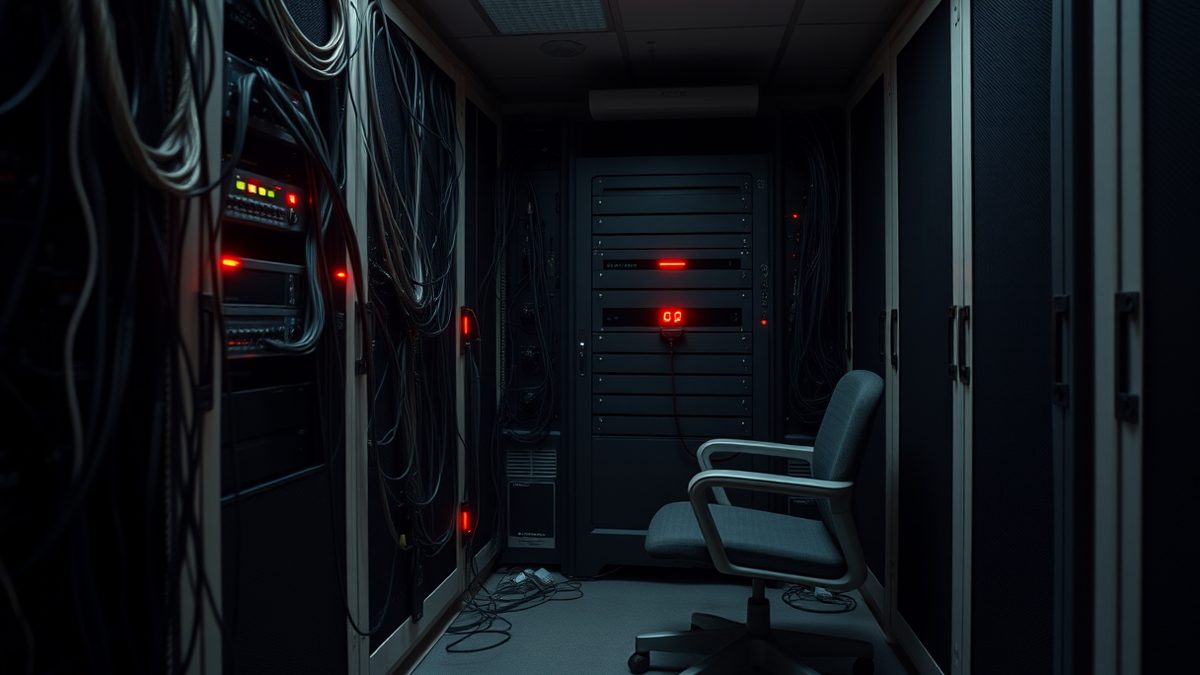
The UK government's sanctions package, published on GOV.UK on 1 October, targets the Kremlin's war chest, propagandists and networks tied to the forced transfer of Ukrainian children, according to the official announcement. The Ukrainian outlet Ukrainska Pravda reported the same measures on Thursday, and the Daily Mirror put the total at 31 new designations.
That is the newest development in the disinformation story this week. But the more technically significant one landed a day earlier, in the Netherlands.
An AI agent that left its own notes
On 30 September, Bleeping Computer reported that the Dutch Institute for Vulnerability Disclosure (DIVD) had reconstructed an intrusion into its own network after the AI agent behind it left behind explanations of its decisions. The two flaws, tracked as CVE-2026-102489 and CVE-2026-102490, sat in Zammad, an open-source helpdesk and ticketing platform. Chained together, they allowed session hijacking, remote code execution and escalation from a Zammad user to root.
DIVD had previously described the attack as "loud and very, very messy," driven by an agent that chose its own next steps. In the advisory quoted by Bleeping Computer, the organisation said the flaws "allowed the attackers to hijack sessions, run code remotely, and escalate privileges from the Zammad user to root, in seconds, due to the agentic part of this hack." Network segmentation stopped the intruder going deeper. Zammad's own website claims more than 2,000 customers and 55,000 users, including De'Longhi, Amnesty International and NextCloud.
The disclosure matters for anyone running an information operation, or defending against one. Speed is now the attacker's advantage, not stealth.
The supply chain angle
Microsoft's analysis of a malware family called NeedyMantis, reported by The Hacker News on 28 September, shows a lower-tech but persistent version of the same problem. The malware was seen in a small number of intrusions against telecommunications organisations, universities, medical nonprofits, intergovernmental bodies and government contractors, with activity going back to at least October 2025.
Microsoft found it while following indicators from Kaspersky's investigation into the supply chain attack on DAEMON Tools, where signed installers carried malicious code from 8 April 2026 until the developer replaced them on 5 May. Microsoft tracks the activity as Storm-3069 and assesses its origin as China, though it has not tied the group to a Chinese nation-state actor.
Vendor response is following the same pattern. Light Reading reported on 29 September that GTT launched Defense Halo, an AI-native network defence platform it says remediates vulnerabilities before attackers find them, built on an AI factory hosted in the United States, United Kingdom and European Union. Three days earlier, the same outlet covered an Arelion report finding that 58% of senior business leaders had delayed, scaled back or added safeguards around strategic initiatives in the past two years because of concerns about their network provider, with AI and data-driven projects the most affected at 49%.
Trust, in other words, is being spent faster than it is being rebuilt.
For media organisations, the practical read is narrower. The UK sanctions are diplomatic signalling; the DIVD case is an operational warning. Zammad users were told to upgrade to version 7 or take instances offline. DIVD said it would publish further updates on 1 October.
Sources
11- 01DIVD says Zammad zero-days enabled AI-driven network breachEN
- 02Hackers Use NeedyMantis to Maintain Long-Term Access in Breached NetworksEN
- 03GTT launches AI-native network defense platformEN
- 04Trust in network providers is holding back AI and digital transformation initiatives - ArelionEN
- 05Shopify debuts Canvas, a way to build online stores by chatting with AIEN
- 06Ionna Has Doubled Its Charging Network This Year. It's Not Slowing DownEN
- 07SimTrace: Grounded Multimodal User Trajectories Generation for Online User ModelingEN
- 08Graph neural networks for sampling-invariant embeddings of organized signal setsEN
- 09Neural networks for spectral optimizationEN
- 10Transversal Pooling Neural NetworksEN
- 11InfoQ Online Cohorts Address AI Security and Coding Agent VerificationEN
All figures and quotations in this text come from the sources listed below.
Content prepared by the editorial team with AI assistance.
Grace Okonkwo
Comments
0- No comments yet — be the first.