US charges California CEO over $300M Nvidia chip shipments to China
A California business owner was arrested on Thursday and charged with smuggling around $300 million worth of Nvidia hardware to China without export licences, according to court documents reported by The Register on 2 October.
 Dr. Amara PatelEconomy, business and world
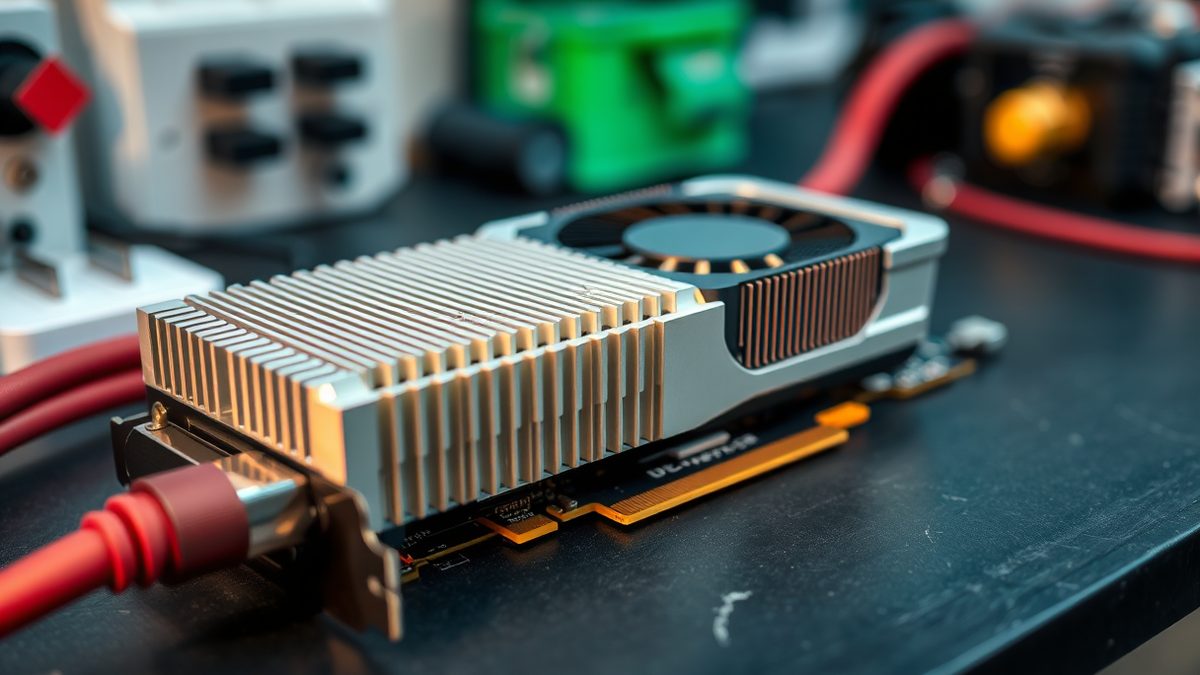
Greg Lui, 38, allegedly ran the scheme through his company, Earthmade Computer Inc. Prosecutors say he ordered servers packed with Nvidia A100, H100, PNY GeForce RTX 4090 and GeForce RTX 5090 GPUs in the US. The kit went first to Malaysia and Singapore, which do not require Commerce Department licences, and was then forwarded to China.
The timing matters more than the arrest. The indictment says the operation began in or around October 2023 and ran until at least 12 August 2026. That is three years in which Washington kept tightening the rules and the route allegedly stayed open. Prosecutors claim Lui took more than $176 million in payments from two Malaysian transshipment companies, brokering sales of almost $300 million of hardware in return. The gap between what he took and what moved is one reason the case will be argued over documents rather than headlines.
For buyers and regulators, the case tests whether licence rules bite at the point of sale or only at the border. Neither the Justice Department nor Nvidia has said how much of the hardware actually reached China. The charges remain allegations.
What is public is the paperwork. Court documents describe 92 servers flown from San Francisco International Airport to Kuala Lumpur on Earthmade's order, with the onward consignee listed as a Chinese customer.
Malaysia in the middle
The Malaysia leg has drawn its own denials. Free Malaysia Today reported on 3 October that a Penang-based company rejected claims it moved AI chips to China. That is a reminder that transshipment allegations land on local firms before any court weighs them. NST Online reported the same weekend that Prime Minister Anwar Ibrahim warned trade weaponisation threatens Malaysia's position as a trading nation.
John A. Eisenberg, assistant attorney general for national security, framed the case in the language of the AI race. "SI is the defining technology of the era," he said, referring to super intelligence. "The National Security Division will protect the American advantage in the chips that power this technology." The Register also reports that the indictment claims Lui told a US front company to list the recipient of a shipment as Jackie Lui, described as the supposed CEO.
Coverage of the arrest spread widely on 3 October, from the South China Morning Post and NDTV Profit to Newsweek, which asked who Lui is, and the Hindustan Times. Most of it repeats the headline figure. The Digital Watch Observatory summarised the charge as the indictment of a CEO for smuggling "AI chips" into China.
Memory is the new front
The hardware in this case is the older, better understood problem: finished accelerators moving through third countries. Reporting published on 3 November points to a harder one. Smugglers are reportedly pairing top-tier HBM memory with cheap server chips to get past controls, then stripping the parts apart inside China, according to accounts circulating on 2 and 3 November. One report puts the value of the memory at $4,000 per unit.
That detail explains why controls keep getting rewritten. A GPU can be traced by model number and serial. Memory modules soldered next to a throwaway processor are harder to spot at a freight desk, and the economics favour the risk. The same week brought claims that China has stockpiled 343 DUV lithography machines, with former US officials urging a full ban to close loopholes, as BigGo Finance reported on 4 October. The Jamestown Foundation said on the same day that procurement documents reveal AI chip workarounds.
None of this means the export regime is failing outright. It means the enforcement story has moved from the datacentre to the shipping manifest. The Tencent deal reported by ET Datacenters on 3 October, leasing 100,000 AI chips from Oracle for $7 billion, shows Chinese buyers still paying premium prices for compute they cannot buy directly.
What comes next
The Lui case will turn on documents and intent, not on the size of the number in the headline. Prosecutors say he knew the rules required licences for advanced Nvidia chips bound for China. His defence has not been set out in public. A court will also have to weigh how much of the $300 million figure reflects hardware that moved and how much reflects orders booked.
For US allies in Southeast Asia, the pressure is different. Malaysia and Singapore sit on a route that Washington now watches closely. Both have reasons to protect legitimate trade.
For Nvidia, every smuggling case is a reminder that demand in China outlives the licence list. The company has not commented on the charges. The next signal will be whether prosecutors name the Malaysian transshipment companies or the Chinese consignee. Until then, the case is a set of allegations with an unusually detailed paper trail, and a policy debate that keeps finding new hardware to argue about.
Sources
1- 01Californian accused of shipping $300M worth of Nvidia chips to China without Uncle Sam's approvalEN
All figures and quotations in this text come from the sources listed below.
Content prepared by the editorial team with AI assistance.
Dr. Amara Patel
Comments
0- No comments yet — be the first.