VW weighs Moia exit as robotaxi money moves to London and Hesse
Volkswagen is weighing exit options for its Moia ridepooling subsidiary, according to a Wirtschaftswoche report cited by heise online on 27 September, as German operators retreat from autonomous driving while Waymo and Uber expand abroad.
 Peter LindqvistSport, cars and travel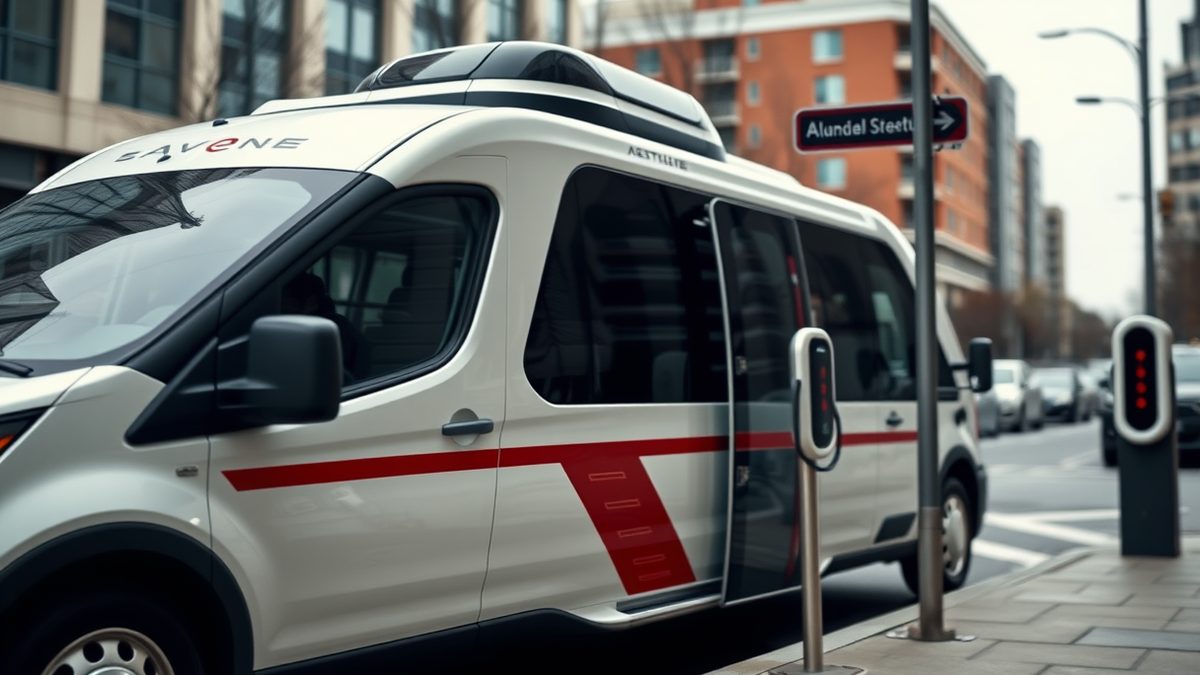
Moia no longer plays a central role in VW's 2030 target picture, according to the strategy paper heise online described on 27 September. The group wants to work through exit options by the end of 2026, from a sale to new investors to a full wind-down.
Two problems are named. In Hamburg, Moia tests autonomous operation on a VW ID.Buzz using supplier Mobileye's technology. Company insiders say the hardware and software do not meet expectations for fault-free driving, so Level 4 autonomy has not been proven. At the same time, VW is unwilling to spend the billions the magazine says further development requires. Potential investors including Uber and Lyft have pulled back, according to the report.
Moia's leadership had recently asked the state for money.
That is the newest datable development in the dossier. It lands the same weekend that Germany's other autonomous public transport project, run by Deutsche Bahn and the Rhein-Main-Verkehrsverbund (RMV), moved forward. On 27 September, heise online reported that Holon shuttles will carry passengers in parts of Darmstadt and the Offenbach district from next year. Test drives to map the area come first, then riders.
The Holon mini-buses are barrier-free, with five seats and one wheelchair space, three passenger seats when the wheelchair spot is used, and room for up to 15 people in total, the manufacturer says. A safety driver monitors the vehicle as an operator, and the shuttles received approval for test operation in Germany at the end of 2025. They replace the Kira project, which has run in southern Hesse since May 2025 with five-seat cars in Darmstadt, Langen and Engelsbach. By the end of May, around 4,200 test users were registered, ordering vehicles via app to roughly 130 stops, per the railway. Kira ends at the end of the year.
RMV chief Knut Ringat framed the goal plainly: "Das Ziel ist es, in naher Zukunft autonome Angebote in den regulären ÖPNV zu integrieren." The quote comes from a statement the companies issued, as carried by heise online.
This is not DB's first attempt. Until the end of 2024 it ran EZ10 buses from Easymile in Bad Birnbach, Bavaria, for seven years. The district says the project was well received, but financing failed and Easymile withdrew entirely from autonomous passenger transport, seeing a business case only in driverless freight. Service ended in January 2025.
London is the test, Hesse is the subsidy
heise online's second 27 September piece locates the real contest elsewhere. London's medieval street plan makes it the preferred proving ground for Waymo, Uber and Baidu, with Munich, Berlin, Zagreb, Zurich and Madrid preparing entries. heise estimates Waymo has invested about $27 billion over more than 15 years, and says it now runs more than half a million paid rides a week in the US alone while preparing European expansion. BMW and Mercedes hold ground at Level 3 assistance, but lag on the AI that robotaxis need, the article argues.
The Robot Report offered the operational counterpoint on 26 September. Waymo has logged more than 220 million autonomous miles and reports more than 94% fewer serious injury crashes than human drivers, at around half a million paid rides weekly. Uber, by contrast, is in over 15,000 cities and did 3.9 billion trips last quarter; it processes Waymo's entire weekly ride volume every 17 minutes.
Then the bill arrives. Author Dan Keene, whose company Aseon Labs is building robotic servicing stations, writes that each cleaning, charging and inspection reset costs roughly two hours, and that California data shows only 54% of 86 million Waymo miles reported through 2025 carried a passenger. Industrial land is being outbid by data centre developers, he says, and California's regulator targets six months just to energize a standard charging site, with a new circuit at 1.9 years, a substation upgrade at 2.8 and a new substation at 8.9. Keene discloses his commercial interest in the problem.
Autonomy itself is still not solved. DrivingBench, a public benchmark published on 22 September, puts frontier models against a real Toyota Corolla with up to three attempts in one chat. GPT-6 Astra reached the finish zone once, in 5:22, on its second attempt; Claude Fable 5.1 peaked at 45% of the course centreline; Grok 4.6 at 11%; GPT-5.6 Sol at 6%. The site's own definition counts progress only while the car stays within four metres of the centreline, and a collision keeps the progress reached before it.
Read together, the dossier describes a market splitting in two. Waymo, Uber, Baidu and Chinese robotaxi operators chase scale in cities where regulators and capital permit it. German players, VW included, are deciding which parts of the stack they can still afford. Analyst estimates cited by heise put future robotaxi cost per kilometre at roughly 60 to 80 cents, and safety drivers are still required under current rules, though operators plan to remove them. For BMW and Mercedes, the risk named in the report is a loss of future value creation rather than a technical failure.
Sources
5- 01Autonomes Fahren: Warum VW bei Moia die Reißleine ziehen könnteDE
- 02RMV baut autonomen Nahverkehr in Darmstadt und Offenbach ausDE
- 03From 14 cities to 15,000: What it will take to scale robotaxis?EN
- 04Show HN: DrivingBench – Frontier LLMs Driving a Real Toyota CorollaEN
- 05Mazda adds LiDAR to CX-6e, rolls out "self driving" tech in ChinaEN
All figures and quotations in this text come from the sources listed below.
Content prepared by the editorial team with AI assistance.
Peter Lindqvist
Comments
0- No comments yet — be the first.