White House signs 'morally binding' AI accord as Brussels keeps enforcing its own rules
President Donald Trump said on 29 September that he and technology executives signed a 'morally binding' artificial intelligence agreement at a White House luncheon, a voluntary statement of principles that lands alongside a European rulebook that is already being enforced.
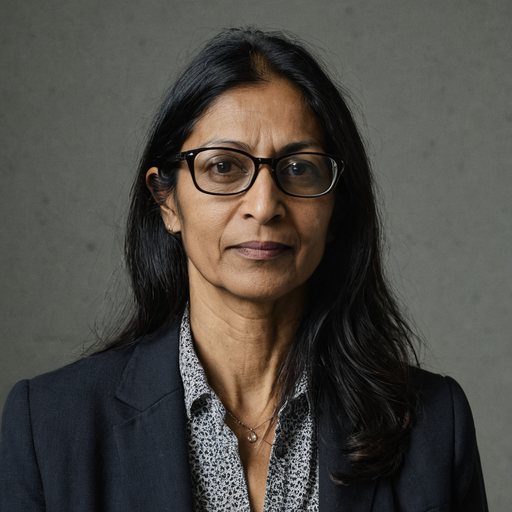 Dr. Amara PatelEconomy, business and world
Trump told reporters after the afternoon event that he was "seeing tremendous self-policing" and that his administration is weighing a 10-person committee to oversee the AI industry, according to CNBC. House Speaker Mike Johnson, who hosted the lunch with Trump, described the document as a statement of principles that are "voluntary on behalf of the industry."
Anthropic CEO Dario Amodei, Nvidia's Jensen Huang, Tesla's Elon Musk, Meta's Mark Zuckerberg, Google's Sundar Pichai, Microsoft's Satya Nadella and AMD's Lisa Su were on the guest list. So were OpenAI president Greg Brockman and Amazon founder Jeff Bezos. Trump said he plans to name a new AI czar within three to four days.
That is the American half of the picture. The European half is older and harder. The AI Act, which the EU has been phasing in, is now in its enforcement stage. In the days before the luncheon, HR Executive and App Developer Magazine ran pieces that framed the shift as one that follows HR content across borders and carries global implications for US technology companies. Those headlines are context, not new facts, but they set the terms of the collision. The contrast is structural rather than rhetorical. Washington produced a signature and a promise. Brussels produced a rulebook with dates attached, and the dates are already passing. The dossier does not contain the AI Act's article numbers or penalty ceilings, so the honest reading is narrower: one jurisdiction is asking, the other is requiring, and both are moving in the same quarter.
Voluntary in Washington, binding in Brussels
Amodei, speaking outside the White House, repeated his safety concerns and said rules to address those risks are "still under discussion." He added: "We all need to work together to make sure that we can win, and we can win safely." Su said she was "very encouraged" and described "a lot of optimism and a sense of responsibility" in the room.
"The main issue that you have and I have is we have to take responsibility for the dangers we're aware of," Palantir CEO Alex Karp told CNBC outside the White House on Tuesday. "All of us do. And by the way, American people don't want separate rules for tech people and for themselves."
Trump also called multibillion-dollar data centers a "very positive thing" despite local backlash ahead of the midterms, and said tech leaders "want to see communities that are safe and happy." The luncheon seating chart, posted to Trump's Truth Social account, put the president next to Huang and Musk. The event coincided with OpenAI's annual DevDay conference in San Francisco, and Apple's new CEO, John Ternus, was not on the guest list.
Meanwhile, OpenAI postponed the release of its GPT-6.1 Astra model over safety concerns, according to CNBC. MIT Technology Review's The Download newsletter on 29 September cited the BBC's report that the company said the model "didn't quite meet the bar," and separately noted an OpenAI apology for what the Guardian described as a "new kind of cyber incident" in Australia.
The compliance question nobody in the room answered
For European readers, the practical question is not whether an American accord is sincere. It is whether a US lab selling into the EU can satisfy a regulator that does not accept self-policing as evidence. The dossier gives no indication that the White House document was written with the AI Act in mind, and no indication that Brussels was consulted. That silence is the story's hinge.
It is also where the money sits. Apollo chief economist Torsten Slok wrote on 29 September that Wall Street's sector analysts are producing internally inconsistent forecasts. The analysts covering tech expect the sector's operating cash flow to more than double to roughly $2.4 trillion by 2028, an increase of over $1.2 trillion. Analysts covering tech's customers, the rest of the S&P 500, expect those companies to add much less. "Both cannot be right at the same time," Slok wrote.
The forecast matters for regulation because compliance costs, model reviews and deployment delays are exactly the kind of friction that turns an optimistic cash flow projection into a revised one. If the European market demands documentation that American self-regulation does not generate, the bill lands on the same labs that signed the White House document.
Safety claims meet sceptical biologists
The safety argument is not only a policy argument. It is also a marketing claim, and it is being tested in public. MIT Technology Review reported that Anthropic said its new molecular biology lab made its first discovery, with AI agents flagging a previously uncatalogued pattern around an enzyme, a pattern the company described as "reminiscent" of what led to CRISPR. Biologists pushed back. Some questioned whether finding a pattern amounts to a discovery. Another said his team had already found the same pattern, raising the question of whether Anthropic's system had learned from his conversations with Claude.
That dispute is a small, concrete version of the larger one. A voluntary accord leans on companies to describe their own progress and their own risks honestly. A regulator leans on documents. MIT Technology Review's own framing was blunt: what is novel for AI may be routine, unsurprising or simply not that consequential to a biologist, and grand claims can make real progress harder to recognise.
There is a worker's side too. Against Tech Oligarchy, a new book by labor organizers JS Tan and Clarissa Redwine reviewed by Bay Area Current on 28 September, traces a decade of tech worker organising from the Project Maven protests through the 2018 Google Walkout to more recent losses and standstills. Its opening quote, from venture capitalist Marc Andreessen in a 2025 interview, complains that "companies are basically being hijacked to engines of social change" and that "the employee base is going feral." The book's authors argue that the same firms now lobbying against binding rules spent years fending off their own employees.
What the EU can and cannot do from here
Europe's leverage is market access, not moral authority. The AI Act's enforcement phase, as the recent trade coverage describes it, creates obligations that follow the product rather than the company's headquarters. That is precisely the mechanism Washington's voluntary approach does not replicate, and it is why the two regimes will keep generating friction even if both sides say they share the same safety goals.
What the dossier does not show is any negotiated settlement between them. No transatlantic AI safety agreement appears in the seven sources, only a voluntary American document, a European rulebook mid-enforcement and a set of corporate statements. The EU's own position, as reported in recent headlines, is that it will keep pushing for global AI safety rules.
One more data point sits awkwardly next to all of this. Consumer Reports published research on 29 September from privacy researchers at Northeastern University, who tested 21 vehicles and their companion apps inside a Faraday tent at CR's Connecticut facility. Almost a quarter of the vehicle apps were sending personally identifiable information, including owners' names, VINs and precise locations, and the top recipients included Amazon, Google, Meta and Microsoft. Co-author Sarah Elizabeth Gillespie said: "It does not appear that a customer can buy a new car that does not track you."
Read together, the week's stories describe an industry that is being asked to police itself in one capital and to prove itself in another, while its own products keep generating the kind of evidence regulators tend to prefer. The White House accord has no enforcement date. The AI Act does. That asymmetry, not the luncheon, is what will decide which rules American AI companies actually follow.
Sources
6- 01Trump says he and tech leaders signed AI agreement that is 'morally binding'EN
- 02The Download: climate tech companies to watch and AI's discovery problemEN
- 03Tech's Trillion-Dollar Internal InconsistencyEN
- 04Your Car Is Sharing Data With Big Tech Companies, Study FindsEN
- 05The Book Your Tech Boss Doesn't Want You to ReadEN
- 06These Tech Workers Made ChatGPT Drive a Toyota CorollaEN
All figures and quotations in this text come from the sources listed below.
Content prepared by the editorial team with AI assistance.
Dr. Amara Patel
Comments
0- No comments yet — be the first.