Agility clears SPAC vote as humanoid factory pilots edge toward paid work
Shareholders of Churchill Capital Corp XI approved the SPAC's merger with Agility Robotics on 2 November, with more than 84% of votes cast in favour, The Robot Report reported on 3 November. The deal, expected to close on 4 November, should give the humanoid maker about $465 million in gross capital before expenses, down from the more than $620 million anticipated in June.
 Grace OkonkwoAI, models and technology
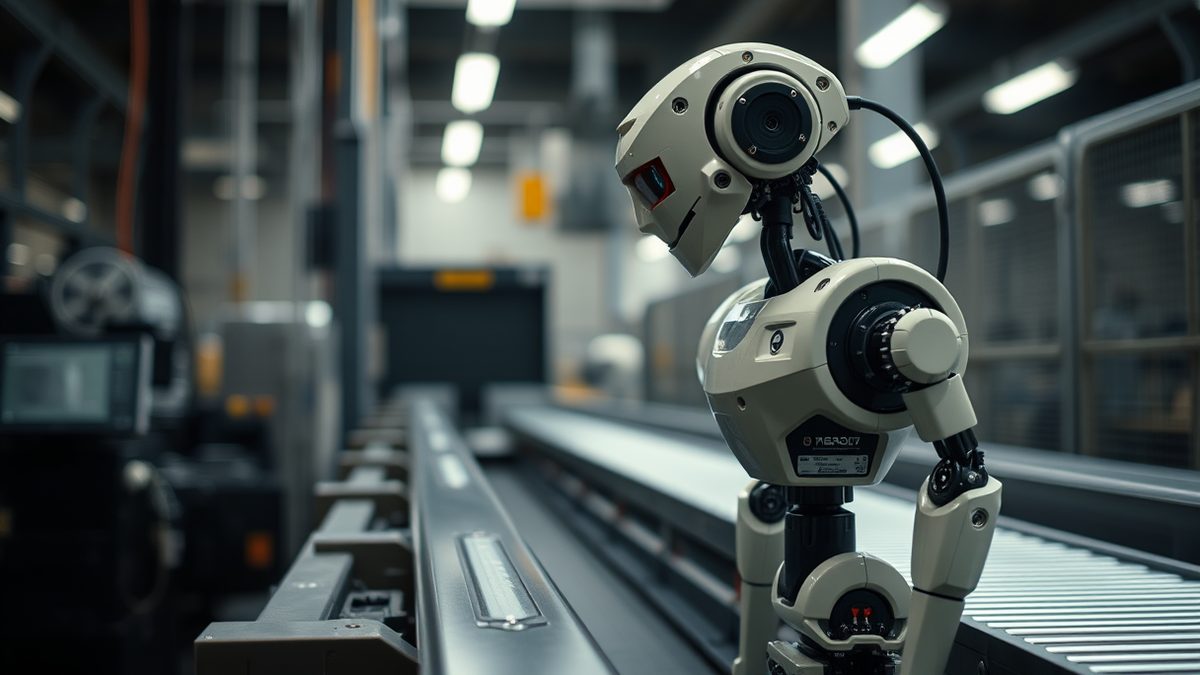
Agility clears the SPAC vote
More than 84% of votes cast at the special shareholder meeting on 2 November backed the merger between Churchill Capital Corp XI and Agility Robotics. The SPAC expects to close on 4 November, and the combined company is due to start trading on Nasdaq on 5 November under the ticker AGLT.
For factory operators, the sales pitch has shifted from demo videos to contracts priced by the hour or the pick. Agility says its Digit robots are already operating in 9 customer environments. Whether those pilots survive production targets is unproven: Interact Analysis found only 10% of the 20,000-plus humanoids produced last year reached real-world applications.
Churchill Capital stock finished up nearly 14% on 2 November.
The proceeds are smaller than first advertised. The transaction is expected to provide about $465 million in gross capital before expenses, against the more than $620 million anticipated when the merger was announced in June. About $164 million comes from Churchill's trust account, roughly $201 million from a PIPE led by Foxconn, and $100 million in equity funding Agility received after the initial announcement. The original deal valued Agility at a $2.5 billion pre-money equity value.
GXO Logistics, a partner since 2023, signed a multi-year Robots-as-a-Service agreement in 2024 and expanded in October to two more sites, Statesville, N.C., and Lebanon, Tenn.. Deployments there are expected to begin in early 2027 using Digit 4, with a move to Digit 5 as it becomes commercially available. Agricultural equipment maker AGCO signed a commercial agreement in October to pilot Digit at its Hesston, Kan., plant from 2027.
The software layer attracts early cheques
Bleu Robotics, a Paris startup founded in December 2025, raised a €5 million pre-seed round co-led by Contrarian Ventures and OVNI Capital. Kvanted, WEPA Ventures, Motier Ventures and Charlie Songhurst, a technology investor and board member at Meta, also participated.
Bleu sells software rather than hardware. Its abductive learning model learns a task from as few as ten operator demonstrations, and the company claims 99%+ accuracy. The target is to compress a full humanoid deployment from months to an hour or less.
"There isn't enough data on factory work, and there won't be internet-scale data, the kind LLMs were built on, for robots for a long time," said Benoît Berkoukchi, co-founder of Bleu Robotics. "Our methodology means we can do more with less."
Berkoukchi said most robotics companies are trying to train humanoids with millions of data points, an approach he argues does not suit manufacturing.
Tutor Intelligence raised $75 million in Series B funding led by Andreessen Horowitz, taking its total capital raised to $117 million. The Watertown, Mass. company, spun out of MIT CSAIL in 2021, charges by the hour or by the pick, with no upfront purchase and no long-term contract.
What is actually running in factories
The installed base remains small. The International Federation of Robotics counted 5 million industrial robots operating globally in 2025. Those machines repeat fixed tasks and cannot adapt to the high-mix, low-volume production now common in manufacturing, so the work still falls to people.
Tutor's own figures show growth from a low base: twice as many of its robots are working in almost four times as many facilities as a year ago.
The trade-show view from Daegu
South Korean manufacturers used FIX 2026 in Daegu, which ran through early November, to show humanoid hardware, dual-arm industrial systems and autonomous vehicle platforms. AeiROBOT displayed its ALICE-M1 humanoid.
The pitch is flexibility: machines that navigate human-built spaces without factory redesign. The reality is narrower. Most humanoid platforms shown at trade shows perform limited tasks under controlled conditions, BriefAsia reported, and hitting the dexterity and reliability of high-volume manufacturing remains an engineering problem.
The pressure behind the push is demographic. South Korea's working-age population has declined since 2020, pushing factories to automate repetitive tasks. For autonomous vehicles, the Ministry of Land, Infrastructure and Transport has authorised limited trials, but full commercial rollout depends on safety validation and liability structures that are not finished.
What happens next
Agility's near-term test is delivery. Early access for Digit 5 customers is expected in the first half of 2027, with general availability targeted for the end of that year. The company says it has more than $300 million in committed multi-year orders for Digit 5, a figure that is not revenue and depends on milestones and specifications. Its RoboFab plant in Salem, Ore., is designed for annual capacity of up to 10,000 robots.
Tutor says it is on track to have more than 1,000 robots under contract by the end of 2027, all built and deployed from the U.S..
The gap between those targets and the 10% of humanoids that reached real applications last year is the number to watch.
Sources
28- 01Churchill Capital XI shareholders approve $2.5B Agility Robotics humanoid SPACEN
- 02Tutor Intelligence raises Series B to scale model training, robot deploymentsEN
- 03Bleu Robotics raises €5 million to scale humanoid robot deployment in factoriesEN
- 04Bleu Robotics raises €5M to scale humanoid robot deployment in factoriesEN
- 05South Korea Advances Factory Automation at FIX 2026 Trade ShowEN
- 06Humanoid Robots in 2027: Tesla, Figure AI, and Agility Race to DeployEN
- 07Top 10 robotics developments of October 2026EN
- 08Aerospace & Defense Factory Automation Market - Global Forecast to 2036 | AI, Robotics, and Smart Factories Propel Market to USD 23.9 Billion at 10.5% CAGREN
- 09Android-Smartphones sichern Fotos jetzt automatisch auf Windows-PCsEN
- 10EPA throws in the towel on policing air pollution from factory farmsEN
- 11 China deploys 'world's first' 800-volt DC power system for massive AI data center EN
- 12CyberKord raises €2.7M to automate IT and cybersecurity operations with AIEN
- 13ARIA’s Scaling Inference Lab Deploys Lumai’s Optical Compute TechEN
- 14Gentherm designs ThermAffyx to secure, heat patients during robotic surgeriesEN
- 15Chinese automakers reportedly head to Beijing for talks on EU hybrid export quotasEN
- 1628 Zero-Day Findings in Less Than Two Days: What AI-Speed Discovery Means for RoboticsEN
- 17Solving the Interconnect Challenge in Modern Robotics: How 3M Is Engineering for Motion, Density, and UptimeEN
- 18VW’s EV Factory Is Now Taking Cars Apart. There’s Money In ItEN
- 19Penguin Solutions to Showcase Full-Stack AI Factory Platform Innovations at SC26EN
- 20Unusual robotic animals can prove their utilityEN
- 21 Astronauts deploy solar array on 100th US spacewalk by International Space Station crew members EN
- 22Toyota Is Betting $6.4 Billion a Year on Humanoid Robots and Factory AutomationEN
- 23How Hyundai Motor redefines the factory floor with robots and AI in its Singapore hub - Singapore Economic Development Board (EDB)EN
- 24CATL signs deal with Germany's Intilion to deploy 3 GWh of sodium-ion storage over 5 yearsEN
- 25Toyota advances humanoid robot push as manufacturing automation race intensifiesEN
- 26ByteDance accelerates robotics commercialisation with new recruitment driveEN
- 27How China ‘risk factors’ loom over Anthropic’s hotly anticipated IPO filingEN
- 28NVIDIA Unveils Minerva to Bring End-to-End Observability for AI FactoriesEN
All figures and quotations in this text come from the sources listed below.
Content prepared by the editorial team with AI assistance.
Grace Okonkwo
Comments
0- No comments yet — be the first.