AI Hiring Hits Two Tracks: Data Centre Trades Boom, Graduates Face 5.7% Jobless Rate
Data centre construction is pulling electricians and pipefitters into six-figure roles while recent graduates face a 5.7% unemployment rate, according to figures reported by CNBC on 25 and 26 September.
 Dr. Amara PatelEconomy, business and world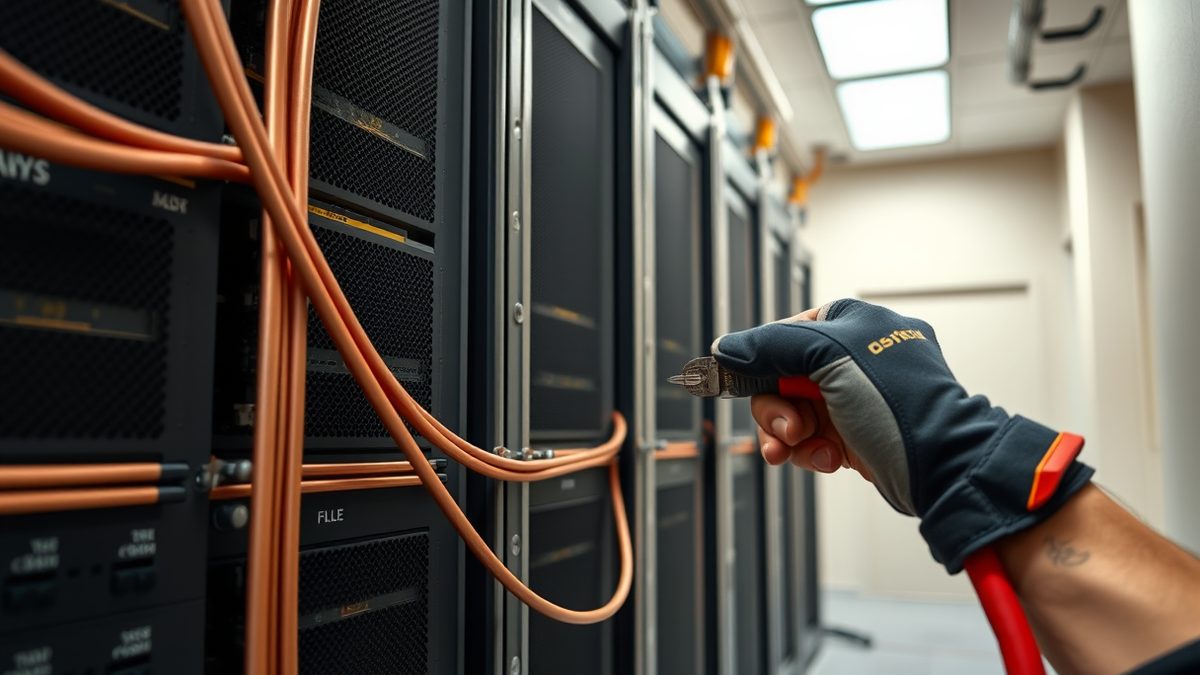
The AI economy is hiring, just not the people most commentary expected. Two CNBC reports published on 26 and 25 September describe a labour market splitting in two.
Blue-collar trades are being pulled into data centre construction. Graduates are pushed into the most automated stage of the hiring funnel. Start with the trades: CNBC reported on 26 September that welders, plumbers, HVAC technicians and electricians are in high demand for data centre buildouts. The jobs are real, but many of them are temporary construction roles tied to a single project. That distinction matters for anyone reading the headline numbers as a permanent shift.
ZipRecruiter labour economist Nicole Bachaud gave CNBC the sharpest number in the piece: the mean minimum salary for data centre jobs rose 125.1% year over year, to nearly $208,000. Bachaud cautioned that specialised engineering roles are pulling the average up, not paying every electrician a quarter of a million dollars. Postings for welders and pipefitters are up 164% year over year.
Maria Flynn, president and CEO of the nonprofit Jobs for the Future, told CNBC that data centres are only one piece of the demand. Grid upgrades, transport and cooling systems are converging at the same time, she said. On pay, Flynn put apprentice-level technicians at $40,000 to $60,000, with experienced electricians above $100,000.
Geography matters as much as skill. Bachaud told CNBC that Houston and Birmingham are seeing particularly strong growth, because land is available and building rules are easier. Coastal hubs with higher costs and tighter regulation lose out. An electrician in Birmingham, in other words, has a better market than one in Boston.
"Positive effects on the labor market are already visible, with an increased demand for cooling and HVAC engineers, industrial automation technicians, and traditional trade workers like construction workers and electricians."
That quote comes from Justin Sinkovich of Columbia College Chicago, also speaking to CNBC. He pointed to Louisiana, where Amazon committed $12 billion to a data centre with 540 on-site jobs, and Meta's Hyperion project carries a $27 billion price tag. Sinkovich argued those jobs cannot be offshored or done remotely, unlike much manufacturing and software work.
Now the other track. CNBC reported on 25 September that college graduates aged 22 to 27 had an unemployment rate of 5.7% as of June 2026, citing the Federal Reserve Bank of New York. That is a full percentage point higher than two years earlier for the same cohort. The unemployment rate for all young workers was 7.2%.
The underemployment figure is worse. According to the same NY Fed data, 42% of recent graduates are working in jobs that do not require a bachelor's degree, against 33.7% for all college graduates.
AI is not only changing which jobs exist. It is changing who sees a human first. LinkedIn research cited by CNBC found 66% of recruiters planned at the start of 2026 to increase their use of AI for pre-screening interviews, while 81% of job seekers had used or planned to use AI in their search. Both ends of the funnel are now automated.
Students are adapting on paper. Handshake, an early-career platform that has worked with OpenAI, told CNBC that 2026 graduating seniors mentioned AI skills on their resumes at twice the rate of the class of 2022. Its analysis found 74% of those mentions tied to real projects rather than coursework.
The National Association of Colleges and Employers, or NACE, reported to CNBC that AI skills appeared in 16.5% of job descriptions in the spring, up from 10.5% the previous autumn. Overall, 28% of employers said they want early-career hires who can use AI at work.
But the NY Fed is more cautious than the headlines suggest. CNBC reported that its study of job postings found "while AI may be contributing to recent labor market developments, it is not the main driver of the slowdown in hiring." Its employer surveys found firms mostly intend to absorb AI through retraining, with limited effects on hiring. That is a softer conclusion than much of this week's commentary assumes.
There is also a political risk hanging over the construction boom. CNBC noted on 26 September that states including New York and Texas have moved to slow data centre development, and local freezes have followed public backlash. If those freezes spread, the temporary construction demand that is currently lifting welders and pipefitters could cool before the permanent jobs arrive.
For context on the scale of the shift, an NBER conference paper posted on 22 September examines AI and labour market reallocation. The PDF is the dossier's oldest source and is better treated as background than as a news peg.
Separately, and outside the jobs story, pv magazine reported on 26 September that China's Zhejiang province has opened its electricity spot market to independent grid-side batteries, covering 40 projects totalling 2.54 GW/5.1 GWh, with price-and-quantity bidding planned from 1 January 2027. It is a reminder that the infrastructure behind AI and electrification is being rebuilt province by province, and that the workers who build it are the ones this week's data says are in demand.
The two CNBC reports do not contradict each other so much as describe different ends of the same pipeline. Trades get the buildout. Graduates get the screening software, the 5.7% unemployment rate and, for 42% of recent cohorts, a job below their qualification level.
Sources
5- 01The blue-collar AI job market is booming. Will data center backlash make it go bust?EN
- 02How recent grads and college students should be thinking about AI, the CV, and the job marketEN
- 03Chinese province moves grid-side batteries into spot marketEN
- 04Artificial Intelligence and Labor Market ReallocationEN
- 05Tone-Deaf Trillionaire Launches $200,000 Electric Car Into Sour US MarketEN
All figures and quotations in this text come from the sources listed below.
Content prepared by the editorial team with AI assistance.
Dr. Amara Patel
Comments
0- No comments yet — be the first.