Auckland trial plugs 100 EVs into the grid as batteries for homes
Up to 100 two-way chargers will be installed in Auckland homes and businesses to test whether electric cars can double as household batteries, the Energy Efficiency and Conservation Authority said on 29 September.
 Peter LindqvistSport, cars and travel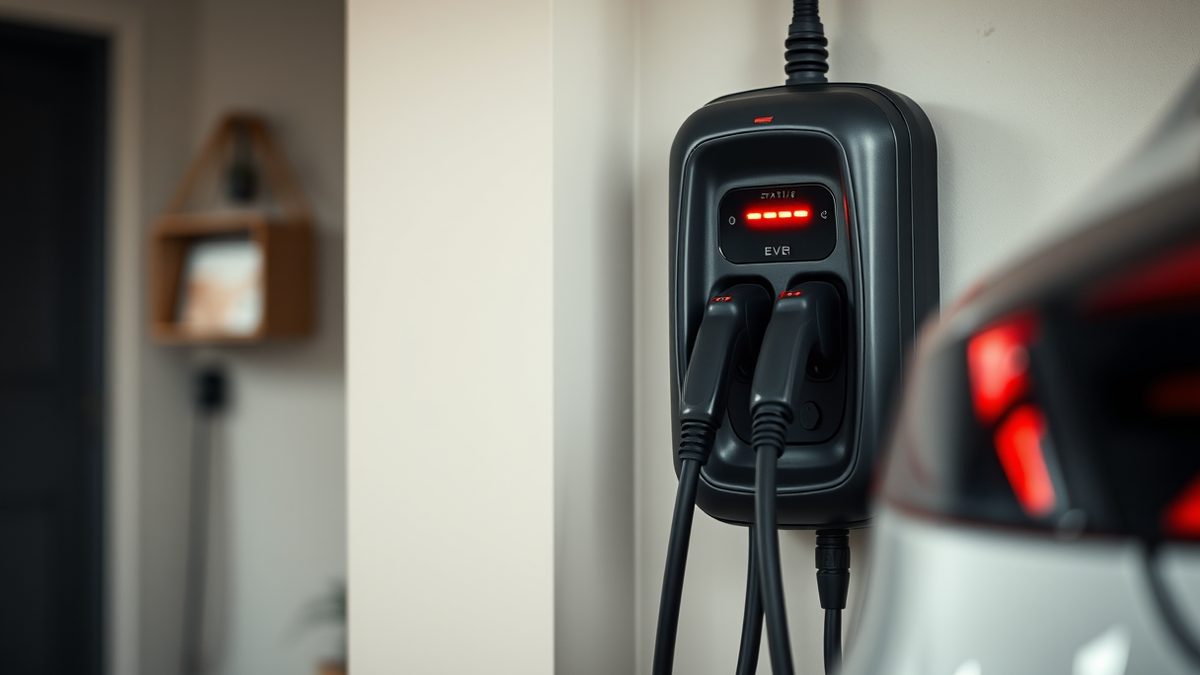
The trial, run with lines company Counties Energy, is the newest of several efforts in the dossier to turn parked electric vehicles into grid storage. EECA said the chargers let an EV charge as usual, then push electricity back to a home, a business, or the national grid at times of peak use.
Households could charge when power is cheap and sell the surplus back when prices are high, according to RNZ. Murray Bell, EECA's policy and regulation manager, said the findings would build an evidence base for future policy. He told RNZ the technology is known as vehicle-to-household or vehicle-to-grid, and that a charged car can run a home for "up to three or four days" during an outage.
Chargers scarce, cars cautious
The obstacles are practical, not conceptual. Bell said two-way chargers that can discharge to the grid are not widely available in New Zealand, and the technology is relatively untested there. Few EV and charger combinations are compatible, and manufacturers worry that third-party equipment will affect battery performance. Older household wiring and the question of where to put a charger add to the friction.
"We want this basically to be plug-and-play," Bell said, according to RNZ.
Counties Energy, which runs the OpenLoop charging service, will recruit participants and deploy chargers. Its chief network and digital officer, Moonis Vegdani, said the company would first find willing EV manufacturers, then target owners of particular models. BYD, now the second-most popular EV brand in New Zealand behind Tesla, took part in Australian trials. The New Zealand trial follows a smaller one already expanding in Queenstown.
The financial case is being tested alongside the engineering. The Ministry for Business, Innovation and Employment expects New Zealand's electricity demand to rise by 35 to 82 per cent by 2050 as transport and industry shift away from fossil fuels. Bell said EECA's work puts the avoided cost of extra poles and wires in the billions of dollars. Australia has already run large two-way charging trials, and the technology is available in some circumstances in New South Wales and South Australia, RNZ reported.
Vermont already runs the model at scale
On the other side of the world, a virtual power plant built from home batteries has become Vermont's largest power source. The BBC reported on 29 September that more than 5,500 homes in the state have battery systems installed under a programme run by Green Mountain Power, the state's largest utility. Participants pay $55 a month over a 10-year lease for two batteries.
Pollyanna Bladyka, a resident of Springfield in eastern Vermont, told the BBC she was about to buy a $12,000 gas generator in 2024 when an electrician mentioned the scheme. "I'd like to say I did it for the environment, but I did it for myself," she said. "But I don't mind helping." She has not lost power since the system was installed, and says the battery should run her house for two days if heavy appliances are kept off.
Green Mountain Power says seven of the 10 most damaging storms in its history occurred in the last decade, causing more than $225m in damage. The BBC cites a 2022 Associated Press analysis of government data showing outages have increased in Vermont and across the US. According to internal analysis by Wood Mackenzie, the US now has over 40GW of virtual power plant capacity, small next to roughly 600GW of natural gas and 200GW of coal, but a 2025 US Department of Energy report says 160GW could be available by 2030.
Delhi shows what a grid can do
IEEE Spectrum reported on 29 September that Delhi cut electricity losses from over 50 per cent in 2002 to 5 to 6 per cent in 2026, a level it compares with France and Belgium and says is better than Greece and Serbia. The magazine's account, written by a professor of electrical engineering at Jamia Millia Islamia, describes daily outages and flickering voltage in the early 2000s, caused by an ageing distribution network and utilities that were paid for only a fraction of the power they delivered.
A quarter century of work by the city government and its distribution utilities changed that. The lesson sits awkwardly beside the battery pilots: the cheapest capacity is often the capacity a grid stops wasting.
Not every storage idea is aimed at the grid. Chemical & Engineering News reported on 28 September that researchers at MIT built a swallowable battery from a paper-like material that powered small devices inside pig stomachs for three days before breaking down. The team, led by mechanical engineer Giovanni Traverso, made a cathode from cellulose nanofibers, molybdenum trioxide and activated carbon, with a magnesium alloy anode and an electrolyte of choline chloride and lactic acid. Voltage fell from 1.84V to 1.45V over three days, and the device degraded within a few months.
Yasser Khan, an electrical and computer engineer at the University of Southern California who was not involved in the work, told C&EN that powering electronics inside the body is one of the field's biggest challenges, and that extensive biocompatibility testing is still needed before human use. The same caution applies to the grid trials now starting in Auckland. Two-way charging works in theory, and in pockets of Australia. Whether it works at the scale of a city, with mixed cars, mixed wiring and nervous manufacturers, is what the next phase is meant to establish.
Sources
4- 01EVs being trialled as giant batteries to power homes for less in AucklandEN
- 02Vermont replacing power plants with home batteriesEN
- 03How Delhi cut electricity loss from 50 to 5 percentEN
- 04This Battery Is Ready to EatEN
All figures and quotations in this text come from the sources listed below.
Content prepared by the editorial team with AI assistance.
Peter Lindqvist
Comments
0- No comments yet — be the first.