Two-Way Chargers, Paper Batteries and Delhi's Grid: EV Storage News Round-Up
New Zealand's Energy Efficiency and Conservation Authority said on 29 September that it will install up to 100 two-way chargers in Auckland homes and businesses, in a trial testing whether electric cars can double as household batteries.
 Peter LindqvistSport, cars and travel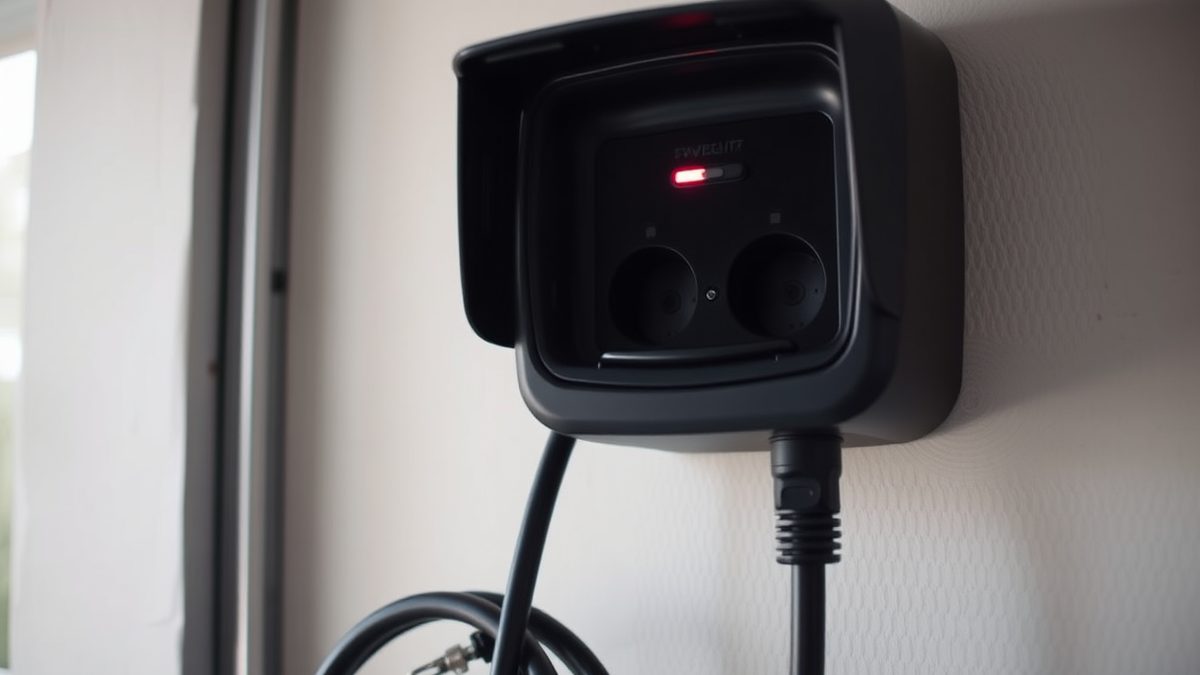
RNZ reported the trial on 29 September. It caps a week that produced evidence on battery durability, grid losses and even a swallowable power source. EECA said the two-way chargers let an EV charge as usual, then send electricity back to a home, a business or the national grid at peak times.
Murray Bell, EECA's policy and regulation manager, said households could charge when power is cheap and sell the surplus back when prices are high. "Because the batteries in the car are so large these days, you can run your household for up to three or four days," Bell said, according to RNZ. He added that compatible combinations of EVs and two-way chargers are still scarce in New Zealand, and that manufacturers worry about battery performance when third-party equipment is attached. Older household wiring and charger placement are practical problems too.
Counties Energy, which runs the OpenLoop charging service, will recruit participants and deploy the hardware. Its chief network and digital officer, Moonis Vegdani, said BYD, now the second-most popular EV brand in New Zealand behind Tesla, had taken part in Australian trials and the company would look at a similar arrangement. The trial builds on a smaller one already expanding in Queenstown.
Vermont already runs the model at scale
Vehicle-to-grid is not a laboratory idea any more. The BBC reported on 29 September that Green Mountain Power, Vermont's largest utility, has more than 5,500 home battery systems enrolled in a lease programme that costs participants $55 a month over ten years. The aggregated fleet has become the state's largest single power source.
Pollyanna Bladyka, a resident of Springfield in eastern Vermont, told the BBC she chose the batteries over a $12,000 gas generator. "I'd like to say I did it for the environment, but I did it for myself," she said. "But I don't mind helping." According to the BBC, seven of the ten most damaging storms in GMP's history have occurred in the last decade, causing more than $225m in damage.
The US now has over 40GW of virtual power plant capacity, according to internal analysis by Wood Mackenzie cited by the BBC, against roughly 600GW of natural gas and 200GW of coal. A 2025 Department of Energy report cited in the same piece put the accessible total at 160GW by 2030, equal to about 20% of expected peak demand.
Delhi shows what a fixed grid can do
Where Vermont spreads storage across homes, Delhi spent a quarter century repairing the wires. IEEE Spectrum reported on 29 September that the city's power losses have fallen from over 50% in 2002 to 5 to 6% in 2026, a level the magazine compared to France and Belgium, and better than Greece and Serbia.
The author, a professor of electrical engineering at Jamia Millia Islamia, described daily outages in the early 2000s and utilities that were paid for only a fraction of the electricity they delivered. The lack of funds blocked investment in better infrastructure, a loop that took regulation and utility reform to break. The piece is a reminder that storage and vehicle-to-grid trials sit on top of a distribution network that has to work first.
What the data says about pack life
Households considering a two-way charger are effectively betting on their battery lasting. Two guides published on 1 October set out the current evidence. Drive Smart Tools cites the US Department of Energy's expectation of 12 to 15 years in moderate climates and 8 to 12 years in more extreme ones, and Geotab's 2026 analysis of more than 10,000 EVs, which found average degradation of about 1.8% a year. Drive Quip notes that most manufacturers warrant packs for 8 to 10 years or 100,000 to 150,000 miles, with some premium models extending to 120,000 miles or more, and that warranty remedies often kick in when capacity falls to around 70% to 80% of the original figure.
Neither guide is a peer-reviewed study, and both describe averages rather than predictions for a specific car. The practical advice converges: avoid sitting at 100% or near empty for long periods, moderate fast charging where possible, and follow the owner's manual over generic rules. That matters for vehicle-to-grid economics, because a pack that is discharged to a house every evening is cycling more often than one that is simply driven.
India's rules, and a CNG counterpoint
India's CAFE III fuel-efficiency norms, covered by The Economic Times, take effect on 1 April 2027 and run to March 2032. The framework gives triple credits for battery EVs, allows credit trading, and introduces carbon-neutrality factors, according to the outlet's coverage. Small cars get no special benefit. Industry bodies including SIAM and Mahindra welcomed the five-year certainty, the same report says.
Not everyone agrees on the direction of travel. A TERI study cited by The Economic Times found that CNG currently has a lower overall lifecycle environmental burden than EVs across most vehicle categories in India, mainly because the grid is coal-heavy. That finding sits awkwardly beside the credit structure designed to push manufacturers toward batteries, and it is a live disagreement rather than a settled one.
Storage is being built regardless. Adani Green Energy has expanded its battery energy storage system to 6.63 GWh, a figure the company says can power around two million homes daily and took 14 months to reach, with a 50 GWh target over five years. BLive, meanwhile, says it wants to deploy 10,000 EVs over three years through a franchise model aimed at 100 entrepreneurs.
A battery you can swallow
The strangest item of the week came from Chemical & Engineering News on 29 September. Researchers led by Giovanni Traverso, a mechanical engineer at MIT, built a paper-like battery from cellulose nanofibers, molybdenum trioxide and activated carbon, with a magnesium alloy anode and an electrolyte made by melting choline chloride and lactic acid. Encased in beeswax and delivered by endoscope into pig stomachs, it powered an RFID tag and an electrical stimulation device for three days, with voltage falling from 1.84 V to 1.45 V.
The device disintegrated into tiny fragments within a few weeks, and the whole assembly degraded within a few months, according to the report in Nature Chemical Engineering. Yasser Khan of the University of Southern California, who was not involved, called powering electronics inside the body "one of the biggest challenges in our field" and said the work is "an important step toward swallowable devices." He also said extensive biocompatibility testing is needed before human use.
Traverso said thickness and encapsulation can be tuned, and that depending on design the batteries could work for days to weeks. That is a long way from a car park in Auckland, but the underlying problem is the same one EECA is trying to solve: a battery is only useful if it is safe, predictable and compatible with whatever is plugged into it.
Sources
7- 01EVs being trialled as giant batteries to power homes for less in AucklandEN
- 02The US state replacing power plants with home batteriesEN
- 03How Delhi Cut Electricity Loss from 50 to 5 PercentEN
- 04How Long Does an Electric Car Battery Last? Lifespan, Warranty, and ReplacementEN
- 05How Often Do You Change Batteries in an Electric CarEN
- 06Electric vehicle battery technologyEN
- 07This Battery Is Ready to EatEN
All figures and quotations in this text come from the sources listed below.
Content prepared by the editorial team with AI assistance.
Peter Lindqvist
Comments
0- No comments yet — be the first.