Austria Opens Peer-to-Peer Power Sharing on Oct 5 as Grid Investment Race Widens
Austria will let households and companies trade self-generated electricity directly from Oct 5, under rules that take effect on Oct 1, according to pv magazine, which reported the framework on 28 September.
 Dr. Amara PatelEconomy, business and world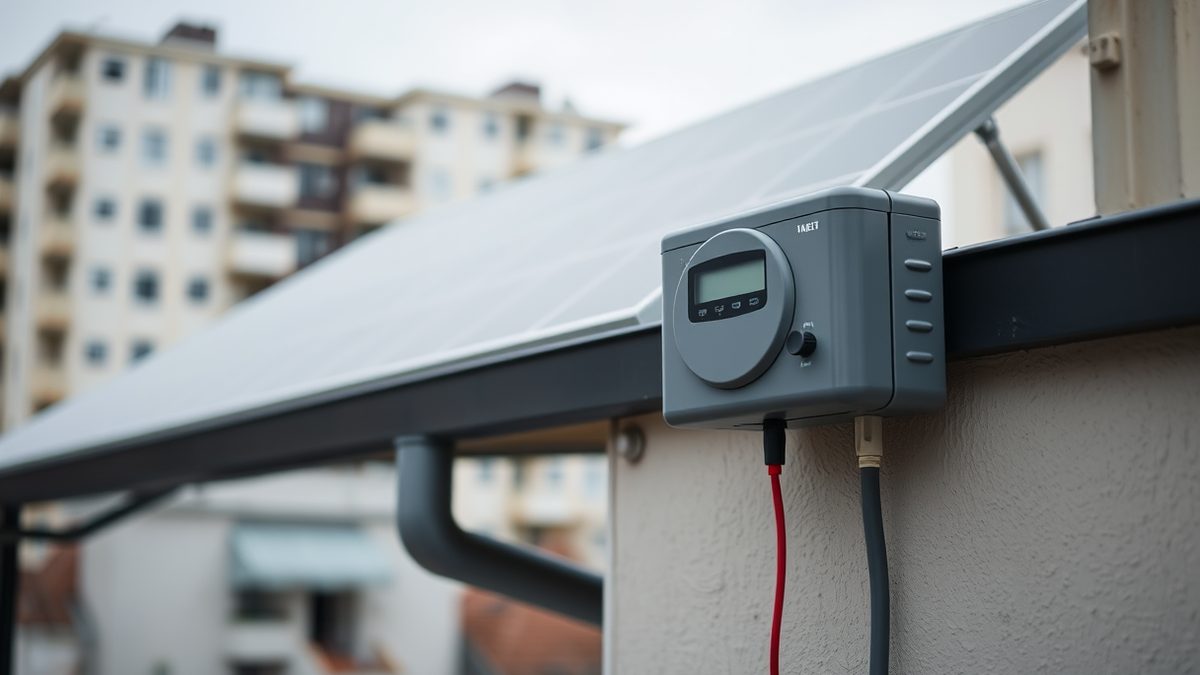
The coordination office for Austria's energy communities says the new rules will be in force on Oct 1, with practical peer-to-peer sharing starting Oct 5. Participants no longer need to set up a separate legal entity. Billing can run directly between the contracting parties or through a service provider or registered organiser. Unlike energy communities, the arrangements may be operated for profit.
That last detail matters.
Profit-making is not normally the point of a community energy scheme, and Austria has now drawn a line between the two models. The first phase is narrow: only metering points assigned to the same grid operator can take part, so a seller in one distribution area cannot yet trade with a buyer in another.
Money arrives later than the electrons
The commercial incentives lag the technical launch. An amended grid-charge regulation is scheduled to take effect on Jan 1, 2027, and only from that date will planned reductions apply to local and regional citizen energy communities, peer-to-peer arrangements and joint generation facilities. Between October and December 2026, grid operators cannot apply the reduced charges. Until the end of 2026, according to the coordination office, only members of local or regional renewable energy communities remain eligible for reduced grid usage charges.
Nationwide sharing across multiple grid areas is planned from April 2027. Participants who want reduced tariffs will have to define a specific proximity zone when registering. The framework distinguishes between main line, site, local and regional zones.
Austria is not building this in isolation.
The money moving into grid and electrification infrastructure is coming from several directions at once, and some of it is public. On Thursday, the Trump administration put $1.9 billion into 31 projects across 26 states through the Department of Energy's SPARK grant programme, as Canary Media reported on 24 September. The programme was created last year to repurpose money obligated by Congress in the 2021 bipartisan infrastructure law. Participating utilities pledged a collective $3.35 billion in matching funds, bringing total investment to $5.25 billion. Recipients include American Electric Power, CenterPoint Energy, Duke Energy, Eversource Energy, Rocky Mountain Power and PPL Electric Utilities, plus four public power utilities and rural electric cooperatives in Arizona, New Mexico and North Carolina.
Washington splits the cost of squeezing more out of existing wires
Much of the money goes to advanced conductors and dynamic line rating, the sensor and software systems that assess a line's real capacity from hour to hour. Canary Media notes that studies from the DOE, utilities and clean energy think tanks have found these technologies deliver benefits far greater than their deployment cost, yet adoption has been slow because utilities are wary of new technology and because regulated profits favour building new assets instead. Energy Secretary Chris Wright said the grants will "get more out of the infrastructure we already have, move more electricity across the grid, and help deliver affordable, reliable, and secure power that will fuel American prosperity for decades to come."
Two projects dominate the list: a $1.2 billion effort headed by the Colorado Energy Office and an $832 million project by the Oklahoma Office of Management and Enterprise Services. Each received a $250 million grant. Both are meant to expand capacity to share power between the Eastern and Western US grids.
Private capital is moving too. Nordic energy company Fortum has joined Norrsken Evolve as a limited partner, Tech.eu reported on 25 September, following the final close of the pre-seed fund's oversubscribed €62 million raise this summer. Norrsken Evolve has backed more than 80 companies, 75 per cent of which have gone on to raise follow-on investment. Fortum's Gustav Eilertsen said the partnership strengthens the company's connection to firms working on electrification, flexibility and industrial decarbonisation. Johan Attby, a general partner at Norrsken Evolve, framed the value in operational terms: "What Fortum brings is the operational depth that financial investors cannot: real knowledge of how energy is generated, moved and sold."
Heavy vehicles become a grid question
Electric trucks and buses are shifting from a transport story to an infrastructure one. Volvo's new generation of heavy-duty electric trucks was named International Truck of the Year 2027 at IAA Transportation in Hanover, Germany, CleanTechnica reported on 27 September. It is the second time the Volvo FH Electric has taken the award, after 2024. Series production of the next generation began on Sept 14 at the Tuve plant in Gothenburg, with additional production planned in Ghent, Belgium. The flagship FH Aero Electric claims up to 700 kilometres on a single charge and supports megawatt charging. Volvo says about 7,000 of its electric trucks have accumulated roughly 500 million kilometres since 2019.
Megawatt charging is the constraint. Ars Technica reported on 26 September that Tesla launched high-volume Semi production in Sparks, Nevada, with a long-range version estimated at 500 miles per charge and a standard version at 325 miles. Tesla's website showed two public megawatt chargers operating in the LA area, though Dan Priestley, who leads the Semi programme, says the company plans to open 30 by the end of the year. An alliance of shippers including Microsoft and PepsiCo placed an order for 2,500 Semis, to be delivered starting this year and through the next 18 months. Ars Technica reports that if those trucks reach customers they would nearly double the number of heavy-duty electric trucks on US roads today.
Fleet operators are already past the pilot stage. Electrek reported on 26 September that JUNA, a joint venture between German logistics firm sennder and Sweden's Scania, has deployed its 110th battery-electric truck and plans to add as many as 40 more before the end of the year. Its Scania fleet has travelled more than 3.9 million emissions-free kilometres across Germany, Italy, Poland and the Netherlands. Scania's R45 packs a 450 kW powertrain and a 624 kWh battery, hauling up to 40 tonnes roughly 350 km per charge.
Demand from vehicles eventually lands on the distribution grid. Canary Media reported on 23 September that First Student and Con Edison have completed the first phase of a $9 million electric school bus pilot in East New York, Brooklyn, with 10 buses in service and 40 more due by June. The aboveground charging design saved nearly 20 per cent in project costs and cut about a month from the timeline, according to the company. Con Edison forecasts that electric buses, trucks and other commercial vehicles will add over 100 megawatts of electricity demand by 2030. First Student's chief executive, John Kenning, said the goal is to build vehicle-to-grid and facility-to-grid capability of up to 10 megawatts over the next couple of years. Across the US, more than 8,500 electric school buses were operating as of June 2026, up 66 per cent year on year, according to the World Resources Institute.
The Austrian model points in the same direction: more devices, more flexible demand, and a grid bill that arrives after the hardware does.
Sources
7- 01Austria to enable peer-to-peer electricity sharing from OctoberEN
- 02Advanced grid tech gets a $1.9B DOE boostEN
- 03Fortum backs Norrsken Evolve's €62M fund to accelerate Europe's electrificationEN
- 04Volvo's Electric Trucks Win International Truck of the Year 2027 at IAAEN
- 05Tesla's big electric truck faces an even bigger infrastructure challengeEN
- 06JUNA puts more than 100 Scania electric semi trucks to workEN
- 07A new fleet of electric school buses hits New York City streetsEN
All figures and quotations in this text come from the sources listed below.
Content prepared by the editorial team with AI assistance.
Dr. Amara Patel
Comments
0- No comments yet — be the first.