AI jobs: data centres create blue-collar work, grads still wait for the entry-level hit
AI is hiring welders, electricians and pipefitters for data centre buildouts in the US, but state and local pushback could slow that demand, CNBC reported on 26 September. Separate data shows recent graduates still face an unemployment rate of 5.7%.
 Dr. Amara PatelEconomy, business and world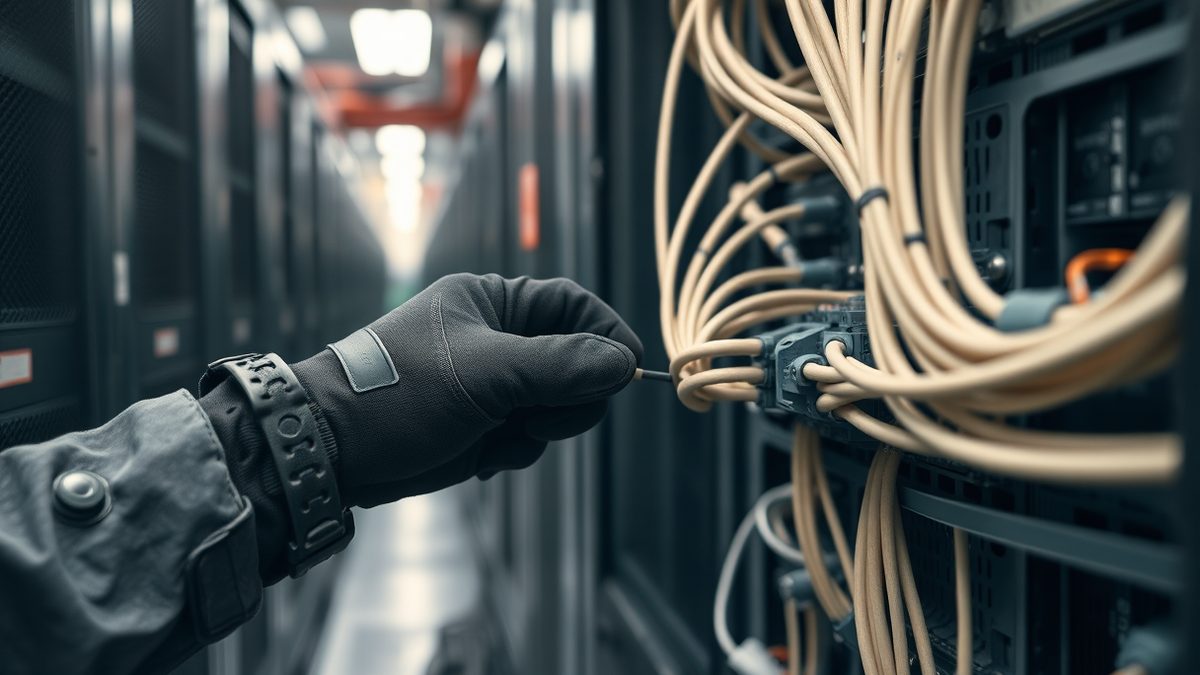
On 26 September CNBC reported that welders, plumbers, HVAC technicians and electricians are in high demand for data centre construction. That is the newest datable development in the file. It sits next to older, more cautious research: the Federal Reserve Bank of New York found hiring has slowed overall but is not concentrated in entry-level jobs most exposed to AI, and the National Association of Colleges and Employers sees a gap between what employers want and what students believe.
States including New York and Texas are moving to slow development, and local freezes are spreading. The AI jobs story is not one story. It is at least three, and they are moving at different speeds.
What the data centre buildout is actually paying
CNBC reports that building and maintaining data centres, and the wider AI ecosystem, requires a new generation of HVAC technicians, construction workers, line workers and pipefitters. Maria Flynn, president and CEO of the nonprofit Jobs for the Future, told the outlet that data centres are only one piece of a larger puzzle that also includes transport upgrades and grid modernisation. "We are seeing major sources of demand that are converging at the same time," Flynn said.
The pay numbers CNBC cites are concrete. Flynn said an apprentice-level technician can take home $40,000 to $60,000, while experienced electricians command north of $100,000. Nicole Bachaud, a labour economist at ZipRecruiter, told the outlet that the mean minimum salary for data centre jobs spiked 125.1% year over year to nearly $208,000. She attributed that to highly specialised engineering roles pulling the average up. Postings for welders and pipefitters are up 164% year over year, according to Bachaud's data, though CNBC notes that a small sample size may be part of the explanation.
Geography matters. Houston and Birmingham have seen particularly strong growth, Bachaud said, because land is available and building rules make development easier, cheaper and faster than in coastal hubs. "That means an electrician or pipefitter in Birmingham will probably have more of a buyer's market than one in Boston," CNBC wrote.
Justin Sinkovich, an associate professor at Columbia College Chicago, gave the outlet specific project numbers. He said Amazon committed $12 billion to a new data centre in Louisiana with 540 new on-site jobs, including 1,700 electricians, technicians and security personnel, and that Meta's Hyperion project in Louisiana is worth $27 billion. "These projects create demand for on-site workers and therefore cannot be offshored or conducted remotely, unlike manufacturing and software," Sinkovich said.
The same CNBC piece flags the risk plainly. Recent moves by states including New York and Texas to slow development, plus local freezes across the US in response to public backlash, could affect the labour market trend. Many of the construction jobs are temporary by nature. The piece does not resolve what happens to those workers when a buildout ends.
The graduate side of the ledger
CNBC reported on 25 September that, according to the Federal Reserve Bank of New York, college graduates aged 22 to 27 had an unemployment rate of 5.7% as of June 2026. That is a full percentage point higher than two years earlier for that cohort, and above the national average. The unemployment rate for all young workers was 7.2% in June. The underemployment rate, meaning college graduates working in jobs that do not require a bachelor's degree, reached 42% for recent graduates against 33.7% for all college graduates.
AI is now part of the hiring funnel itself. LinkedIn research cited by CNBC found 66% of recruiters said at the start of 2026 they planned to increase their use of AI for pre-screening interviews, while 81% of job seekers said they had used or planned to use AI in their search. Michela DiLorenzo, a Seton Hall student and student editor at The Setonian, told CNBC's Jon Fortt on Friday that the technology is changing how students approach life after graduation. "AI is really changing the motivation that students have going into the job market," she said.
Handshake, an early-career platform that has worked with OpenAI on student tech skills, says graduating seniors in 2026 mentioned AI skills on their resumes at twice the rate of the class of 2022. Its analysis found 74% of those mentions were tied to real-world projects rather than coursework. "The data tells us that early talent isn't being displaced by AI, they're being amplified by it," Handshake wrote in a blog post, adding that resumes alone are not enough.
Employer demand is rising on paper. NACE says the requirement for AI skills appeared in 16.5% of job descriptions in the spring versus 10.5% the previous autumn, and that 28% of employers are seeking early career talent who can use AI at work. NACE also flags what it calls a striking disconnect between some members of Gen Z and the labour market.
So far the displacement thesis is not showing up in the aggregate numbers. CNBC cited New York Fed research on job postings: "while AI may be contributing to recent labor market developments, it is not the main driver of the slowdown in hiring." The same research found employers mostly intend to fold AI in through retraining, with limited effects on hiring. That is a careful finding, not a verdict, and the paper itself, an NBER conference paper dated 22 September, is titled Artificial Intelligence and Labor Market Reallocation.
Where the two stories meet
They meet in the labour market's plumbing. One part of the AI economy needs physical infrastructure that cannot be imported or run remotely, and it pays for it. Another part is changing how white-collar and entry-level hiring works, and the data there is still ambiguous. The two forces could offset each other in national totals while producing very different outcomes for a pipefitter in Birmingham and a 2026 graduate in Boston.
There is a third thread in the file, further from the labour market but part of the same buildout. On 26 September, pv magazine reported that China's Zhejiang province has set market rules for 40 grid-side storage projects totalling 2.54 GW/5.1 GWh, with full price-and-quantity bidding planned for 2027. The regulatory statement was issued on 23 September. It follows China's 2025 decision to scrap its energy storage mandate for renewable plants and the capacity price floor for grid-scale storage set in February.
Two other items in the dossier are marketing and leadership content rather than labour data. The Next Web published a piece on 27 September on measuring B2B marketing by revenue rather than leads, citing Gartner's 2026 finding that B2B buyers use an average of seven information sources during a purchase and that 45% turn to generative AI in their research. pv magazine published a 25 September report from Solar & Storage Live UK 2026 on inclusive leadership, in which Liam Tattershall of Solarport said belonging alone "doesn't get you the breakthrough". Neither adds numbers on AI and employment, and neither is used here as evidence about the labour market.
What the file supports is narrower than the headlines. Data centre construction is a real and measurable source of blue-collar demand, with specific pay figures and specific projects, and a real political risk attached. The graduate labour market is weaker than it was two years ago by the New York Fed's own numbers, but the same institution says AI is not the main driver of the hiring slowdown. Anyone claiming a clean answer is going beyond what the data in front of them shows.
Sources
6- 01The blue-collar AI job market is booming. Will data center backlash make it go bust?EN
- 02How recent grads and college students should be thinking about AI, the CV, and the job marketEN
- 03The inevitable problem with measuring B2B marketing by leadsEN
- 04Chinese province moves grid-side batteries into spot marketEN
- 05Inclusive leadership: turning diverse perspectives into innovation and impactEN
- 06Artificial Intelligence and Labor Market ReallocationEN
All figures and quotations in this text come from the sources listed below.
Content prepared by the editorial team with AI assistance.
Dr. Amara Patel
Comments
0- No comments yet — be the first.