Beijing Presses Washington on Chip Software Curbs as New Travel Rules Hit AI Staff
China's Ministry of Commerce called on the United States to drop restrictions on semiconductor software sales to Chinese firms, in comments published by the Beijing Post on Thursday, as new reporting says Beijing has extended overseas travel controls to the families of senior AI and chip executives.
 Dr. Amara PatelEconomy, business and world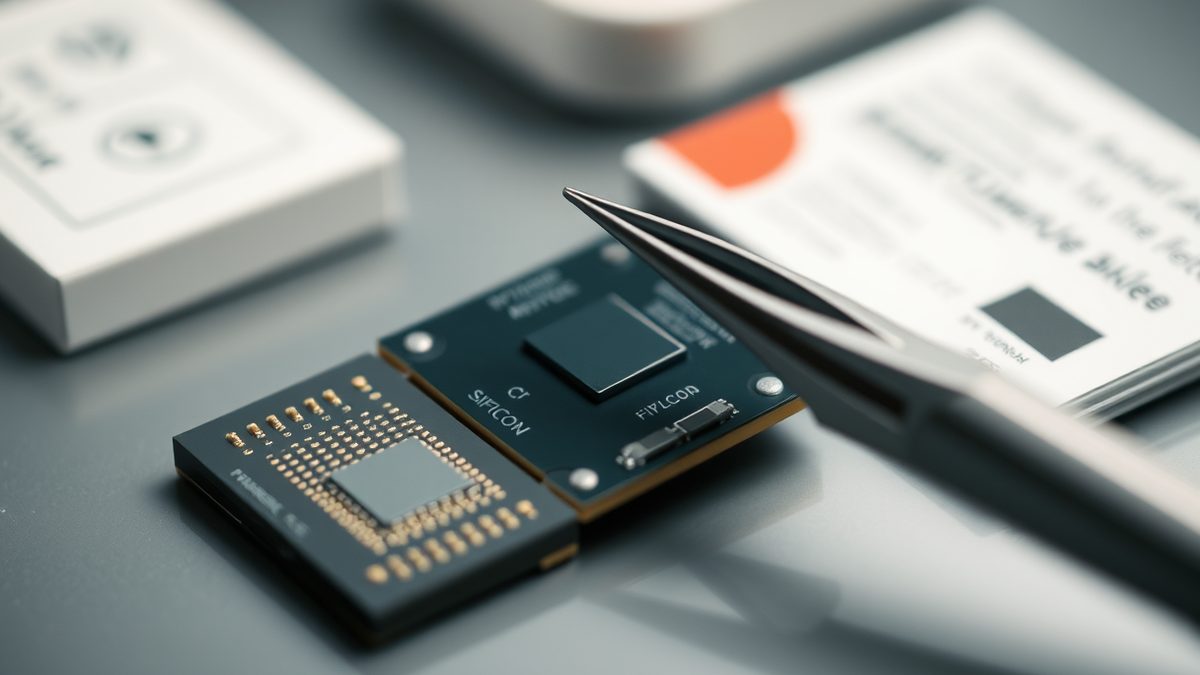
The Chinese ministry's spokesperson, He Yongqian, said economic and trade teams on both sides had stayed in contact since talks in Geneva and that mutual concerns still needed to be addressed, according to the Beijing Post. The outlet also reported that Washington had told suppliers of electronic design automation tools, among them Cadence, Synopsys and Siemens EDA, to stop providing technology to Chinese entities. Those instructions went out by letter through the Bureau of Industry and Security.
Markets moved fast. The Beijing Post put Synopsys shares down 9.6% and Cadence down 10.7%, while Chinese EDA names Primarius Technologies and Semitronix rose. Those figures come from the outlet's own account and have not been independently checked here.
Travel curbs reach families
The export-control fight is only one half of the story. Bloomberg reported on 28 September, in a piece carried by Business Standard, that Chinese agencies have begun telling affected people that spouses and children of certain AI and chip executives must now get approval from Beijing before going abroad, even for short trips. The report says it is unclear whether every family falls under the new requirement, and that the Ministry of Industry and Information Technology did not respond to a faxed request for comment.
That widens restrictions already placed on senior private-sector AI staff at firms including Alibaba and DeepSeek, which Bloomberg News reported in May. Separately, rules that took effect on 15 September govern exit bans in cases from criminal investigations to possible breaches of industrial and technological security, according to the same report. The stated aim is to keep know-how and talent inside China. The report links that effort to a climate of caution that intensified after Meta's $2 billion acquisition of Manus, which Beijing later ordered unwound.
Meanwhile, pressure runs in the other direction on hardware. China Sourcing News reported that the Ministry of Industry and Information Technology is weighing whether to let major domestic firms such as ByteDance and Alibaba buy Nvidia's newly released RTX Pro. The item gives no decision date and no confirmation from either company or the ministry.
"President Trump continues to say, hey, we sell arms to other people around the world. He actually asked President Xi, would he like to buy some at one point," US ambassador to China David Perdue told Fox News, according to The Guardian.
The Guardian reported on 28 September that the White House said there were no plans to sell arms to China, while the State Department said US law prohibits such sales. The same piece notes Taiwan has waited months for approval of a $14bn arms package.
Elsewhere, TechNode reported on 29 September that China shipped more than 19,000 humanoid robots in the first half of 2026, or 77.9% of global shipments, citing figures attributed to IDC, with global shipments near 25,000 units, up 432.1% year on year. The Intercept, writing on 28 September, cited CNN's 18 September report that an AI-generated intelligence assessment about a Chinese ship almost triggered a US interception. And the EFF said on 28 September that San Francisco's police drone policy remains too vague, with the Police Commission due to take it up on 14 October.
Sources
7- 01China Calls for End to U.S. Semiconductor Export Controls Amid Rising TensionsEN
- 02China broadens travel curbs to encompass family of top AI talentEN
- 03Trump asked Xi Jinping if China would like to buy US weapons, American ambassador saysEN
- 04China accounts for 77.9% of global humanoid robot shipments in H1, IDC saysEN
- 05China's Potential Shift in Policy for Tech Giants: An NVIDIA Deal Imminent?EN
- 06AI Almost Started a U.S.-China War - and No One Seems to CareEN
- 07EFF to San Francisco Police: Drones are Powerful Surveillance Tools That Require a Robust PolicyEN
All figures and quotations in this text come from the sources listed below.
Content prepared by the editorial team with AI assistance.
Dr. Amara Patel
Comments
0- No comments yet — be the first.