China's New Battery Plan Backs Sodium-Ion as Export Controls Reshape Tech Policy
China published a five-year battery industry plan on 28 September that targets 15,000-cycle lithium cells and preliminary large-scale use of solid-state batteries by 2030, while placing sodium-ion and flow batteries inside a multi-chemistry storage portfolio. The document, dated 14 September, was issued by seven government bodies including the Ministry of Industry and Information Technology (MIIT), the National Development and Reform Commission and the National Energy Administration, according to pv magazine.
 Dr. Amara PatelEconomy, business and world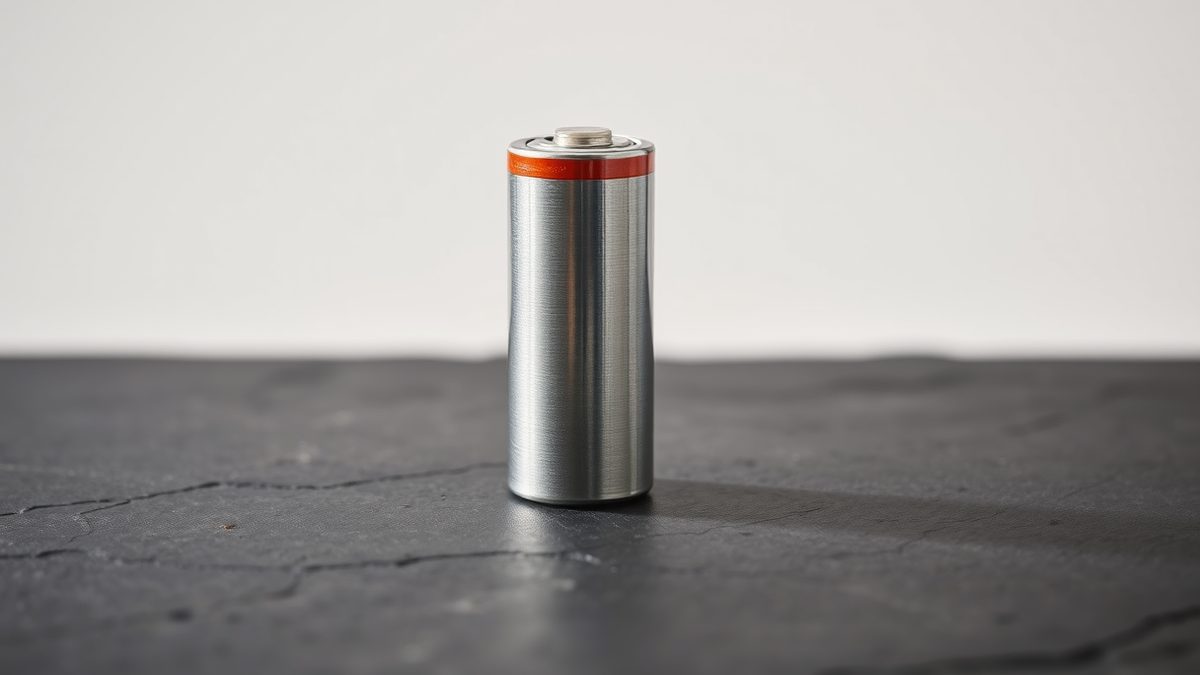
China published a five-year battery industry plan on 28 September that targets 15,000-cycle lithium cells and preliminary large-scale use of solid-state batteries by 2030, while placing sodium-ion and flow batteries inside a multi-chemistry storage portfolio. The document, dated 14 September, was issued by seven government bodies including the Ministry of Industry and Information Technology (MIIT), the National Development and Reform Commission and the National Energy Administration, according to pv magazine.
The plan is the most recent sign of how Beijing is trying to steer its technology base as export controls and investment screening tighten around it. It does not set a capacity or output-value target, unlike some earlier industrial policies, and it does not set a sodium-ion deployment target either. Instead it calls for advances in electrode materials, new electrolytes and high-end auxiliary materials, and for defect rates at leading manufacturers to reach parts-per-billion levels by 2030. Energy storage applications are to expand on the generation and grid sides, in industrial parks and in data centers. pv magazine reports that MIIT will strengthen capacity early-warning mechanisms, product-quality supervision and regulation of price competition, and that the plan backs mergers, recycling, safety management and more orderly overseas investment. Read together, the measures point away from capacity-led expansion and toward technology, quality and supply-demand discipline. For storage, the practical effect is policy support for longer-life lithium, sodium-ion and flow batteries, plus a wider set of applications.
Chips, models and the software gap
Two days before the battery plan surfaced, China's AI industry showed a different kind of coordination. Deepseek released open-source programming tools for Huawei's Ascend chips, according to a post on Deepseek's official WeChat channel cited by The Decoder. The centerpiece is TileLang, a language developed originally by Peking University researchers that Deepseek says offers a simpler programming model than Nvidia's CUDA. The release includes libraries for computation and for moving data between chips, and Reuters reported the open-sourcing. Deepseek says Huawei "fully supported" the work, and the two companies optimized a supernode of 128 Ascend 950 chips.
The target is Nvidia's software moat, which rests on an estimated four million developers worldwide who build with CUDA. The Decoder notes that Chinese model makers like Z.ai and Moonshot AI have moved faster than the country's chipmakers, and that Huawei unveiled new AI processors and supernode systems two weeks before Deepseek's announcement, saying they would be widely used for model training next year. SemiAnalysis, meanwhile, tested OpenAI's Jalapeño inference chip and called the CUDA moat "potentially dead" in the scenarios it tested, though it cautioned that those scenarios were relatively easy to optimize and that it had not yet run the AgentX benchmark. In an earlier August analysis, SemiAnalysis found Nvidia still well ahead on agent workloads, and said Huawei's chips were not part of that comparison.
Export controls are the backdrop to both files. DW reported on 24 September that new entry-exit rules took effect last week, giving Chinese authorities the power to stop engineers, founders and other specialists from leaving if their expertise in batteries, rare earths or AI is judged a threat to "industrial and technological security." Henry Gao, a law professor at Singapore Management University, told DW the curbs "offer a rare glimpse into the true state of China's economy" and suggest Beijing is deeply concerned about economic weakness and capital outflows. Alicia Garcia-Herrero, chief economist for Asia-Pacific at Natixis, told DW that the block on talent will matter more than the squeeze on capital, because "you cannot easily replace a process engineer who cannot board a plane."
Cars and the demand problem at home
The battery plan lands in a weak domestic market. CnEVPost reported on 30 September that China's NEV retail sales fell 20% year on year in the first 27 days of September, to 827,000 units, a steeper decline than the 9% drop in the first 20 days. Overall passenger car retail sales totaled 1.258 million, down 29% year on year. The China Passenger Car Association attributed part of the annual decline to a high comparison base from last September's subsidy-driven buying rush and to the timing of the Mid-Autumn Festival holiday. NEVs still took 65.7% of retail sales, and year-to-date NEV retail sales were 7.5 million, down 13%.
Competition for that shrinking demand is visible in pricing. Hyundai's Beijing joint venture launched the China-tailored Ioniq V on 29 September at a limited-time starting price of 99,900 yuan ($14,820), with CATL lithium iron phosphate batteries, Momenta driver assistance and CLTC range options of 540 km and 650 km, according to CnEVPost. Tesla, by contrast, upgraded every Model 3 it sells in China on 1 October with a 16-inch touchscreen and up to 2.2 kW of AC power export across its Model 3 and Model Y lineup, Electrek reported. The US Model 3 still has a 15.4-inch display and is shut out of the vehicle-to-load feature Tesla launched stateside in August. Electrek notes that even after discounts Tesla advertises the Model 3 from 222,500 yuan, above BYD's new Formula S at 189,900 yuan.
The policy direction is not confined to hardware. In an essay published by Rest of World on 22 September, Rumman Chowdhury and Konstantinos Komaitis argue that Washington is fighting the wrong AI race, and that China has built a more extensive regulatory environment for how AI interacts with users, including labeling rules for AI-generated content and protections for children and the elderly. They cite a survey finding that 87% of Chinese citizens trust AI compared with 23% in the US. Rest of World also published an interview on 24 September with physician and consultant Ruby Wang, who said China's share of global drug out-licensing deals could reach 60% this year, while cautioning that Chinese biotech firms remain weak at commercializing their own products.
What ties the files together is a shift in emphasis. The battery plan governs quality, recycling and overseas investment rather than raw capacity. The Deepseek-Huawei release attacks the software layer that keeps Nvidia ahead. The travel rules try to keep the people who build both from leaving. Each is a response to the same constraint: access to foreign technology, capital and markets is no longer something Beijing can assume.
Sources
8- 01China sets 2030 battery targets, backs sodium-ion and solid-stateEN
- 02China's AI industry closes ranks as Deepseek ships open-source software for Huawei's Ascend chipsEN
- 03China's new travel rules unsettle tech giants and talentEN
- 04China NEV retail sales fall 20% in first 27 days of September as decline deepensEN
- 05Hyundai launches China-tailored Ioniq V electric sedan from under $15,000EN
- 06Tesla upgrades China Model 3 with 16-inch screen and V2L, US left outEN
- 07America is in the wrong AI race with ChinaEN
- 08China is excelling in health tech. That's good news for the worldEN
All figures and quotations in this text come from the sources listed below.
Content prepared by the editorial team with AI assistance.
Dr. Amara Patel
Comments
0- No comments yet — be the first.