China Wraps Its Technology Export Rules Around People, Not Just Products
China's new entry-exit rules, which took effect in the third week of September, let authorities stop engineers and founders from leaving the country if their work in batteries, rare earths or AI is judged a threat to "industrial and technological security", DW reported on 24 September.
 Dr. Amara PatelEconomy, business and world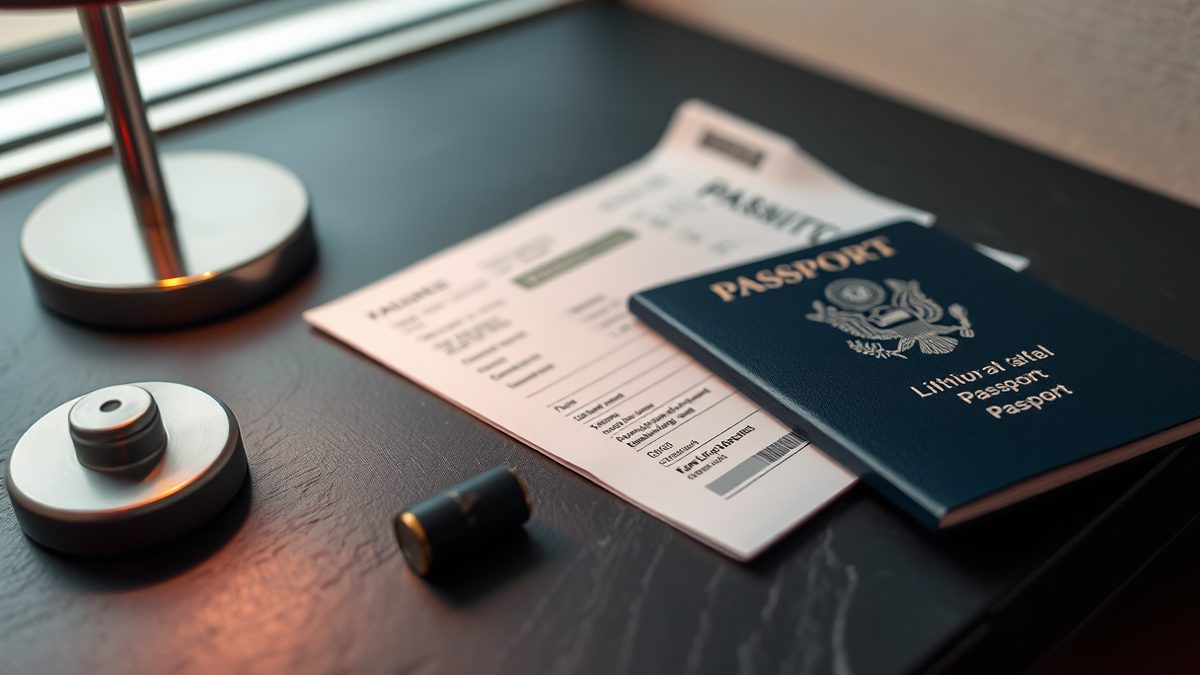
The measure is the most direct expression yet of a shift in Chinese technology policy: the state is now treating knowledge, and the people who carry it, as controlled exports. Until recently the framing ran the other way. For years Washington and Brussels accused Chinese firms of taking Western technology. Now Beijing is trying to stop its own from leaving.
DW reported that the rules came with tighter outbound-investment screening, a crackdown on Chinese nationals holding wealth offshore, and restrictions on posting technical staff abroad.
The Manus case and the money leaving
The most visible test case is Manus, an AI startup founded in Beijing by two Chinese nationals. The company moved its headquarters to Singapore last year, partly to dodge US investment curbs. When Meta tried to acquire it last December for $2 billion, Beijing blocked the deal and barred both founders from leaving the country, DW reported.
Bloomberg Intelligence estimated that about $1 trillion in Chinese wealth left the country last year, the largest hot-money outflow since records began in 2006. The annual $50,000 foreign-exchange quota for households is unchanged. What has tightened, Natixis Asia-Pacific chief economist Alicia Garcia-Herrero told DW, are the informal channels wealthy people used to move around it: "They are now squeezing the people and agents that money usually travels with."
Henry Gao, a law professor at Singapore Management University, told DW the combined curbs "offer a rare glimpse into the true state of China's economy", suggesting Beijing is worried about capital outflows and about losing entrepreneurs and skilled staff.
That reading fits the macro data. China's property crash has hit domestic consumption, bank lending fell to a record low over the summer, and new car sales in August dropped nearly a quarter year-on-year, according to DW.
A policy built on numbers that point sideways
The export-control instinct sits alongside an economy that is uneven rather than collapsing. Geely Auto sold 292,168 vehicles in September, its highest monthly total this year, up 6.97% year-on-year, CnEVPost reported on Thursday. But domestic sales fell 20.21% and exports slipped 3.1% from August, ending eight consecutive months of record exports.
The wider market is weaker still. Retail sales of new energy vehicles in China fell 20% year-on-year in the first 27 days of September, and overall passenger car retail sales dropped 29%, the China Passenger Car Association said, as cited by CnEVPost. The comparison base is inflated by a buying rush ahead of subsidy suspensions last September.
Meanwhile the technology the rules are meant to protect keeps advancing. DeepSeek open-sourced six software modules for Huawei's Ascend AI chips on Wednesday, including an Ascend-compatible version of the TileLang programming language, SCMP reported. The goal, per DeepSeek's WeChat post, is an "independent and controllable" software ecosystem for GPUs. The Decoder noted that Huawei "fully supported" the work, and that the two companies optimized a supernode cluster of 128 Ascend 950 chips.
China's Ministry of Industry and Information Technology is pushing in the same direction on batteries. Its five-year plan for 2026 to 2030, dated 14 September and issued by seven agencies, targets initial large-scale use of all-solid-state batteries by 2030, 15,000 charge-discharge cycles for long-life lithium batteries, and parts-per-billion defect rates for leading manufacturers, CnEVPost reported.
The country's generative AI user base passed 700 million at the end of June, up 16% from 602 million at the end of 2025, according to the China Internet Network Information Centre, as reported by SCMP. And a LexisNexis study published on Thursday found Chinese companies accounted for 44% of global drone patent filings in 2024 against 17% for US firms, though by value the two countries were roughly level.
Elsewhere, China's reach is being read as influence. The Diplomat argued on 30 September that the "constructive China-U.S. relationship of strategic stability" agreed at the leaders' May Beijing summit marks a break from the decoupling language of 2018, citing a McKinsey Global Institute estimate that China-US trade fell around 30% in 2025 alone.
Not everyone in the Chinese system is convinced the controls are costless. Chinese commentary on Russia's 20 September Duma election treated United Russia's win as evidence that "stability was paramount", per The Diplomat, a framing that says more about Beijing's own priorities than Moscow's.
Sources
12- 01China's new travel rules unsettle tech giants and talentEN
- 02Geely September sales rise 7% to 2026 high as record export streak endsEN
- 03China NEV retail sales fall 20% in first 27 days of September as decline deepensEN
- 04China's DeepSeek open-sources tools to help Huawei chips supplant Nvidia in AIEN
- 05China's AI industry closes ranks as Deepseek ships open-source software for Huawei's Ascend chipsEN
- 06China unveils 5-year battery plan targeting large-scale all-solid-state use by 2030EN
- 07China's generative AI user base crosses 700 million, covering over half the populationEN
- 08China leads drone patent volume but US matches quality as start-ups drive innovation: studyEN
- 09Goodbye, 'China Plus One': The Real Change in US China PolicyEN
- 10China's Stake in the Russian Duma ElectionsEN
- 11Tesla upgrades China Model 3 with 16-inch screen and V2L, US left outEN
- 12Experts worry about Nvidia's AI chip sales in China and influence over TrumpEN
All figures and quotations in this text come from the sources listed below.
Content prepared by the editorial team with AI assistance.
Dr. Amara Patel
Comments
0- No comments yet — be the first.