Electra Opens Madrid Fast-Charging Hub as Geely Deploys 2,250 kW Network in China
French charging provider Electra opened its most powerful urban high-power charging site in Europe in Madrid on 2 October, with 26 charging points delivering up to 600 kW, according to EVMagz.
 Daniel FisherSport, cars and travel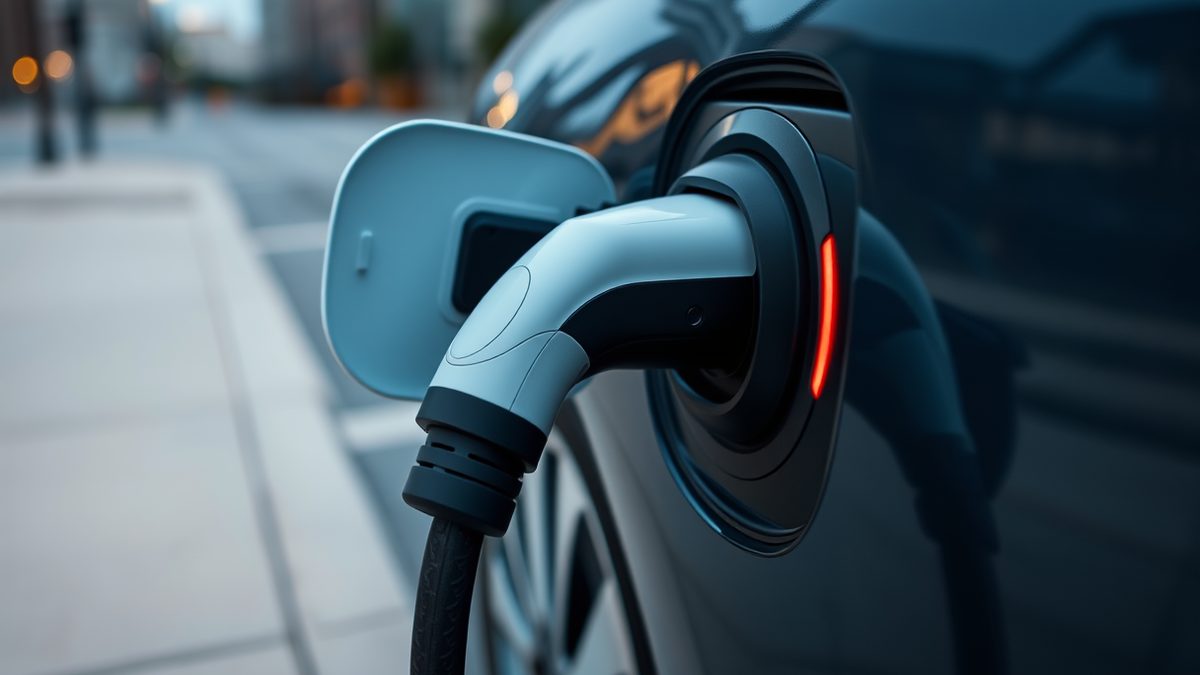
French charging provider Electra opened its most powerful urban high-power charging site in Europe in Madrid on 2 October, with 26 charging points delivering up to 600 kW, according to EVMagz. The same outlet reported that Geely began rolling out a 2,250 kW ultra-fast charging network in China on 1 October, shortly after unveiling the technology.
Those two announcements landed within 24 hours of each other and frame a battery story that is now less about chemistry breakthroughs and more about infrastructure, manufacturing capacity and who can build cells at a price the market will pay. The numbers involved are large and, in several cases, contested. GM confirmed on 29 September that its Ultium Cells plant in Spring Hill, Tennessee will be converted to produce lithium manganese-rich (LMR) prismatic cells. CleanTechnica reported that GM expects LMR to deliver improved performance at a lower cost than other batteries in the affordability bracket, and cited GM's statement that LFP and LMR investments will reach a combined $2 billion by 2030. GM's vice president of battery and sustainability, Kurt Kelty, said high-nickel batteries continue to serve markets where long range is the priority, leaving LMR for cost-sensitive applications.
GM turns a Tennessee plant to LMR prismatic cells
The conversion matters because GM had pulled back on EV lines after the $7,500 federal tax credit was eliminated. CleanTechnica framed the LMR announcement as a concrete sign the company expects the EV market to recover. Motor Illustrated reported the plan adds 500 jobs in Tennessee, and a Chosun Ilbo headline described the output as the world's first mass-produced LMR prismatic batteries. Those two claims come from different outlets and are not identical in scope: one counts jobs, the other counts a manufacturing first.
"By producing multiple chemistries, including high-nickel, lithium iron phosphate (LFP), and now LMR, in both pouch and prismatic form factors, Ultium Cells demonstrates its ability to adapt quickly as battery technologies evolve," GM said, according to CleanTechnica.
Ford is also working on LMR, CleanTechnica noted, though short lifespan and voltage decay have been problems for the chemistry. That caveat is worth keeping in view while GM's plant is retooled.
Stellantis stops French lines over a battery shortage
Not every battery headline this week is a capacity expansion. Automotive News reported on 29 September that Stellantis plans temporary halts at French factories because of a long-range EV battery shortage, a detail also carried by Yahoo Finance UK.
The same day, Electrek reported that GM cut its Chevrolet Bolt production target to about 35,000 units, with EVMagz carrying the same figure on 1 October. A shortage of long-range packs at Stellantis and a reduced Bolt target at GM point in the same direction: cell supply and demand are not matching up neatly, even as new plants are announced. The two stories come from separate outlets and describe different companies, but they sit awkwardly beside the LMR expansion. Volkswagen is moving in the opposite direction on sourcing. Automotive News reported on 29 September that VW Group deepened its ties with China's Gotion to make LFP batteries for mass-market EVs through joint ventures, and EVMagz listed the same partnership as a European battery push with a new Chinese partner. Gotion is separately targeting 400 Wh/kg energy density for solid-state batteries, according to an EVMagz headline.
Sodium ion, solid state and the recycling question
The most detailed technical reporting in the dossier comes from the BBC, which published a piece on 29 September about US start-ups trying to bring battery making home. San Diego-based Unigrid sells a nine kilowatt hour sodium-ion battery for homes and has shipped its first 100 units, with chief executive Darren Tan telling the BBC the company expects to ship 1,000 before the end of the year.
Unigrid's cells are currently made in China, not the US, and its cathode contains chromium-3. Professor Dame Clare Grey at the University of Cambridge warned the BBC that under certain conditions chromium-3 may form chromium-6, a toxic, cancer-causing material. Ivana Hasa at the University of Warwick, who has no connection to Unigrid, told the BBC that formation is possible at very high states of charge but can be mitigated by voltage control. Tan called concerns overblown and said third-party tests had not produced chromium-6.
Solid state remains the industry's favourite future tense. EVMagz reported that a Mercedes-backed company, Taiwan's ProLogium, has put solid-state cells into mass production, while InsideEVs carried an LG Energy Solution executive's warning that key challenges remain. Hyundai's R&D boss told InsideEVs he expects small-volume cars with solid-state batteries within five years. China has set a 2030 target for initial mass production of solid-state batteries, according to finance.biggo.com.
GM is also using recycled battery materials in new EVs, according to WardsAuto and an InsideEVs headline, and Hyundai and LG Energy Solution have a second-life project for used EV batteries reported by batteriesnews.com. On 1 October, EVMagz reported that Vianode and FAAM demonstrated recycling of battery production waste into anode material.
The US share problem
CleanTechnica argued on 30 September that the US could finish last in vehicle electrification. The piece put US battery-electric share at 5.9% in the first half of 2026, against China's 45% in August and Europe's 26% in July. Uruguay has reached 50% BEV share, the same outlet reported. It also cited protectionism against Chinese brands as a barrier to the most competitive EVs reaching US buyers.
Numbers elsewhere in the dossier complicate any simple ranking. CommBank reported that EVs are now one in four new car sales in Australia, and SIMI reported a 1 October jump of 80% in new electric car registrations. Those are different measures from the CleanTechnica BEV share figures and should not be stacked against them.
Battery chemistry basics matter here. Drive Smart Tools notes that lithium-ion describes a family of chemistries, not one design, with LFP trading energy density for durability and lower material costs, and NMC and NCA prioritising range. The site also warns that charging recommendations vary by model, so owners should follow the manual rather than assume one rule applies everywhere.
Geely's 2,250 kW network and Electra's 600 kW Madrid hub are the infrastructure half of the same equation. Toyota, meanwhile, is testing durability rather than charging speed. Electrek reported on 30 September that Toyota dropped a 1,675 lb (760 kg) caravan 30 feet onto the roof of its Hilux BEV at Bentwaters airfield in Suffolk, after a Reddit poll, and the truck drove off. The Hilux BEV has a 59.2 kWh battery, a WLTP range of up to 160 miles (257 km) and DC fast charging of up to 125 kW, with a UK base price of £42,170 ($56,500) excluding VAT.
Sources
7- 01EVMagz - Electric Vehicle News & Sustainable Mobility UpdatesEN
- 02Is The US Going To End DEAD LAST In Vehicle Electrification?EN
- 03GM Really Wasn't Kidding About Those New LMR EV BatteriesEN
- 04The start-ups hoping to return battery making to the USEN
- 05Battery Tech - Electric Vehicle News and Trends | InsideEVsEN
- 06Toyota dropped a 1,675 lb caravan on its electric truck, and it drove off unfazed [Video]EN
- 07What Type of Batteries Do Electric Cars Use?EN
All figures and quotations in this text come from the sources listed below.
Content prepared by the editorial team with AI assistance.
Daniel Fisher
Comments
0- No comments yet — be the first.