Europe's energy bill keeps climbing, and factories are moving out
Playmobil has ended figure production at its Dietenhofen plant in Bavaria, cutting around 350 jobs. The Horst Brandstätter Group blames high energy prices. It is the latest European manufacturer to leave as power costs stay high.
 Dr. Amara PatelEconomy, business and world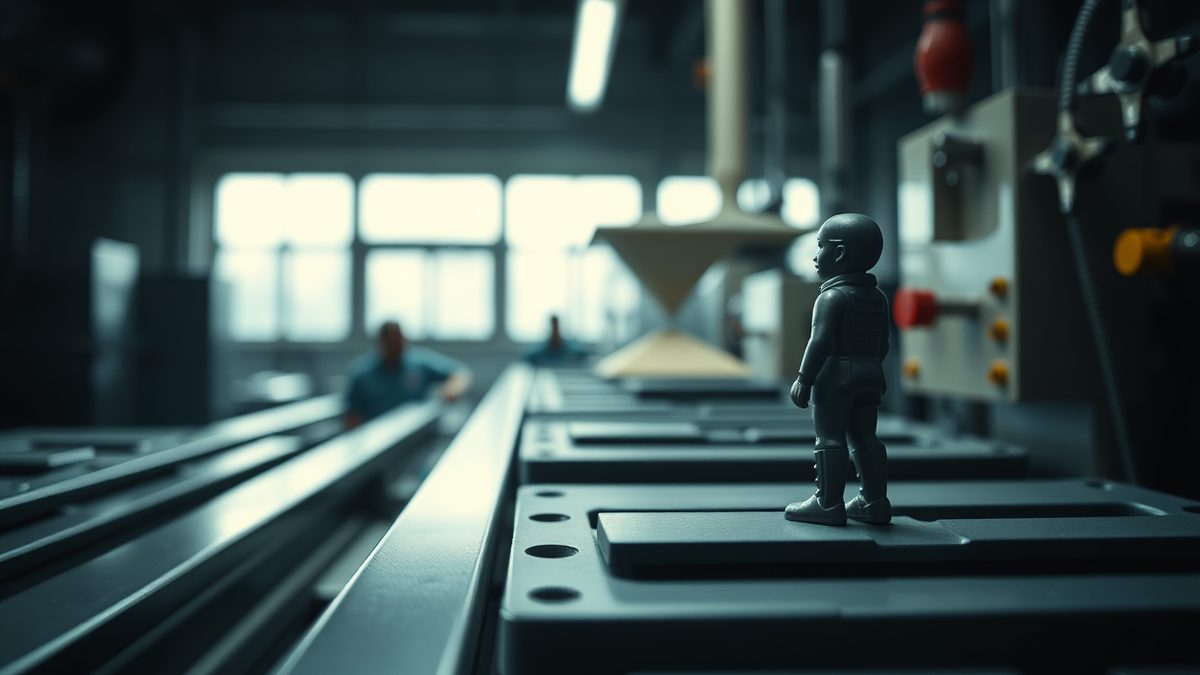
The final shift at Dietenhofen ended this week. The Horst Brandstätter Group, which owns Playmobil, told Brussels Signal that figure production is being consolidated at existing facilities in Malta and the Czech Republic. Around 350 jobs are affected at the site. Workers there have been placed on paid leave ahead of the official shutdown at the end of June.
The company cited sharply rising production costs in Germany. It named high energy prices alongside elevated wages and ancillary labour costs. Unions called the move a "catastrophe" for the region, Brussels Signal reported. Business groups described it as the latest example of a mid-sized German manufacturer relocating. Germany's household electricity prices are currently the fifth most expensive globally and the second highest among major industrial nations, the report notes.
Why this is not only a German story
Energy costs have become the common thread running through European industrial decisions this year. France asked the EU in late September to take immediate action to lower energy prices, according to the Financial Times. Reuters reported that EU countries backed changes to the carbon market aimed at curbing price spikes. The Financial Times also reported that Ineos would idle Europe's last world-scale acetyls plant. The company said energy prices in Europe were hitting 12 times US levels. Greek industry has sought EU aid as energy costs threaten companies, tovima.com reported.
These headlines come from the recent coverage list supplied to FLASH24 and are context only. They line up with the Playmobil case: the pressure is not confined to one sector or one country. The Brussels Signal report links the trend to the 2022 energy crisis and to Germany's rapid shift away from nuclear and coal without sufficient baseload alternatives. That combination leaves energy-intensive processes, including plastic injection moulding, especially exposed even with partial government relief schemes.
The demand side is changing too
Consumers are reacting to the same prices. Residential heat pump sales rose 17 percent year on year across 11 European countries in the first quarter of 2026, according to the European Heat Pump Association, with France, Germany and Poland averaging 25 percent growth. The EHPA counted around 575,000 residential units sold from January to March 2026, up from 494,000 a year earlier. It tied the jump to higher gas and oil prices after Iran closed the Strait of Hormuz on 2 March. Austria was the outlier on the downside, with sales falling 30 percent due to the absence of government subsidies.
"If your streaming service doubled its price then blocked its movies you'd find a better one," Paul Kenny, director general of the EHPA, said in the pv magazine report. "Consumers have realized heat pumps are the solution when gas and oil are erratic in price and supply." Kenny said the European Commission has outlined VAT and tax reductions and social leasing schemes for lower-income households in its energy crisis plan. He called on EU governments to implement those measures quickly.
On the supply side, one bet is finally producing. Fervo Energy, an enhanced geothermal systems provider backed by Google, achieved first power this week at its Cape Station plant in Beaver County, Utah, according to The Register. The first of three 33 MW GeoBlocks has begun supplying electricity to the grid and is expected to reach commercial operation next week. Another 66 MW is due by New Year, and Fervo says the site could eventually scale beyond four gigawatts. The company is working toward 900 MW of contracted capacity, with 100 MW targeted by 1 January and half a gigawatt by 2028.
That is American capacity aimed at American datacenter demand, and it does little for a Bavarian injection-moulding line. The Register also noted that, compared with conventional generation, geothermal still carries challenges. Think tank Rhodium estimated the technology could meet up to 64 percent of datacenter demand by the end of the decade, but those facilities could pay a 20 percent premium for it.
For European manufacturers weighing where to make things, the arithmetic is simpler. Playmobil will keep administrative and logistical functions in Germany. The figures themselves will be made elsewhere.
Sources
3- 01High energy prices force Playmobil to end production in GermanyEN
- 02Heat pump sales rise 17% across Europe in Q1 as energy prices surgeEN
- 03Google-backed energy outfit brings 33 MW of 4 GW geothermal potential online in UtahEN
All figures and quotations in this text come from the sources listed below.
Content prepared by the editorial team with AI assistance.
Dr. Amara Patel
Comments
0- No comments yet — be the first.