Europe's night train revival: what the new cross-border routes actually change
Europe's December timetable change has restored direct overnight links that in some cases had been severed for more than a decade, including a Munich to Warsaw sleeper that departed on 10 December, the first direct service from Bavaria to Poland since 2010.
 Daniel FisherSport, cars and travel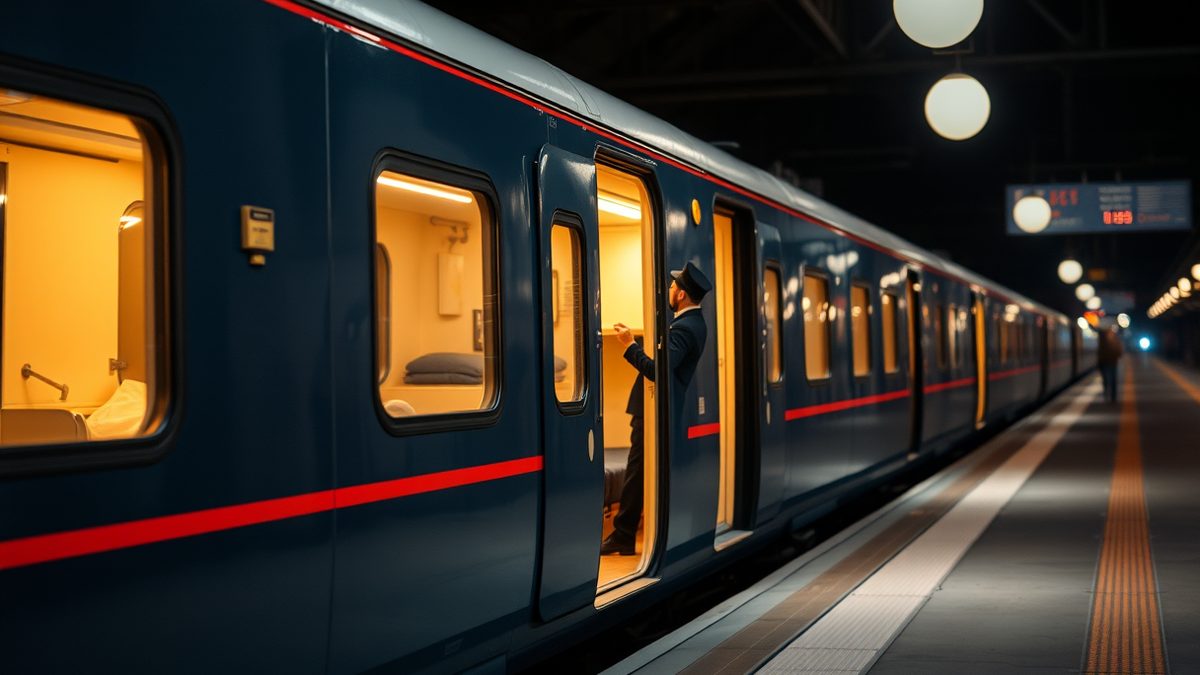
Every December, rail operators across Europe swap in new timetables. Most years the changes are minor. This year's, introduced on 10 December, include a string of direct overnight links between city pairs that previously had no direct train at all, according to a Guardian roundup of the new schedules. Some of those pairs had been unconnected for years.
The most consequential new route is the night train linking Munich and Warsaw. The Warsaw-bound departure from Munich on the evening of 10 December was the first direct service from Bavaria to Poland since 2010, the Guardian reported. It is not a single line but a web: the same night train network has opened up a Salzburg to Kraków sleeper, a trip of almost 10 hours, which the Guardian describes as one of several new city pairs created by the Munich-Warsaw link. Paris and Berlin now have a direct night train again, restoring a connection that was cut at the start of the pandemic, when the Russian Railways service from Paris to Berlin and Moscow ran for the last time. A Nightjet now leaves Aachen just after 9pm and reaches Halle 10 hours later, linking two cities with no direct daytime service between them.
Why overnight trains fill a different gap
Night trains matter most where the daytime network is thin. The Guardian's analysis notes that Warsaw, Munich, Berlin, Paris, Aachen and Salzburg are among the city pairs newly linked by direct overnight services, and that none of them currently has a direct daytime train. That is the point of a sleeper: it does not compete with high-speed rail so much as cover the routes high-speed rail has abandoned.
France is the clearest example of the shift. In 2016, Le Monde declared the night train finished. Demand has since risen, and Béziers and Montpellier now have direct overnight links to Paris on some nights, alongside the existing TGVs that cover Montpellier to Paris in a little over three hours. The French sleepers are basic: no sleeping cars, so passengers choose between a reclining seat and a couchette. Fares start at €19 for seats and €29 for couchettes, the Guardian reported.
All these new trains across Europe are creating a real buzz at Byway. We're now able to pair places in holidays where direct trains didn't exist before. The new Euronight direct sleeper linking Salzburg with Kraków, for example, creates a real opportunity for culture vultures to combine [trips to] two very different cities.
That is Cat Jones, chief executive of the flight-free operator Byway Travel, quoted in the Guardian's roundup. Her point is commercial rather than sentimental: operators and agents rebuild itineraries around whatever the timetable allows, and a new sleeper creates holiday combinations that were not previously bookable.
Not every change is an addition. Aarhus loses its twice-daily direct trains to Hamburg, but gains a connecting service every two hours via a same-platform change at Kolding that gets travellers to Hamburg faster than the direct train did. Nuremberg, long a jumping-off point for Czech destinations, had five direct trains a day to the Czech Republic until last week. Now it has none, though other cross-border routes between Germany and the Czech Republic remain.
The carbon argument, and its catch
Night trains are usually sold on emissions as much as on convenience, and the industry has produced detailed numbers to back that up. According to analysis by the Rail Delivery Group, the UK rail industry body, travelling by train on Britain's busiest business routes generates less than half the carbon emissions of a battery electric car. On average across the top 100 business travel routes, a diesel or petrol car produced nine times more carbon than the train, a plug-in hybrid four times more, and a battery electric car almost two and a half times more, the RDG said.
The granular figures are starker. Edinburgh to London Kings Cross emits 116kg of CO2 in a diesel car, 31.8kg in a battery car and 12.7kg per person by train, according to RDG data. On the greenest and fullest electric trains, some trips produce as little as one-fifteenth of the CO2 per person of a sole-occupancy petrol or diesel car, the group claims.
The catch is price. The Guardian noted that single fares on LNER, the main operator on the Edinburgh to London route, were £183 without pre-booking, though much cheaper advance fares exist, while average fuel for a small petrol car over the same 400 miles would be roughly £50. Campaigners made the same point: rail is greener, but it is not always cheaper.
Michael Solomon Williams of the charity Campaign for Better Transport said: "Travelling by train is always greener than driving, and it's getting even greener as more rail routes are electrified. It is often quicker too, but what we now need to do is to ensure it is also cheaper. Next week's rail fare rise will do little to address the rising cost of rail travel." The Guardian reported that rail fares were due to rise by 4.9% across England from the Sunday after its article.
What to watch
Several of the new links are still being built out. Czech private operator RegioJet is said to be exploring a direct overnight train from Prague to Chop, in Ukraine's Transcarpathia region, from early 2024, the Guardian reported. A second direct train from Vienna to Ukraine already exists: the morning departure from Vienna to Romania now carries through-carriages to Chop, complementing the long-standing Euronight service from Vienna to Kyiv.
Elsewhere the picture is uneven. Some routes in Poland and the Baltic states had not yet switched to their 2024 timetables at the time of the Guardian's report, and a new high-speed line through Spain's Cantabrian mountains opened in late November rather than at the December change. The Guardian also noted that cross-border services from Lithuania to Latvia may be reinstated.
The practical upshot for anyone planning a trip: check the specific date, not the season. A night train that exists in one timetable may not exist in the next, and a connection that looks direct on a map may require a same-platform change in a town you have never heard of. The 10 December changes created new options. They also removed some.
Sources
2- 01Night trains and border crossings: Europe's best new rail routesEN
- 02Electric cars produce twice as much CO₂ as trains, says rail group dataEN
All figures and quotations in this text come from the sources listed below.
Content prepared by the editorial team with AI assistance.
Daniel Fisher
Comments
0- No comments yet — be the first.