EV batteries are being drafted as grid and body hardware, not just car parts
Auckland's new two-way charging trial, announced on 29 September, will put up to 100 vehicle-to-grid chargers into homes and businesses, turning parked electric cars into household backup power.
 Daniel FisherSport, cars and travel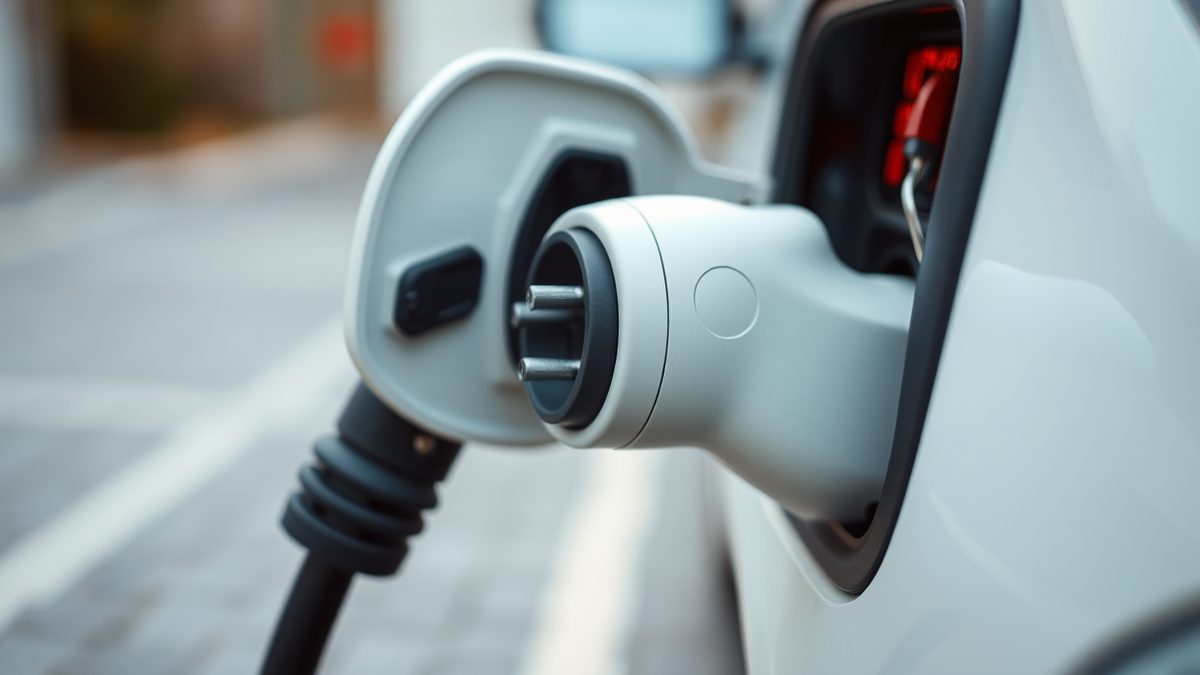
The Energy Efficiency and Conservation Authority, New Zealand's government energy agency, said the trial will install up to 100 two-way chargers in Auckland and other urban centres. The chargers let an EV charge normally, then push electricity back into a home, a business, or the national grid when demand peaks. EECA policy and regulation manager Murray Bell told RNZ that a car battery can run a household for "up to three or four days" during an outage.
That is the news peg. It is also a reminder that the EV battery is no longer only a car component.
Over the past three days, the same object has kept turning up in three different roles: as a grid asset, as a public-health device, and as a national skills problem. Each story rests on the same core claim, that a battery is a flexible lump of stored energy, and each pulls it in a different direction.
Vermont already runs the model Auckland wants
The closest working version of the Auckland idea is in Vermont, where Green Mountain Power has leased two home batteries to more than 5,500 customers for $55 a month over a decade, according to the BBC. The report, published on 29 September, says the aggregated fleet has quietly become the state's largest power source. One participant, Pollyanna Bladyka, told the BBC she had planned to spend $12,000 on a gas generator before the utility's scheme was offered. "I'd like to say I did it for the environment, but I did it for myself," she said. "But I don't mind helping."
The BBC also cites Wood Mackenzie analysis putting US virtual power plant capacity above 40GW, against roughly 600GW of natural gas and 200GW of coal. A 2025 US Department of Energy report cited in the same piece says 160GW could be available by 2030, about 20% of expected peak demand.
Those numbers describe a system that is still small next to fossil capacity. They also describe one that is growing from consumer hardware rather than utility construction.
Delhi shows the other half of the argument
Where Vermont adds batteries to a working grid, Delhi spent a quarter century repairing one. Writing in IEEE Spectrum on 29 September, Jamia Millia Islamia professor Sushil Sood, a power systems specialist, describes outages in 2002 that hit three times a week, with losses above 50% from obsolete equipment and theft. By 2026, losses are 5% to 6%, a level the article compares to France and Belgium, and better than Greece and Serbia.
The Delhi account matters because it inverts the usual EV story. Better wires and metering come first. Distributed batteries and vehicle-to-grid services are useful only after the basic distribution problem is solved.
New Zealand's own numbers point the same way. RNZ reports that the Ministry for Business, Innovation and Employment expects national electricity demand to rise between 35% and 82% by 2050. Bell said avoided network costs "run into the billions of dollars". Counties Energy, which runs the OpenLoop charging service, will recruit participants. Its chief network and digital officer, Moonis Vegdani, said BYD, now the second-most popular EV brand in New Zealand behind Tesla, had taken part in Australian trials and could be approached for a similar arrangement.
The obstacles are mundane and specific. Bell said few EV and charger combinations are compatible in New Zealand, manufacturers worry about third-party equipment affecting battery performance, and some houses have old wiring.
Efficiency maths and a German skills leak
On 29 September, Hannah Ritchie's Substack laid out why electrification reduces total energy use. Working from Oxford professor Nick Eyre's model, she writes that final energy demand falls from 416 to 247 exajoules, with electricity rising from 110 to 189 EJ. Electric cars convert about 80% of energy to motion, against 20% for petrol, so post-transition demand for cars and vans is roughly a quarter of today's.
The model assumes hydrogen covers sectors that cannot be electrified, including long-haul aviation and high-temperature industry. It is a thought experiment, not a forecast, and Ritchie says so.
People are the other bottleneck. VDE, the German electrical engineering association, said in a 21 September release, covered here because it is the newest data in the dossier, that international first-semester students in electrical and information technology have roughly doubled over 20 years and now make up more than half of first-years. But 55.5% of international master's graduates leave Germany, equal to 35.5% of all graduates. VDE's Michael Schanz said every euro invested in an international student returns about 16 euros in added value.
If the grid and the car are both becoming battery problems, the workforce that installs and maintains them is not keeping pace. Auckland's 100 chargers will not settle that. They will produce evidence, which is what EECA says it wants.
The wildest item in the dossier points somewhere else entirely. Chemical and Engineering News reported on 28 September that MIT researchers built a paper-like battery from cellulose nanofibers, molybdenum trioxide, activated carbon, a magnesium alloy anode, and a choline chloride and lactic acid electrolyte, sealed in beeswax. Delivered into pig stomachs by endoscope, it powered an RFID tag and a stimulation device for three days, with voltage falling from 1.84V to 1.45V, then broke into fragments within weeks.
Giovanni Traverso, the MIT mechanical engineer behind the work, told C&EN the devices are "readily tunable to the application". Yasser Khan of the University of Southern California, who was not involved, called it "an important step toward swallowable devices", but said extensive biocompatibility testing is needed first.
One battery chemistry, three very different jobs. The Auckland trial is the one that will produce household data first.
Sources
6- 01EVs being trialled as giant batteries to power homes for less in AucklandEN
- 02Vermont replacing power plants with home batteriesEN
- 03How Delhi cut electricity loss from 50 to 5 percentEN
- 04Electrification is efficiency: The world will need less energy after the transitionEN
- 05Electrical Engineering Programs Are Popular Internationally, But the Majority Leave Germany AgainEN
- 06This Battery Is Ready to EatEN
All figures and quotations in this text come from the sources listed below.
Content prepared by the editorial team with AI assistance.
Daniel Fisher
Comments
0- No comments yet — be the first.