GM picks Tennessee for prismatic LMR cells as BYD pushes solid-state to 2027
Ultium Cells will mass produce prismatic lithium manganese rich battery cells at its Spring Hill, Tennessee plant, GM and LG Energy Solution said on Tuesday, claiming 33% higher energy density than LFP at comparable cost.
 Daniel FisherSport, cars and travel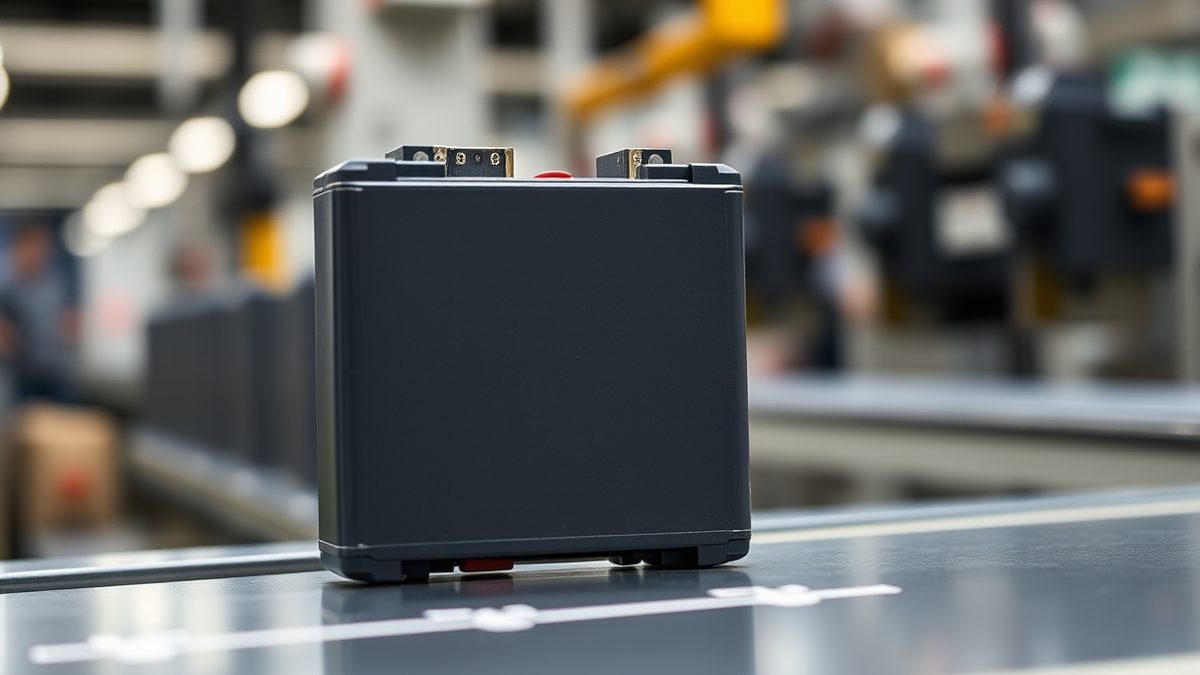
The announcement, first reported by Electrek on 29 September, ends more than a year of silence on where the chemistry would be built. GM and LG revealed the technology in 2025 but only now named the site, which the companies describe as the first in the world to mass produce prismatic LMR cells.
Upgrades start later this year and should finish by 2028. They add 500 jobs, for a workforce of 1,700. GM expects its first LMR vehicle in 2028, targeting over 400 miles of range in trucks and full-size SUVs. Kurt Kelty, GM's vice president of battery and sustainability, said LMR "positions us to leapfrog today's more affordable chemistries and deliver lower costs with better performance." The company's longest-range EV today, the Chevrolet Silverado EV, is rated at up to 478 miles on a high-nickel pack and starts at $55,895.
GM's move sits on the affordable end of the chemistry race. On the same day, Electrek reported that BYD is testing an ultra-luxury Yangwang sedan, about 5.5 metres long, that local outlet Autohome says will be its first EV with solid-state batteries. Yangwang general manager Hu Xiaoqing posted images on Weibo and said the name is not final; internally it is called "HU". Zheng Yu, the brand's executive general manager, promised "unprecedented disruptive technology" without detail.
Stella Li, BYD's executive vice president, told Carwow.es earlier in September that the company is "in the leading position" on solid-state commercialisation and would prove it with a car debuting in 2027. FinDreams, BYD's battery arm, aims to start limited output of sulfide-based all-solid-state cells in 2027 and scale to mass production by 2030. Reports estimate the Yangwang sedan above 2 million yuan, nearly $300,000, against 658,000 yuan for the current Yangwang U7.
While cell chemistry dominates the headlines, pack economics are already shifting in commercial fleets. A Transport & Environment total cost of ownership analysis, republished by CleanTechnica on 28 September, found electric trucks are the cheapest choice in six of nine major EU markets, which together take 46% of new heavy truck sales. Five-year savings reach €100,000 in the Netherlands, €85,000 in Germany and €69,000 in Denmark, with payback in two years; a Chinese truck in the Netherlands saves up to €128,000.
The durability question underneath those numbers has a partial answer from Geotab's 2026 analysis of more than 10,000 EVs, cited by Drive Smart Tools: average degradation of about 1.8% per year. The US Department of Energy expects 12 to 15 years in moderate climates and 8 to 12 in extremes, and Drive Quip notes most makers warrant packs for 8 to 10 years or 100,000 to 150,000 miles.
Second life for packs
Stationary storage is absorbing used capacity. The BBC reported on 29 September that Green Mountain Power's virtual power plant, built from home batteries leased at $55 a month, has become Vermont's largest power source, with more than 5,500 systems installed. Wood Mackenzie puts US virtual power plant capacity above 40GW, against roughly 600GW of gas and 200GW of coal, and a 2025 Department of Energy report sees 160GW by 2030.
New Zealand is testing the same idea with cars. RNZ reported on 29 September that the Energy Efficiency and Conservation Authority will fund up to 100 two-way chargers in Auckland homes and businesses, building on a smaller Queenstown trial. EECA's Murray Bell said a car battery "can run your household for up to three or four days" during outages, though few compatible vehicle and charger combinations exist locally.
Elsewhere in the dossier, IEEE Spectrum detailed how Delhi cut grid losses from 50% to 5%, Volkswagen confirmed the electric ID. Tiguan will premiere in October and reach markets in early 2027 as the ID.4 and ID.5 successor, and researchers at MIT built a rice paper-like battery that powered devices in pig stomachs for three days before degrading, according to Chemical & Engineering News. VDE, meanwhile, calculated that every euro invested in international electrical engineering students in Germany returns about 16 euros, yet 55.5% of international master's graduates leave.
Sources
15- 01GM's new EV battery tech will cut costs without sacrificing rangeEN
- 02BYD tests new ultra-luxury EV with coach doors and a solid-state batteryEN
- 03Two Silverado EVs and a 150 kWh battery powered an entire concert tourEN
- 04Tesla patents 'Electric Fan Car' with 4 ducted fans ahead of Roadster revealEN
- 05Are Electric Trucks Cheaper To Operate Than Diesel?EN
- 06Electric Future, Established Name: The New ID. Tiguan Premieres in OctoberEN
- 07Op-Ed: Upcoming Philippine Electric Vehicle Summit is an Audit of National PolicyEN
- 08Vermont replacing power plants with home batteriesEN
- 09EVs being trialled as giant batteries to power homes for less in AucklandEN
- 10How Delhi cut electricity loss from 50 to 5 percentEN
- 11How Long Does an Electric Car Battery Last? Lifespan, Warranty, and ReplacementEN
- 12How Often Do You Change Batteries in an Electric CarEN
- 13This Battery Is Ready to EatEN
- 14Electrical Engineering Programs Are Popular Internationally, But the Majority Leave Germany AgainEN
- 15Electrification efficiency: The world will need less energy after the transitionEN
All figures and quotations in this text come from the sources listed below.
Content prepared by the editorial team with AI assistance.
Daniel Fisher
Comments
0- No comments yet — be the first.