FDA approves Xbrane's Lucamzi as fifth ranibizumab biosimilar
The FDA approved Xbrane Biopharma's Lucamzi, a biosimilar to Lucentis, on 29 October 2026, making it the fifth ranibizumab biosimilar cleared in the US. The company plans to launch it in 2027.
 Sofia MarchettiScience and health
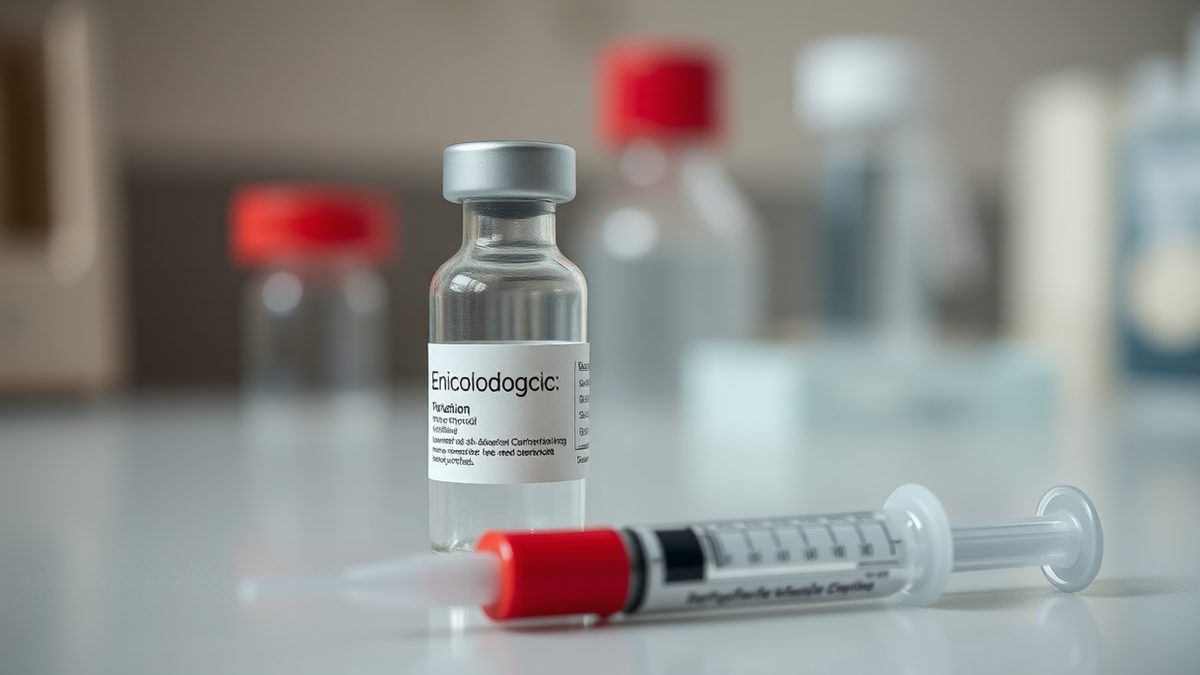
Xbrane Biopharma won FDA approval for Lucamzi (ranibizumab-blrz) on 29 October 2026, clearing a biosimilar to Lucentis for the US market more than three years after the company first filed its application. The Swedish drugmaker said it will finalise preparations with partners for a commercial launch during 2027.
Lucamzi is a biosimilar to Lucentis, the ranibizumab product developed by Roche-owned Genentech, whose original patent protection has expired. Xbrane described the approval as opening a cost-effective treatment option for neovascular (wet) age-related macular degeneration and other serious eye conditions. Eyes On Eyecare, which reported on the approval, said the specific indications and dosing were inferred from the Lucentis label and are not confirmed for the biosimilar. The reference label lists wet AMD, diabetic macular edema, diabetic retinopathy, macular edema after retinal vein occlusion and myopic choroidal neovascularisation.
Fifth ranibizumab biosimilar in the US
Lucamzi is the fifth ranibizumab biosimilar the FDA has approved. It follows Samsung Bioepis's Byooviz in September 2021, Coherus's Cimerli in August 2022, Formycon's Nufymco in December 2025 and Lupin's Ranluspec in June 2026. The list has grown in bursts: two approvals in 2021 and 2022, then a gap until December 2025.
One detail separates Lucamzi from the other four. The FDA licensed it as a biosimilar rather than as an interchangeable product, according to the agency's Purple Book. Byooviz, Cimerli, Nufymco and Ranluspec all carry interchangeable designations.
Trial data behind the approval
The submission rested on comparative structural and functional analytical work plus a Phase 3 study in 582 patients with wet AMD, Xbrane said. In the XPLORE trial, mean best-corrected visual acuity gain at week 8 was 4.6 letters with the biosimilar and 6.4 letters with Lucentis, a 1.8-letter difference inside the prespecified equivalence margin of plus or minus 3.5 letters.
Through week 52, serious adverse events occurred in 11.3% of patients on the biosimilar and 12.1% of those on Lucentis. Investigators reported no clinically meaningful differences between the groups in safety or immunogenicity, or in secondary endpoints including central foveal thickness, choroidal neovascularisation size and leakage area, and subretinal fluid. Lucamzi is given as an intravitreal injection, as Lucentis is.
Why the approval took years
Xbrane first filed the application in April 2023. In October 2025 the FDA issued a Complete Response Letter about remaining observations at one of the production facilities, requiring the contract manufacturer to complete outstanding corrective actions at the site. Xbrane resubmitted the biologics licence application and expected a review of about six months. Life Science Focus reported that problems at contract manufacturers had partly delayed development.
What happens next
Xbrane is preparing the US launch with Valorum Biologics, which will handle sales and marketing under a licensing agreement, according to Eyes On Eyecare. Lucamzi is the same product Xbrane has marketed in Europe as Ximluci since 2023, following European approval in November 2022. The company has not narrowed the US launch beyond 2027.
The market it enters is large. Anti-VEGF drugs for retinal disorders accounted for about EUR 9 billion in annual net sales and about 10 million injections a year, according to Xbrane. The company argues that more biosimilar competition on ranibizumab offers equivalent therapy at lower prices, reducing US healthcare costs and improving patient access. Around 20 million people in the US live with AMD, at an age-standardised prevalence of 5,677 per 100,000, and Xbrane estimates the total economic burden of late-stage AMD in the US at $49.4 billion a year.
"FDA approval of Lucamzi is a landmark event for Xbrane, representing a key opportunity to reach many more patients and to realize a return on our development investments," chief executive Martin Åmark said in the announcement.
Sources
9- 01FDA Approves Xbrane's LUCAMZI, a Biosimilar to LUCENTISEN
- 02FDA approves ranibizumab biosimilar Lucamzi for wet AMDEN
- 03Xbrane Biopharma AB: FDA approves Lucamzi - biosimilar to LucentisEN
- 04Xbrane Biopharma AB: Xbrane Submits Ranibizumab Biosimilar Candidate To FDAEN
- 05Xbrane wins long-awaited FDA approval for eye drug biosimilarEN
- 06FDA issues nationwide voluntary recall for over 3M eye drop bottles - Glance by Eyes On EyecareEN
- 07Estonia approves 24/7 robotic pharmacies, paving the way for a European firstEN
- 08Churchill Capital XI shareholders approve $2.5B Agility Robotics humanoid SPACEN
- 09Federal Reserve Board announces approval of application by The Bank of Nova ScotiaEN
All figures and quotations in this text come from the sources listed below.
Content prepared by the editorial team with AI assistance.
Sofia Marchetti
Comments
0- No comments yet — be the first.