Antares says DOE granted Mark-1 the first NSDA for a second reactor design
Antares said on 23 October that DOE had approved the nuclear safety design agreement for Mark-1, the first such agreement granted for a second reactor design, moving its electricity-producing test reactor toward a 2027 run at Idaho National Laboratory.
 Sofia MarchettiScience and health
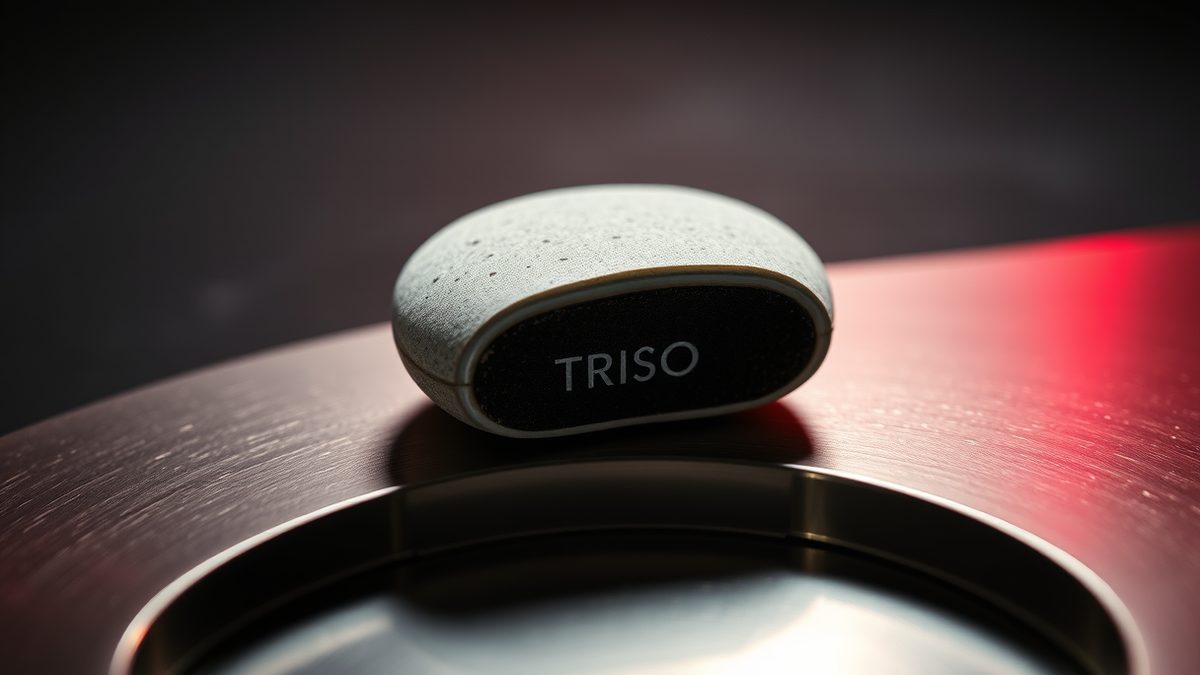
Antares announced on 23 October that DOE had approved the NSDA for Mark-1, its first electricity-producing reactor. The agreement establishes the design requirements, safety analysis approach and regulatory expectations that will govern the reactor through construction and operation.
Antares calls the NSDA the first step in DOE's authorization pathway for Mark-1, while the American Nuclear Society counts it as the second of five milestones, after the other transaction agreement, and reported that it was the first NSDA granted for a second reactor design under the framework.
Where the NSDA sits in DOE's five-step path
The five milestones run from the other transaction agreement to the NSDA, then the preliminary documented safety analysis, the documented safety analysis and a readiness review. A guide to the pathway published by Discovery Alert says DOE aims to review NSDA and PDSA submissions in roughly 45 days. It adds that approval is not a commercial license: the Nuclear Regulatory Commission keeps the final say, though an October 2026 rule lets applicants use DOE demonstration data in later license applications.
Mark-1 still needs the PDSA, DSA and readiness review before operation. Antares says Mark-0 moved from NSDA approval in October 2025 to criticality in eight months, receiving DOE approval of its PDSA and DSA along the way. Mark-1 follows the same sequence. The NSDA approval is the second time in twelve months that Antares has started DOE's authorization process for a reactor.
Mark-1 is designed for a 2027 full-power run
Antares says Mark-1 is designed to operate at full electrical power for several months in 2027 at Idaho National Laboratory, integrated with its nitrogen closed Brayton cycle power conversion system. It uses the same full-scale core, TRISO fuel and test facility as Mark-0. CEO Jordan Bramble said the run is planned for six months.
Mark-0 achieved criticality on 4 June 2026, Antares said, as the first privately developed non-light-water reactor to do so in the United States in more than four decades. POWER reported that it demonstrated a self-sustaining chain reaction but generated no electricity. Antares says Mark-1 will be the first full-scale electricity-producing microreactor test in the country and describes it as the bridge between the Mark-0 demonstration and R1 deployment.
What the 2027 campaign is meant to support
Antares says data from the 2027 operating campaign is meant to support its initial deliveries to defense customers beginning in 2028. That includes the first of multiple reactors at Fort Bragg, North Carolina, under the Army's Janus program. The first 1 MW R1 unit there is targeted for September 2028, according to Discovery Alert.
The American Nuclear Society reported that Antares is ultimately pursuing the R1, a design spanning 100 kWe to 1 MWe that uses sodium heat pipes and a nitrogen-based Brayton cycle, and that the company was selected for the Nuclear Energy Launch Pad in August, though it has not explicitly confirmed that Mark-1 is moving through that program.
Sources
11- 01Antares Secures BWXT Fuel Agreement, Advances DOE Review for Electricity-Producing Mark-1EN
- 02Antares Announces Approval Landmark In Mark-1 Reactor Authorisation ProcessEN
- 03Antares Clears First DOE Authorization Gate for Mark-1, Its Electricity-Producing ReactorEN
- 04What DOE Reactor Approval Really Means: the 5-Step Ladder ExplainedEN
- 05Antares, Last Energy, and Radiant hit DOE authorization milestonesEN
- 06Estonia approves 24/7 robotic pharmacies, paving the way for a European firstEN
- 07Edera's Object Capability Bounded Authority Promises to Isolate Credentials From AI Agent WorkloadsEN
- 08Trust Responsive Runtime Authorization for Agentic AI with Empirical Characterization of Policy Behavior and Parameter SensitivityEN
- 09Churchill Capital XI shareholders approve $2.5B Agility Robotics humanoid SPACEN
- 10Barracuda Flaws Could Be Chained to Bypass Authorization and Gain Root AccessEN
- 11Federal Reserve Board announces approval of application by The Bank of Nova ScotiaEN
All figures and quotations in this text come from the sources listed below.
Content prepared by the editorial team with AI assistance.
Sofia Marchetti
Comments
0- No comments yet — be the first.