Geely's 1,100 kW battery, and the two things that kill fast-charging cells
Geely Auto Group says its new Ultra Short Blade Battery can take close to 1,100 kilowatts and still hold up. The company backed that claim on 30 September with an extended warranty and a demo charge from 10% to 97% in 8 minutes and 40 seconds.
 Daniel FisherSport, cars and travel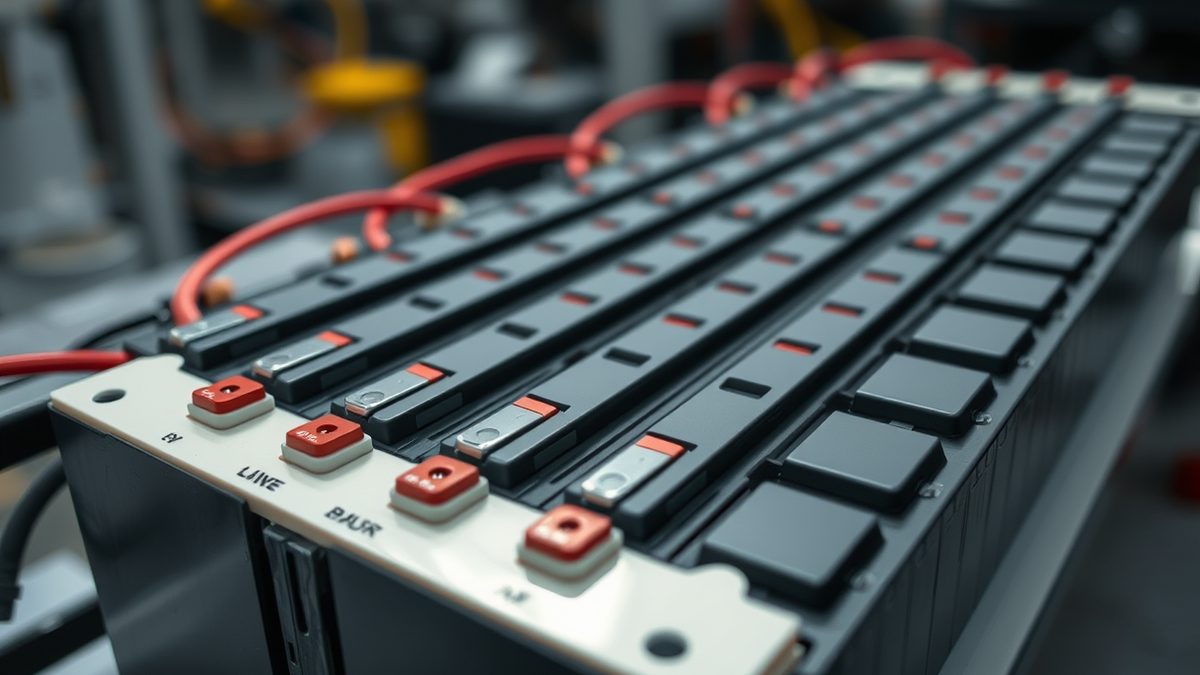
Geely Auto Group says its new Ultra Short Blade Battery can take close to 1,100 kilowatts and still hold up. The company laid out how on 30 September, in a briefing picked up by InsideEVs.
Charging an electric car that hard normally shortens the life of the pack. Geely's answer is a mix of smaller cells, reworked electrodes and software that watches the temperature, and the company has put a longer warranty behind the claim. Geely also says it is the first to let two EVs pull megawatt speeds from the same station. The core question is whether the chemistry can survive the current. Geely's charger can dispense 2.2 megawatts from a single gun, and some high-end EVs in the group will peak at around 1,100 kW. One demo figure is worth remembering: a Lynk & Co 10 charged from 10% to 97% in 8 minutes and 40 seconds.
For comparison, InsideEVs notes that the fastest-charging EVs in the US, the Lucid Gravity and the Porsche Cayenne Electric, peak at 400 kW, while the upcoming Mercedes-AMG GT will peak at 600 kW. Most mass-market US models average around 30 minutes for a 10-80% charge.
Geely also extended the battery warranty from eight years and 150,000 km (93,205 miles) to eight years and 200,000 km (124,000 miles). That is the company's own confidence signal, not an independent test result.
Jerry Gan, the CEO of Geely Auto Group, did not downplay the trade-off. "We do not advocate fast-charging technologies at the expense of lifespan," Gan said. "If a battery frequently fast-charged is not maintained or repaired, its lifespan suffers irreversible decline."
Lithium plating is the enemy
Geely frames battery aging around two root causes: lithium plating and extreme temperatures. In its own breakdown, megawatt speeds accounted for 60% of the heat generated in the battery, mainly from current pushed through the cells' internal paths. About 35% came from electrochemical reactions, and the rest from what the company called "entropic" heat. Lithium plating is the more stubborn problem. Ions flood the anode, the part of the cell where electrons travel during charging, and some accumulate on its surface instead of being absorbed. Push that too far and you get lithium dendrites, tiny spikes that grow inside a cell. Those can cause short circuits and permanent damage.
Ren Xiangfei, the chief engineering scientist at Geely Auto Group, said the company changed the cell, the raw materials inside it and the manufacturing process. It also added an AI-powered charger management system to keep the pack from crossing its thermal limits. "In an ideal world, the ions settle into the graphite evenly and smoothly," Xiangfei said.
The cell itself is smaller. The Ultra Short Blade Battery comes in two lengths, 395 mm and 370 mm, both shorter than Geely's 580 mm cell and what the company says is common in the industry at around 960 mm. A shorter cell means a shorter migration path for the ions during charging and discharging. That lowers internal resistance, which in turn cuts heat generation. There are structural changes on both sides of the cell. On the cathode, Geely uses "high entropy elements" to widen the pathways ions travel through, which Xiangfei compared to turning a single lane into a multi-lane highway. The changes to the graphite anode, he said, were equivalent to "building a flyover." A "lithium pulse restoration" technique keeps ions from piling up.
Why this is a China story first
None of this lands in a vacuum. Chinese automakers have pushed past 1,000 kW for passenger cars while Western companies have been rolling out 750 kW chargers, and InsideEVs describes the two camps as locked in a battle to one-up each other. BYD and Geely are the names in that fight.
The truck market shows how fast the demand side can move. Global sales of medium- and heavy-duty electric trucks hit a record 158,000 vehicles in the first half of 2026, up 75% year on year, according to BloombergNEF. More than nine out of 10 of those were sold in China. Electric trucks reached about 20% of total truck sales globally, and 5.5% in Europe.
Big packs and fast charging go together, and BNEF flags high-power charging as the bottleneck for long-haul electric trucking. It estimates operators would need to charge roughly $0.10 to $0.22 per kilowatt-hour on top of electricity costs to recover their investment. Utilization varies widely between stations today.
There is also a manufacturing question underneath all of it. As the BBC reported on 29 September, US startups such as San Diego-based Unigrid are trying to build a battery supply chain outside China, working with sodium ion rather than lithium ion cells. Unigrid's nine kilowatt-hour home battery currently uses cells made in China, and the company says it could switch to US cells later, at a different cost.
Sodium ion has its own argument to settle. Prof Dame Clare Grey at the University of Cambridge, co-founder of battery firm Nyobolt, told the BBC that under certain conditions chromium-3 in a cathode may form chromium-6, a toxic, cancer-causing material. Ivana Hasa at the University of Warwick said that is possible at very high states of charge but can be mitigated by controlling voltage inside the battery. Unigrid CEO Darren Tan called the toxicity concerns "overblown" and said third-party tests could not produce chromium-6. On price, the gap is still real. LFP batteries traded at $81 per kilowatt-hour last December, the BBC reported, while Unigrid's sodium ion battery is roughly $100 per kWh. Some companies suggested sodium ion could reach as low as $30 per kWh, but analysts told the BBC that significantly lower costs could be many years away.
The demand problem nobody solves with a spec sheet
Fast charging and cheap cells only help if the grid can carry the load, and that part of the story is getting worse rather than better. A study by Lighthouse Report with Trouw and other European media found that the vast majority of European data centers keep their environmental impact secret, NL Times reported on 30 September. In the Netherlands, fewer than a quarter of larger data centers publish electricity and drinking water figures.
The European Energy Efficiency Directive has obliged data centers with at least 500 kW of installed capacity to report energy and water consumption for three years. In practice, few do. The Dutch Datacenter Association counted 186 commercial data centers at that size at the end of last year, but the Netherlands Enterprise Agency had data on only 104 of them, with public electricity figures for 44 and water figures for 47. Statistics Netherlands puts data center electricity use in the country at 5.1 billion kilowatt-hours in 2024, or 4.6% of national consumption, nearly double the level five years earlier. Grid operator TenneT projects 10% to 15% by 2030.
That is the backdrop for every megawatt charging claim, including Geely's. The cells are getting better at taking power. Whether the grid and the reporting around it keep up is a separate question, and right now the answer is mostly undisclosed.
Sources
5- 01How Geely's New Battery Handles A Megawatt Of Charging Power Without Crazy DegradationEN
- 02The Electric Trucking Market's Record Rise: Three Things to KnowEN
- 03The start-ups hoping to return battery making to the USEN
- 04Most data centers refusing to say how much water, electricity they useEN
- 05Tesla patents 'Electric Fan Car' with 4 ducted fans ahead of Roadster revealEN
All figures and quotations in this text come from the sources listed below.
Content prepared by the editorial team with AI assistance.
Daniel Fisher
Comments
0- No comments yet — be the first.