Google AI chips head to orbit on SpaceX rocket as Satlyt raises $8M for satellite software
Google's tensor processing units launched toward orbit on a SpaceX Falcon 9 on Thursday, the first in-orbit test of Alphabet's Project Suncatcher, while Sunnyvale and Nairobi-based Satlyt said the same day it raised an $8 million seed round to run AI on satellites.
 Sofia MarchettiScience and health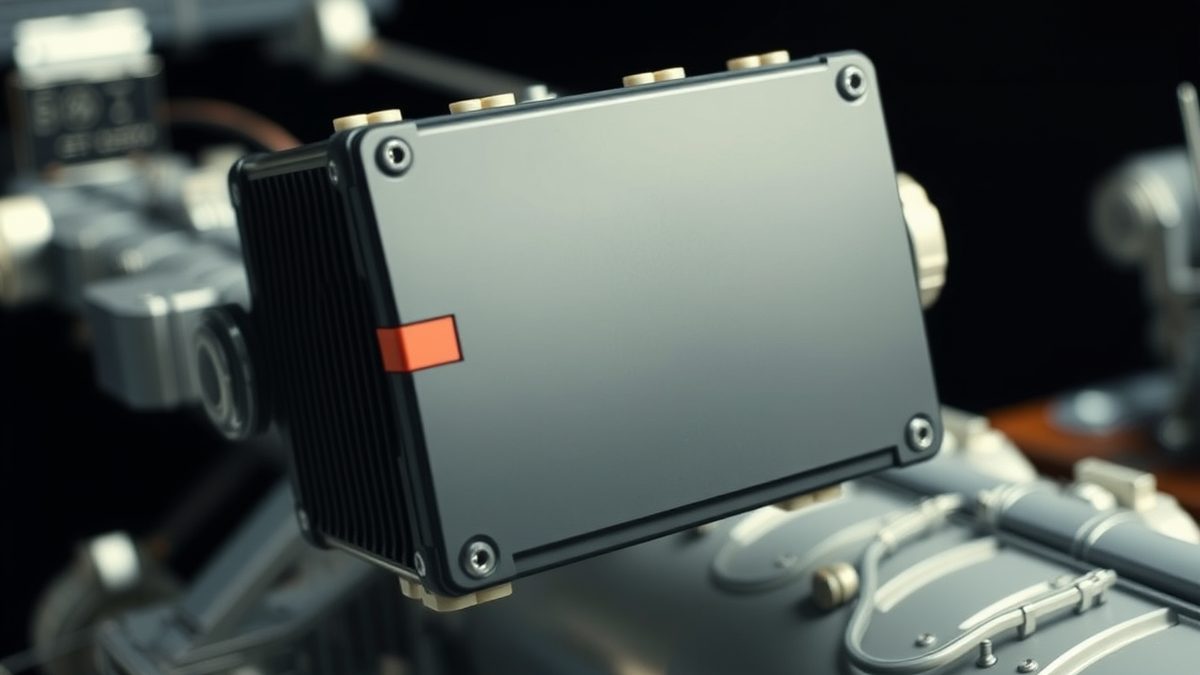
The launch was scheduled for 11:15 am PT from Vandenberg Air Force Base in California's Santa Barbara County, according to CNBC. The flight, named Transporter-18, is carrying Planet Labs satellites, including a solar-powered prototype equipped with Google's tensor processing units.
It marks the first in-orbit test for Alphabet's Project Suncatcher. Google first revealed the moonshot in November 2025. Alphabet said in a post announcing the launch that the project is a means of "exploring whether space could one day host scalable machine learning infrastructure." CNBC reported that Alphabet holds a stake worth more than $82 billion in SpaceX, which went public in June in a record IPO. The two companies are close partners even as their AI divisions compete.
A second, smaller bet on the same orbit
Hours earlier, TechCrunch reported that Satlyt, founded by former Google and SpaceX product manager Rama Afullo, had raised an $8 million seed round. The company has headquarters in Sunnyvale, California, and Nairobi, and builds software for satellites rather than spacecraft of its own.
Afullo told TechCrunch he pitched computers in space internally at both Google and SpaceX and was turned down at both. "When I was at SpaceX, I tried to pitch this internally. They said no. When I was at Google, I tried to pitch this internally. They said no," he said.
Satlyt's software is set to launch Thursday on a SpaceX rocket alongside the first prototype for Project Suncatcher. The mission involves three customers, according to TechCrunch: NASA, which is paying the company to test protocols for cloud computing in space; Stellerian, a space surveillance startup that wants to test image processing workloads; and TakeMe2Space, an Indian startup that builds computing hardware for satellites and wants to show its spacecraft can host other companies' software.
"The folks like SpaceX who are doing orbital data centers, if they are the iPhone, we'll build Android as a horizontally integrated, open ecosystem," Afullo told TechCrunch.
Unlike SpaceX, Google, or startups such as Starcloud and Cowboy Space Company, Satlyt is not planning to build its own spacecraft. Afullo compares his approach to VMware and Snowflake, companies whose platforms let users run complex software without worrying about the underlying infrastructure.
What the software actually does
Satlyt has already flown its software on two demonstration missions. The initial focus is finding operational efficiencies for spacecraft, which typically depend on flight controllers on the ground to solve problems. Sending data back to Earth, known as downlink, is expensive and often slow, so using AI to make decisions on the spacecraft can mean real savings, either when resolving anomalies or by processing sensor readings onboard instead of on the ground.
Earlier this year, Satlyt deployed Google DeepMind's Gemma AI model onboard a spacecraft operated by Momentus. According to TechCrunch, the model cut the size of a transmission about onboard software errors by more than 60%, the kind of efficiency that Afullo says can save hundreds of thousands of dollars per satellite each year.
Right now, few high-powered GPUs are in orbit. The company's next project is to show it can create a shared computing system, a cloud, spanning two different satellites, which it expects to attempt next year.
The seed round was led by Houston-based Non Sibi Ventures, where partner Bernard Harris, who served as a NASA astronaut for more than 20 years, helped ground the firm's conviction in a space-based business. Non Sibi partner Kent Lucas told TechCrunch that one reason the firm invested was that Satlyt does not depend on the highest-octane vision of space data centers, which faces uncertain economics and a launch bottleneck.
"We don't need data centers in space for Rama to be wildly successful, right?" Lucas said. "It can just be driven by the number of satellites going up."
Afullo's hope is to be live on 20% of satellites by the end of the decade, when he expects virtually every spacecraft builder to be putting GPUs and similar advanced processors in their satellites.
"If you're putting up a satellite without putting up a GPU on it, at the very least, you're doing yourself a disservice, right?" he said.
Google's math, and the skeptics'
Alphabet is making a much larger bet on the same premise. In low Earth orbit, satellites can "access near-constant sunlight, generating up to eight times more solar power than on Earth," Alphabet said in its post. Eventually, the company expects to "link together multiple constellations of satellites, allowing them to manage larger AI workloads while in orbit."
The Google parent has already tested its TPUs running AI workloads in a facility at the University of California at Davis, CNBC reported, but it does not yet know how its chips will perform in the challenging conditions of low Earth orbit.
SpaceX, led by Elon Musk, has announced plans to build and launch its own orbital data centers: swarms of satellites developed in Redmond, Washington, equipped with GPUs and solar arrays it plans to produce with Tesla. Earlier this year, Musk said data centers in space would be the cheapest way to train AI, "and that will be true within two years, maybe three at the latest." SpaceX COO Gwynne Shotwell said at an event in September that the company will deploy "supercompute in space" in 2027.
Industry experts are less certain. CNBC reported that space-based data centers represent a far-out mission, if they can even become feasible, in part because rocket launches remain capacity-constrained and expensive. Orbital data centers would also require cooling systems and chips that can withstand extreme temperatures, as well as protection from radiation. Clutter and orbital debris could also impede their viability.
The Transporter-18 flight is the second potentially historic launch in a single day for SpaceX, which is also slated to carry astronauts to the International Space Station from Florida's Space Coast for NASA on Thursday, marking the start of a six-month mission in orbit.
Europe's hardware layer looks at the same problem
Away from orbit, Latvian startup Trace.Space used the same day to launch Trinity, a hardware engineering platform aimed at robotics, aerospace, automotive, defence, and other hardware teams moving from prototypes to products manufactured at scale. Tech.eu reported that Trinity connects requirements, testing, design parameters, and product variants in one system, while giving AI agents access to that engineering data.
Trace.Space was founded in 2022 in Riga and has offices locally and in the US. The company estimates Trinity covers around 40% of the product development lifecycle today, up from roughly 10% when it started, and ultimately aims to manage as much as 80%. Over the next year it plans to move further into modelling, simulation, and manufacturing, including bills of materials, ERP, and supply chains.
Co-founder Janis Vavere, who saw the requirements-management problem from the buyer side at Jama Software, told Tech.eu that engineering information had been fragmented across requirements tools, spreadsheets, and documents. "We started in requirements management because we knew this from our past experience, and we wanted to hold that core. But the plan was never to stay in requirements only. It was to expand across the engineering and manufacturing lifecycle," he said.
The document layer underneath all of it
One more piece of the same puzzle surfaced on 28 September, when Vespper, a Y Combinator F24 company, launched a DOCX MCP that it says makes AI agents 3x faster and 2x cheaper on Word documents, with better accuracy.
Vespper argues that agents editing .docx files today spend their context budget on Word mechanics instead of the actual task. The company describes a .docx as a ZIP file of XML following the OOXML spec, where a short four to five sentence paragraph can turn into thousands of tokens once styles, metadata, formatting, run splitting, and XML boilerplate are added.
The startup cites Harvey, the legal AI company, which it says diagnosed the problem after rebuilding its document editing system: it had been asking one agent to be both a legal assistant and a Word state machine at the same time. Vespper's answer is lossless round-tripping, inspired, it says, by the Infrastructure as Code world.
Whether any of this reaches orbit at scale is still open. Alphabet has a chip in the sky and a test to run. Satlyt has $8 million and a software stack on someone else's satellite. Both are betting that the constraint is no longer the launch, but what the hardware can usefully do once it gets there.
Sources
4- 01Satlyt, founded by a former Google and SpaceX product manager, raises $8M to run AI on satellitesEN
- 02SpaceX set to launch Google AI chips into orbit in push toward space-based data centersEN
- 03Trace.Space launches Trinity to tackle hardware engineering's next bottleneckEN
- 04Launching Vespper DOCX MCP: 3x faster, 2x cheaper, more accurateEN
All figures and quotations in this text come from the sources listed below.
Content prepared by the editorial team with AI assistance.
Sofia Marchetti
Comments
0- No comments yet — be the first.