Space Science Roundup: Gut Bacteria in Orbit, Orbital AI and a Russian Capsule
Blood samples from 52 astronauts suggest gut bacteria start fermenting protein within weeks of arriving in orbit, according to University of Copenhagen research published on 28 September, while on 1 October the first Google TPUs headed for orbit aboard a SpaceX Falcon 9.
 Sofia MarchettiScience and health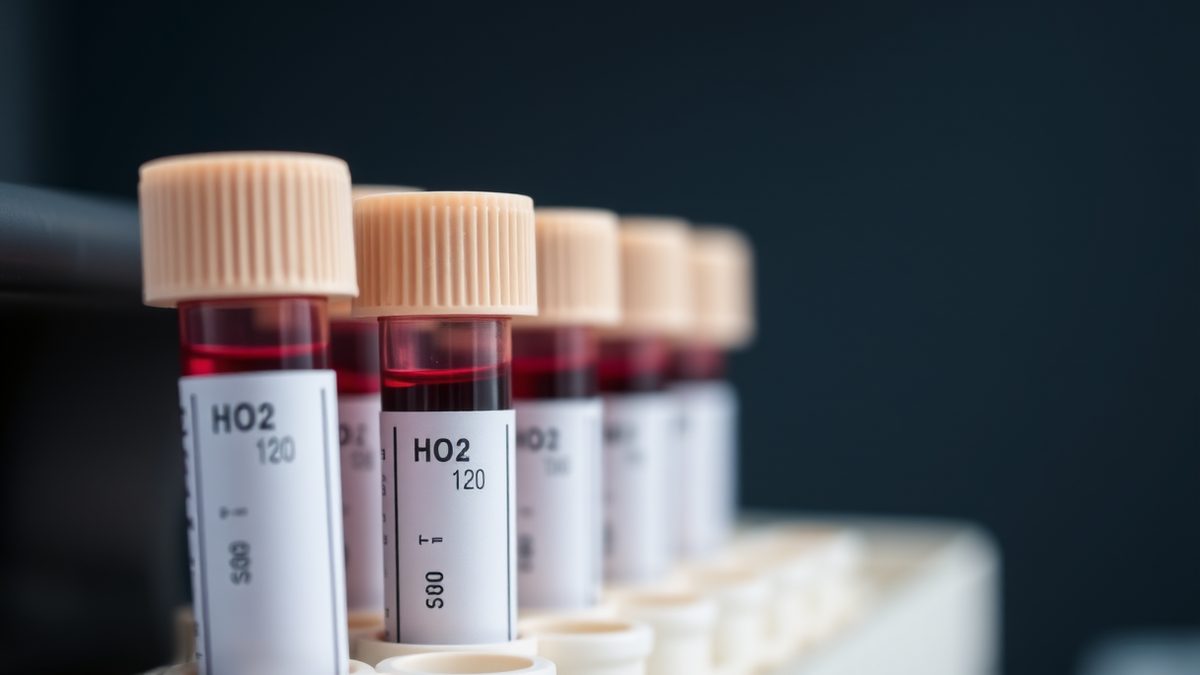
Two very different kinds of space research landed within days of each other. One explains a complaint as old as human spaceflight: constipation. The other tests whether AI chips can survive low Earth orbit.
On 28 September, the University of Copenhagen published results in ScienceDaily describing blood analysis from 52 astronauts who spent months aboard the International Space Station. The study, run with NASA, found signs that gut bacteria begin fermenting protein rather than fiber within weeks of arrival, a shift that persisted until the astronauts returned to Earth. "We see changes in astronauts' blood samples that indicate that the gut bacteria begin to ferment protein to a greater extent than usual within weeks after the astronauts arrive in space, and this change continues until they are back on Earth," said joint first author Giorgia La Barbera, an associate professor at the university's Department of Nutrition, Exercise and Sports.
The mechanism is not exotic. Protein fermentation happens on Earth too, when available dietary fiber runs out. The researchers suspect microgravity slows the movement of food through the digestive tract. "The lack of gravity in space probably causes food to move more slowly through the intestine, and this fits with the fact that we are seeing signs of increased protein fermentation. This may also help explain constipation in astronauts," said co-author Henrik Roager.
That matters beyond comfort. Lars Ove Dragsted, the senior author, said protein fermentation products are "often associated with negative health consequences, such as kidney damage, potential effects on mood or reduced ability to focus." Longer missions to the Moon and Mars would expose crews to the condition for far longer than current ISS rotations.
Orbital compute gets its first flight test
On 1 October, SpaceX was scheduled to launch Google tensor processing units into orbit on Planet Labs satellites, according to CNBC. The Transporter-18 mission from Vandenberg was due to lift off at 11:15 am PT and marks the first in-orbit test of Alphabet's Project Suncatcher, a "moonshot" Google first revealed in November 2025. Alphabet said in a post that low Earth orbit offers "near-constant sunlight, generating up to eight times more solar power than on Earth," and floated linking "multiple constellations of satellites" to handle larger AI workloads.
The chips have already run AI workloads in a facility at the University of California at Davis. What is untested is how they behave in orbit. CNBC also noted that Alphabet holds a stake in SpaceX worth more than $82 billion; SpaceX went public in June in a record IPO.
The same launch carries software from Satlyt, a Sunnyvale and Nairobi company that raised an $8 million seed round, founder Rama Afullo told TechCrunch on 1 October. Satlyt does not build spacecraft. It builds the layer that runs models on other people's hardware, and earlier this year it deployed Google DeepMind's Gemma model on a Momentus spacecraft, cutting the size of a transmission about onboard software errors by more than 60%. "When I was at SpaceX, I tried to pitch this internally. They said no. When I was at Google, I tried to pitch this internally. They said no," Afullo said. The Transporter-18 mission also carries a spacecraft from Indian startup TakeMe2Space, with NASA paying to test cloud computing protocols in orbit.
Not everyone is convinced the economics work yet. At the AI Infra Summit in Santa Clara, held 15-17 September, Viasat chief data and AI officer Sumeet Singh said launch costs of $2,500 to $3,000 per kilogram would need to fall to roughly $200 to $500 for orbital data centers to make financial sense, according to Data Center Knowledge. Deepak Sachdeva, CIO of the US Air Force, said the technology is not ready for operational use at scale and backed a proof of concept instead.
Other missions and money
Russia's long-delayed crewed spacecraft is still not flying. Ars Technica reported on 30 September that Roscosmos chief executive Dmitry Bakanov has dropped the "Eagle" name favored by his predecessor and refers to the vehicle as PTK NP. Bakanov said parachute drop tests will begin this fall in the Far East, with emergency rescue tests later this year and tests in the zone of maximum dynamic pressures in 2027. Russian officials are holding to a debut crewed launch in 2028 or 2029, likely on an Angara A5M rocket.
Money continued to move elsewhere. Varda raised a $251 million Series D to advance pharmaceutical manufacturing in space, Endpoints News reported on 30 September. Quantum Space signed a launch processing work order with All Points Logistics for its Prime pathfinder mission, targeting the second half of 2027 from Vandenberg, SpaceNews reported on 30 September. Blackswan Space closed a €2.5 million round led by Iron Wolf Capital, bringing total funding to €3.2 million, Tech.eu reported on 30 September; its RPO Kit is set to fly in 2027.
On the ground, the European Space Agency's Kate Underhill told EE Times at the Pretzl Connect 2026 event in Budapest that space systems typically operate "at least 10 years behind consumer electronics," and that ESA once tried to order 20 laser diodes from a German supplier that demanded a minimum order of 10,000 units. Europe's push for supply chain control is now a policy question as much as an engineering one.
Sources
12- 01Blood tests reveal why astronauts get constipated in spaceEN
- 02SpaceX set to launch Google AI chips into orbit in push toward space-based data centersEN
- 03Satlyt, founded by a former Google and SpaceX product manager, raises $8M to run AI on satellitesEN
- 04Space Data Centers Inch Toward Reality, With CaveatsEN
- 05So what's happening with Russia's new, long-delayed crewed spacecraft?EN
- 06Varda gets $251M to make medicines in space, a long-sought area for drugsEN
- 07Quantum Space Executes Launch Processing Agreement with All Points Logistics for Prime MissionEN
- 08Blackswan Space raises €2.5M to take autonomous spacecraft navigation into orbitEN
- 09Europe's Space Industry Seeks Greater Supply Chain ControlEN
- 10Launch Preview: Crew-13 to head to ISS, Falcon Heavy mission for the NROEN
- 11Trace.Space launches Trinity to tackle hardware engineering's next bottleneckEN
- 12Agile Space Industries Expands Leadership Structure to Support Next Phase of GrowthEN
All figures and quotations in this text come from the sources listed below.
Content prepared by the editorial team with AI assistance.
Sofia Marchetti
Comments
0- No comments yet — be the first.