HBM smuggling probe targets South Korea-to-China trade loophole as AI memory supply tightens
South Korean authorities are investigating a smuggling route that pairs high-bandwidth memory worth about $4,000 with cheap server chips, reports said on 3 November. The modules are stripped apart in China, and AI memory supply stays tight through 2028.
 Grace OkonkwoAI, models and technology
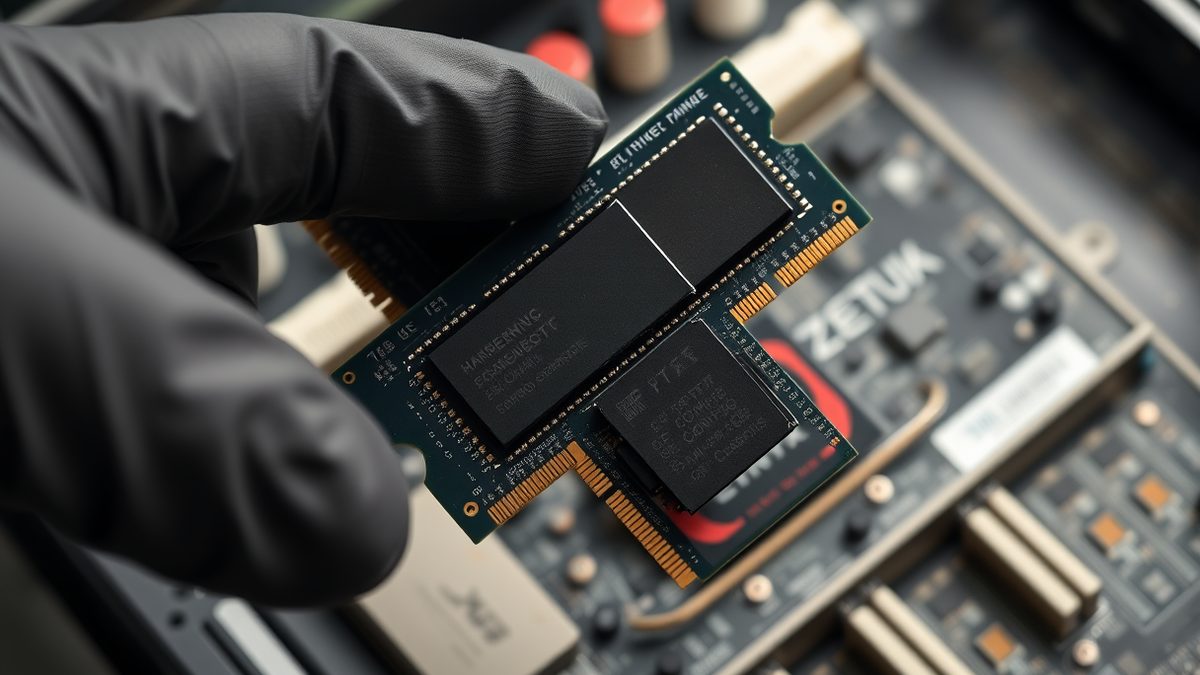
On 3 November, a report described a route that moves banned HBM out of South Korea into China. It pairs the expensive memory with low-cost server hardware. The modules are separated once they are inside the country. The same day, a second report put the memory's value at about $4,000 per unit.
That timing matters for anyone buying AI hardware. HBM decides how many accelerators a datacenter can actually run. Suppliers say demand already outruns capacity. If some output leaves through unofficial channels, the shortage buyers face in 2027 and 2028 gets worse. Neither the Korean government nor the chipmakers named in the coverage has said how large the diverted volume is.
Suppliers say the squeeze runs to 2028
The smuggling reports land on top of a supply picture that suppliers themselves call tight. Micron warned that the global memory shortage could worsen through 2028, according to reports from TechRepublic, Eurogamer.net and 디지털투데이 on 2 and 3 October. Samsung Electronics said the memory shortage will persist through 2028. It also said next year's HBM supply is already sold out, according to a report on 29 October. Two of the three main HBM suppliers are saying the same thing in public.
Tight supply shows up in prices first. Samsung's HBM4 pricing rose more than threefold, starting at $4.50 per Gb, according to BigGo Finance on 2 October. Memory supply is expected to stay tight through 2027, the same report said. An analysis from SNS Insider the same day projected that Samsung's HBM output will take about 30% of its DRAM capacity by 2027. Every wafer that goes to HBM is a wafer that does not go to conventional DRAM. That is where the shortage spreads from servers into laptops and phones. The reported figures do not say how much of the price rise comes from HBM4 itself and how much from the wider DRAM market.
Capacity is the other half of the story, and it is expensive to add. HBM production consumes three to four times more wafers than conventional DRAM, according to a report on 2 November. The supply crunch is expected to persist through 2028 despite capacity buildouts, that report said. The extra wafer cost is the mechanical reason the shortage does not clear quickly. A fab that switches lines to HBM gives up more standard DRAM output than the raw numbers suggest.
Why the bottleneck sits in three companies
The market is concentrated. Three companies have locked up about 85% of the supply of what one report on 18 September called AI's scarcest asset. That concentration is why a single deal can change what is left for everyone else. An analysis from I/O Fund on 2 October argued that Nvidia's SK Hynix deal leaves little AI memory for other buyers. The deal's value has not been disclosed.
Governments are now treating the supply chain as strategic infrastructure. Korea aims to become a global HBM production hub and plans a center for AI data centers, according to a report on 2 November. That push runs alongside the smuggling investigation. The two are not separate stories: a country that wants to be the HBM hub has an interest in controlling where its output goes. The reports do not say whether the new center has funding or a site yet.
Financial markets have already priced in the scarcity. Citi recommended memory-chip stocks as AI demand threatens supply, according to kaohoon international on 2 October. Micron's most recent quarter showed record profits driven by AI demand, according to TradingView and The Futurum Group on 2 October. Streetwise Reports noted the stock is up 549%. Those numbers describe the supplier side of the shortage. For buyers, the same figures describe a bill that keeps growing.
Micron is also expanding physically. Micron Taiwan is accelerating its expansion, the Taipei Times reported on 2 October. Vietnam is beginning to benefit from the race to expand AI chip production, according to Theinvestor the same day. New capacity takes years to come online. That is why the 2028 date keeps appearing in supplier statements rather than 2026 or 2027.
What the smuggling reports leave open
Details of the enforcement side remain thin. The 3 November reports describe the method: pairing $4,000 memory with cheap server chips and stripping the parts in China. They do not give the volume, the operators or any charges. Trade controls on advanced memory exist. Whether they are being enforced at the scale the reports imply is a separate question the coverage does not answer.
For datacenter operators and server buyers, the practical result is a market where allocation, not price, decides who gets memory. Samsung says next year's HBM supply is sold out. Micron says the shortage worsens through 2028. The smuggling route, if it is as described, is a symptom of that gap rather than a cause of it. The next data point to watch is whether Korean authorities confirm an investigation and put a number on the diverted volume. Until then, the size of the leak is unknown.
Sources
4- 01Agents don't need memory, they need documentationEN
- 02The KV Cache Is the New Memory WallEN
- 03Memory safety for Postgres extensions in C/C++EN
- 04Memory-Safe WebP DecodingEN
All figures and quotations in this text come from the sources listed below.
Content prepared by the editorial team with AI assistance.
Grace Okonkwo
Comments
0- No comments yet — be the first.