High energy prices push Europe's industry out of Europe, one plant at a time
Playmobil's Dietenhofen plant in Bavaria, where the plastic figures have been made for decades, ran its final shift in June, with around 350 jobs lost. The company cited high energy prices first among the reasons, and it is not alone.
 Dr. Amara PatelEconomy, business and world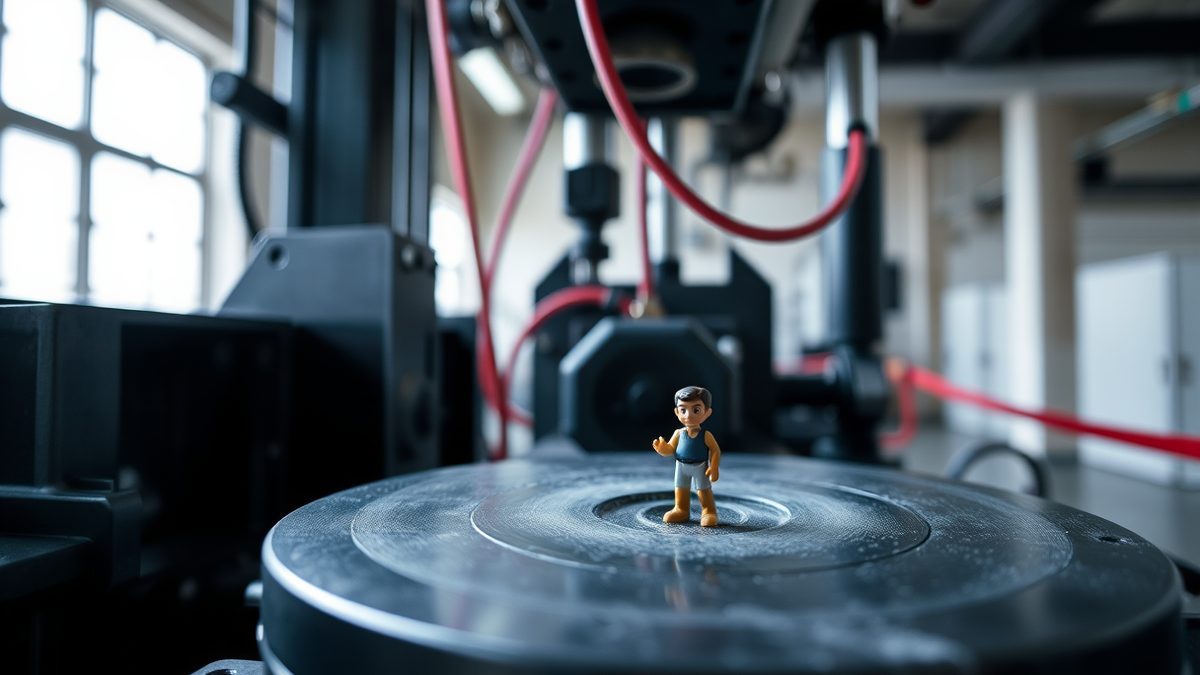
The final shift at Playmobil's Dietenhofen site ended in June. Around 350 jobs go with it. The Horst Brandstätter Group, which owns the brand, is consolidating figure production at plants in Malta and the Czech Republic. It named high energy prices, alongside wages and ancillary labour costs, as the decisive factor, Brussels Signal reported on 24 June. Administrative and logistics work stays in Germany. The moulding does not.
That is one plant. Look wider and the same arithmetic keeps appearing.
What the numbers say
Germany's household electricity prices are currently the fifth most expensive in the world and the second highest among major industrial nations, according to Brussels Signal. That ranking predates this year's price swings. It matters most for energy-intensive processes such as plastic injection moulding, where electricity is a direct input rather than an overhead. Brussels Signal ties the pressure to the country's rapid shift away from nuclear and coal without sufficient baseload alternatives, plus bureaucracy and wage costs. Economists quoted in the piece describe the cumulative effect as creeping deindustrialisation. Unions called the Playmobil decision a catastrophe for the region. Business groups called it the latest example of a mid-sized German firm relocating.
Playmobil had been losing sales and money for years. Management still framed the cost environment, not demand, as the reason production could not stay. That distinction is the whole argument now running through European industrial policy.
Energy prices are not only a German story. Ineos idled Europe's last world-scale acetyls plant on 22 September. The company said energy prices in Europe run at 12 times US levels, according to its own announcement. Two days later Chemical & Engineering News reported that Ineos would shutter its UK acetyls plants.
France has asked the EU to take immediate action on energy prices, the Financial Times reported on 21 September. EU diplomats backed carbon market changes aimed at curbing price spikes, Reuters reported on 23 September. Those headlines are context, not the core of this piece, but they show how quickly the cost question has moved from trade press to heads of government.
The other side of the price signal
Expensive energy does not only push factories out. It also changes what households buy, and here the numbers point the other way.
Residential heat pump sales rose 17% year on year across 11 European countries in the first quarter of 2026, according to the European Heat Pump Association, which pv magazine reported on 4 May. Around 575,000 units were sold from January to March, up from 494,000 a year earlier. France, Germany and Poland averaged 25% growth. The EHPA attributes the surge to a sharp jump in gas and oil prices after Iran closed the Strait of Hormuz on 2 March. Austria was the exception: sales there fell 30% because government subsidies were absent.
If your streaming service doubled its price then blocked its movies you'd find a better one. Consumers have realized heat pumps are the solution when gas and oil are erratic in price and supply.
That is Paul Kenny, director general of the EHPA, quoted by pv magazine. He said the European Commission has outlined VAT and tax reductions and social leasing schemes for lower-income households in its energy crisis plan, and called on EU governments to implement them quickly.
The pattern is familiar: when the running cost of gas rises, the payback period on an electric alternative shortens. Studies published in 2024 found heat pump and solar combinations become cheaper than gas heating within 11 to 14 years, per the same report.
Why the plant still leaves
A household can swap a boiler in a weekend, given the subsidy and the installer. A factory cannot swap its energy contract, its furnace and its supply chain in a quarter. It cannot wait years for a grid connection or a market redesign. Playmobil's figure production moved to existing facilities that were already tooled and staffed. The company kept the German head office and the logistics. What left was the part that consumes power at scale.
There is a second, quieter cost inside all this. European tech leaders and cybersecurity experts have spent recent months arguing that panic about AI-driven catastrophe is crowding out the unglamorous work of securing systems, Politico reported on 24 September. Vincent Strubel, who leads the French cybersecurity agency ANSSI, wrote that managing AI risks requires serious work under time constraint, and that it does not require starting a new panic every other week. The parallel with energy is not exact, but the shape is similar: a real, expensive problem, and a political conversation that keeps drifting elsewhere.
What happens next depends on contracts that are already signed. Monitoring Analytics, the official market monitor for the PJM Interconnection in the US, found wholesale power costs there rose 75.5% year on year in the first quarter of 2026, from $77.78 to $136.53 per megawatt-hour, and blamed datacenter load growth. The watchdog said the price impacts on customers are very large and not reversible. That is the American version, where the demand shock is new. Europe's version is older and more structural, and the Playmobil shift is what it looks like on a factory floor.
Sources
4- 01High energy prices force Playmobil to end production in GermanyEN
- 02Heat pump sales rise 17% across Europe in Q1 as energy prices surgeEN
- 03Don't believe the doomers: Europe's tech industry slams AI panicEN
- 04Datacenters slurping juice help drive 75% jump in PJM power pricesEN
All figures and quotations in this text come from the sources listed below.
Content prepared by the editorial team with AI assistance.
Dr. Amara Patel
Comments
0- No comments yet — be the first.