IBM quantum chip does in 19 seconds what a supercomputer needs 110 years for
IBM's Nighthawk r2 processor generated one million samples in 19 seconds on 29 September, a task researchers estimate would take the Frontier supercomputer around 110 years.
 Grace OkonkwoAI, models and technology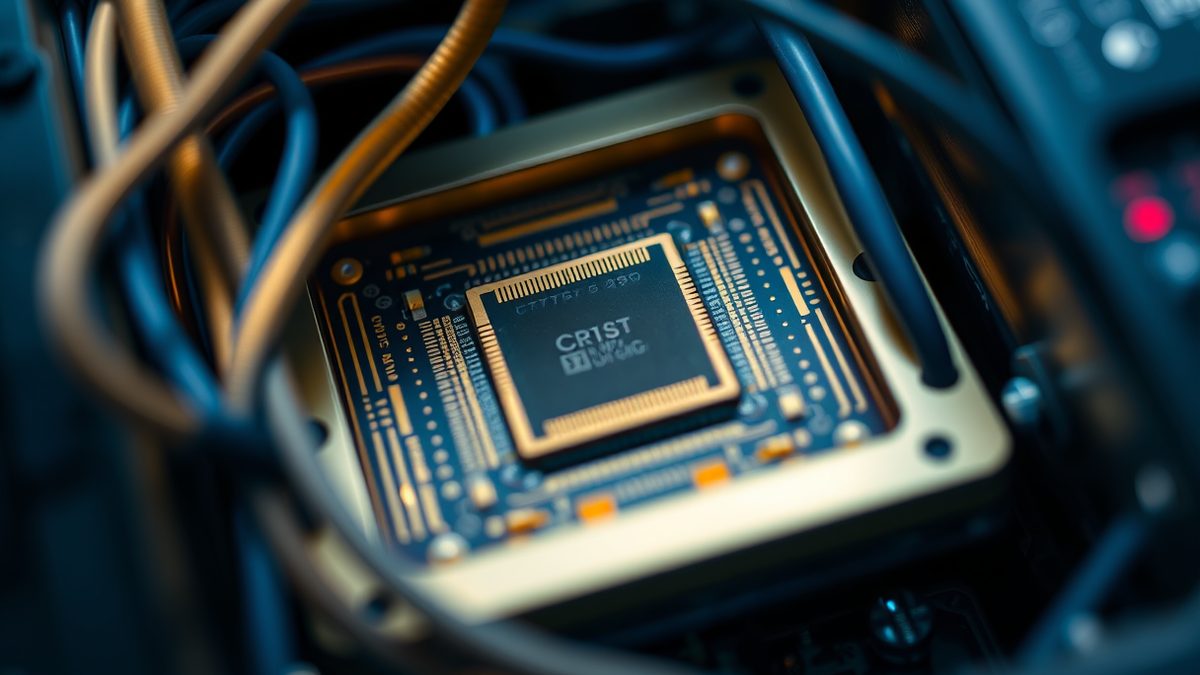
The experiment ran on a 120-qubit superconducting processor available through IBM's cloud platform. Theoretical condensed matter physicist Tigran Sedrakyan of BlueQubit led the work. ScienceAlert reports the team used 61 qubits and random circuits of increasing complexity up to 40 cycles. At 36 cycles and 918 two-qubit gates they hit what they call a Goldilocks zone. Reproducing the million samples would take about 1.2 x 10^27 computational operations, the researchers calculated using tensor-network contraction. Ground News reports the result beat a Frontier-based estimate by a factor of 1.8 trillion.
The caveats matter, though. The 110-year figure assumes a particular simulation method and unlimited memory. It is not a fundamental limit for classical machines.
Sedrakyan's team acknowledges that classical researchers have repeatedly found shortcuts. The most famous case came after Google's 2019 Sycamore claim, which a 2026 paper directly refuted, according to Negotium Infinitum. The preprint is on arXiv and awaits peer review, though the team released circuits, samples and analysis code for independent validation.
A milestone, not a market
Negotium Infinitum's 28 September analysis puts the technical headlines next to the money. IonQ posted $80.05m in Q2 2026 revenue, up 287% year on year. D-Wave's quarterly revenue sits near $3m. Google and IBM disclose no standalone, verifiable quantum revenue at all. That gap is the story investors keep missing: quantum advantage on a benchmark does not yet translate into orders.
The same day, Cloudflare said it had worked with the IETF on a downgrade-protection extension for IPsec, now in beta across its WAN and Magic Transit products. Cloudflare also moved its post-quantum transition deadline up to 2029, citing falling resource estimates for quantum attacks on public key cryptography. The company says the attack requires a quantum computation during the protocol handshake, unlike harvest-now, decrypt-later.
Elsewhere on 29 September, ScienceDaily reported that Kyoto University and Hiroshima University researchers demonstrated an entangled measurement for W states, a multi-photon entanglement problem open for more than 25 years. Corresponding author Shigeki Takeuchi said: "More than 25 years after the initial proposal concerning the entangled measurement for GHZ states, we have finally obtained the entangled measurement for the W state as well, with genuine experimental demonstration for 3-photon W states."
Not every recent milestone is terrestrial. Interesting Engineering reported that University of Vienna scientists operated a quantum computer in space, launched on a Falcon 9 in June 2025, after radiation degraded its photon detectors and the laser output fell from 20 milliwatts to four.
The wider context is sober. Wikipedia's current entry notes that as of 2026 these demonstrations are best understood as scientific milestones rather than evidence for near-term deployment.
Sources
7- 01IBM's Quantum Computer Completes in 19 Seconds What Could Take a Supercomputer a CenturyEN
- 02IBM's Quantum Computer Completes in 19 Seconds What Could Take a Supercomputer a CenturyEN
- 03Quantum Computing's Milestone-Revenue Gap: How Far Apart Are They?EN
- 04Preventing quantum downgrade attacks against IPsecEN
- 05Quantum teleportation breakthrough: Scientists crack a 25-year entanglement challengeEN
- 06World-first: Quantum computer operated in space despite setbacksEN
- 07Quantum computing - WikipediaEN
All figures and quotations in this text come from the sources listed below.
Content prepared by the editorial team with AI assistance.
Grace Okonkwo
Comments
0- No comments yet — be the first.