Mazda's China LiDAR SUV Lands a Day After the AI Antitrust Claim Against OpenAI, Anthropic
Mazda put a LiDAR sensor suite into its China-built CX-6e on 27 September, the same weekend a proposed class action against OpenAI, Anthropic, SpaceXAI and Google over an alleged agreement to slow AI development was still making the rounds. Neither story is a courtroom ruling, which is why this week's antitrust picture is messier than the headlines suggest.
 Dr. Amara PatelEconomy, business and world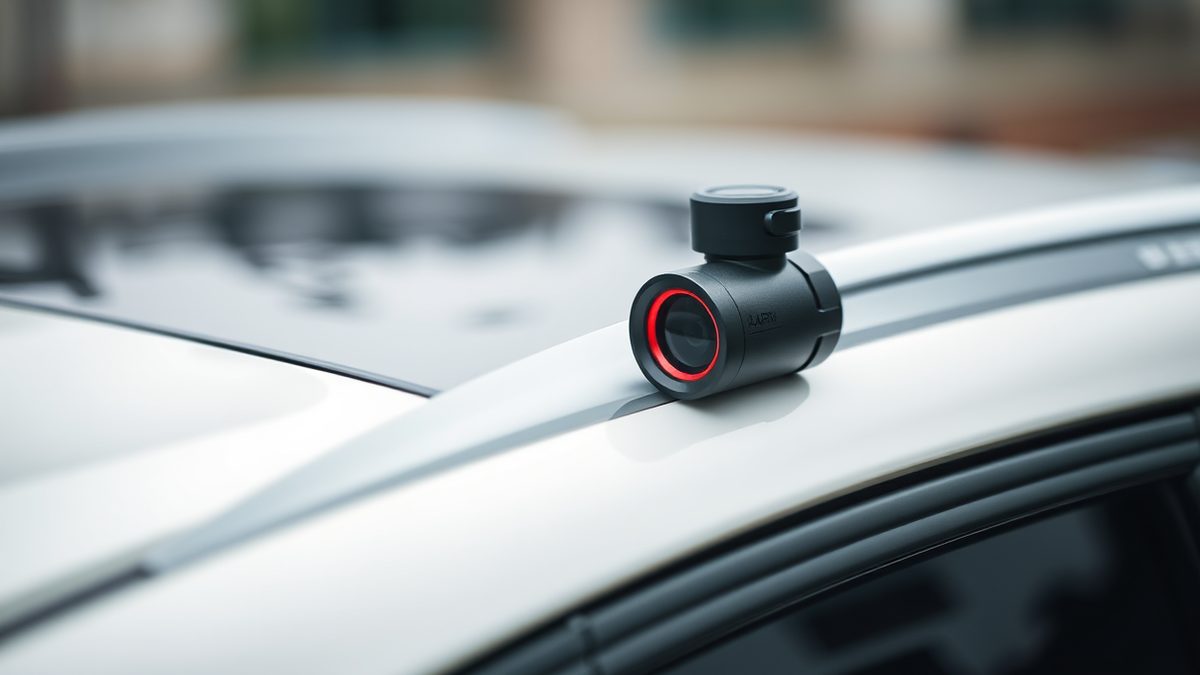
The newest dated item in the tech antitrust pile is not a ruling. It is a car. On 27 September, Electrek reported that Mazda added a LiDAR suite to the CX-6e, the electric SUV built through its Changan Mazda joint venture. The setup enables what the outlet calls "advanced L2" autonomy, navigation on autopilot and automated parking.
Mazda says the system pairs LiDAR with 11 high-definition cameras, 12 ultrasonic sensors and three millimeter-wave radars for what it calls full-domain perception. Electrek reports the company put the system through 11 high-risk real-world tests, from narrow mountain roads to rainy-night highway driving. The EZ-60 Laser Edition received a TOP Intelligent Intelligent Safety Challenge certificate from CATARC. The CX-6e is not sold in the US, so the comparison to Tesla's China-market driver assistance naming is largely academic for American readers.
The timing matters. Antitrust talk around AI has been running hot without much of a paper trail. The Mazda story is a reminder that the hardware side of autonomy is shipping into real markets, sensors and all, while the legal side is still trading in filings and press statements.
The antitrust claim is a class action, not a verdict
The AI antitrust story is older and less settled. Tom's Hardware reported on 21 September that four plaintiffs who subscribed to ChatGPT, Claude, Grok or Gemini filed a proposed class action alleging the developers violated antitrust law by agreeing to slow AI development.
The suit argues the arrangement would "reduce the value consumers get for paid AI subscriptions," according to the Associated Press as cited by Tom's Hardware. It dates the coordination to July 2026, after the leading labs signed a statement acknowledging "intense competitive pressure not to unilaterally slow" development. That is a complaint, not a judgment. The plaintiffs' lead counsel, attorney Nick Rowley, said in the Tom's Hardware piece that a private safety agreement "substitutes collective restraint for individual accountability." Anthropic's Dario Amodei, OpenAI's Sam Altman and the Trump administration all feature in that account, with the president calling the AI extinction framing a "HOAX." Chinese state media, per the same report, called the proposed agreement a club whose membership rules were drafted before the guest list was announced.
"The experience that will be developed through these grants will be phenomenal," said Julia Selker, executive director of the trade group Working for Advanced Transmission Technologies Coalition.
That quote belongs to a different fight, the one over grid capacity, but it illustrates the pattern: antitrust and infrastructure fights are colliding. Canary Media reported on 24 September that the Department of Energy put $1.9 billion behind 31 projects across 26 states through its SPARK grant program, with utilities pledging $3.35 billion in matching funds for a total of $5.25 billion. Recipients include American Electric Power, CenterPoint Energy, Duke Energy, Eversource Energy, Rocky Mountain Power and PPL Electric Utilities, plus four public power utilities and rural electric cooperatives in Arizona, New Mexico and North Carolina. Two of the largest projects each got a $250 million grant: a $1.2 billion effort headed by the Colorado Energy Office and an $832 million one by the Oklahoma Office of Management and Enterprise Services. Both are meant to expand capacity to share power between the Eastern and Western US grids. Canary Media notes that adoption of advanced conductors and dynamic line rating has been slow partly because utilities are not incentivized to choose alternatives to grid investments on which they earn regulated profits.
Europe pushes back on the doomer framing
Meanwhile, the political fight over AI safety has a European counterweight. Politico reported on 24 September that European tech leaders and cybersecurity researchers are pushing back on US-generated warnings about AI extinction. Balderton Capital partner James Wise said of the current narrative, "Sadly, it has jumped up to the Terminator is coming."
The piece cites Synthesia policy lead Alexandru Voica, cyber threat researcher Marcus Hutchins and General Intuition's Pim de Witte. It notes that OpenAI declined to comment while Anthropic did not respond to a request for comment. Add funding data and the picture widens again. Tech.eu reported on 24 September that Swiss tech companies raised more than €1.1 billion in the first half of 2026, with the ten largest rounds accounting for around two-thirds of the total. Semiconductors took about €281 million, energy €223 million and healthtech €220 million. Concentrated capital in a few sectors is not an antitrust violation, but it is the kind of structure competition regulators tend to notice.
For all the noise, none of this week's newest items produced a court ruling. The AI antitrust case is a proposed class action at an early stage, the DOGE-style grid money is an award announcement, and the Mazda update is a product feature. That gap between filing and judgment is where the actual fight sits, and it is why the loudest claim is rarely the most useful one.
Sources
6- 01Mazda adds LiDAR to CX-6e, rolls out "self driving" tech in ChinaEN
- 02TechCrunch Mobility: AV companies pick their lanesEN
- 03Anthropic, OpenAI et al. face antitrust suit for agreeing to slow AI developmentEN
- 04Advanced grid tech gets a $1.9B DOE boostEN
- 05Don't believe the doomers: Europe's tech industry slams AI panicEN
- 06Switzerland's top-funded tech companies in H1 2026EN
All figures and quotations in this text come from the sources listed below.
Content prepared by the editorial team with AI assistance.
Dr. Amara Patel
Comments
0- No comments yet — be the first.