Mazda's CX-6e LiDAR rollout lands as AI labs fight antitrust suit over slowing development
Mazda said on 27 September that its CX-6e electric SUV now ships with a LiDAR suite enabling "advanced L2" autonomy, navigation on autopilot and automated parking in China, the same week a proposed class-action accused four AI labs of coordinating to slow development.
 Dr. Amara PatelEconomy, business and world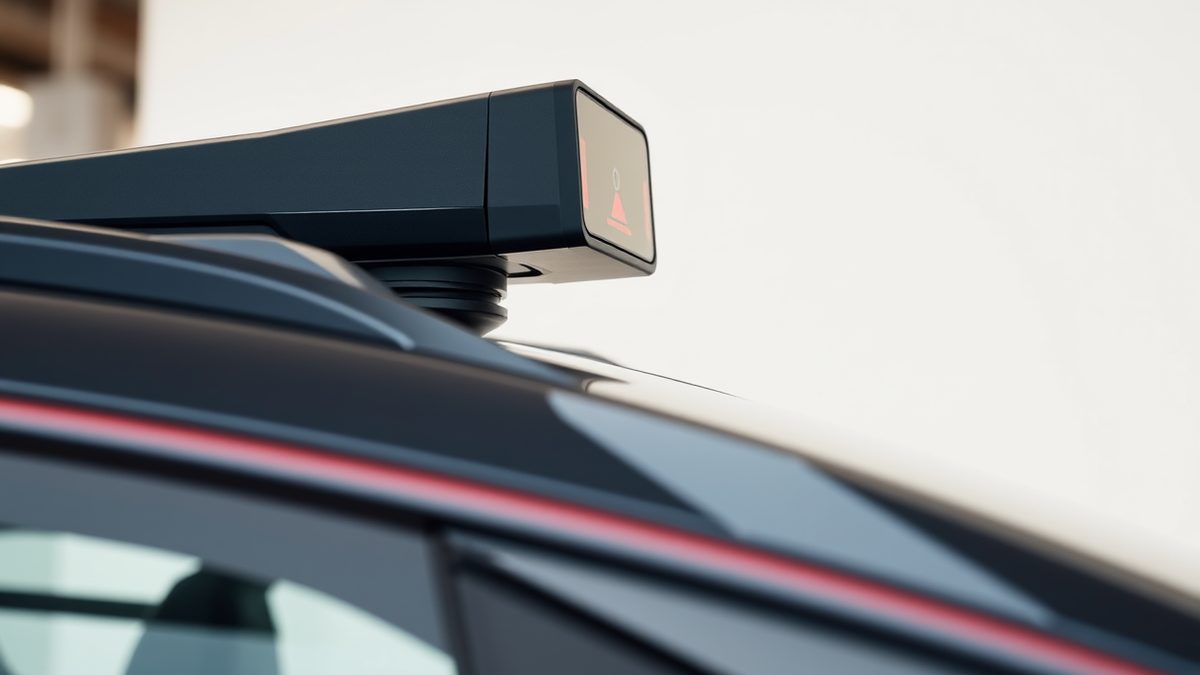
Mazda's CX-6e just picked up a LiDAR suite that its China joint venture says delivers "advanced L2" autonomy, navigation on autopilot and automated parking, Electrek reported on 27 September. The hardware is the second product to come out of Mazda's partnership with Changan Auto.
The system pairs the LiDAR with 11 high-definition cameras, 12 ultrasonic radar sensors and three millimeter-wave radar sensors, Electrek reported. Changan Mazda calls this "full-domain" perception: it covers cars, bikes and pedestrians in poor visibility. The company says the EZ-60 Laser Edition update is not about piling on sensors, but about making better driving decisions than cameras alone allow. That is a claim about software, not sensor count.
Numbers and limits
The CX-6e carries a rear-mounted motor making 190 kW (258 hp) and 214 lb-ft of torque, a 77.94 kWh lithium-iron-phosphate battery and a claimed range of up to 600 km, Electrek reported. The vehicle is not sold in the United States, which makes the naming fight over "NOA" largely theoretical for American buyers. Electrek notes the "NOA" label matches the "Tesla Assisted Driving" branding Chinese-market Teslas carry, a product sold as "Full Self Driving" in the US. On active braking, Electrek says the car can stop for stationary objects at up to 110 km/h, for pedestrians in its lane at up to 90 km/h, and brake for crossing pedestrians and cyclists within 60 km/h. Mazda says the system passed government-sanctioned tests across 11 high-risk scenarios and received a TOP Intelligence Intelligent Safety Challenge certificate from CATARC.
The same day, TechCrunch Mobility described a very different corner of the autonomy business. Wayve signed a commercial partnership with Mercedes-Benz to put its automated driving tech into at least one model within two years, a Level 2 product that still requires an engaged driver. That follows similar deals with Nissan and Stellantis.
"I looked at vehicle registration data and found that, at least for now, Waymo is concentrating its efforts in just two states," TechCrunch's Kirsten Korosec wrote on 27 September. About 80% of Waymo's roughly 4,000 robotaxis sit in California and Texas, with the Texas fleet up more than 49% in three weeks.
TechCrunch also reported that Zoox grounded its autonomous test fleet in Atlanta after safety drivers were potentially exposed to carbon monoxide, carbon dioxide or hydrogen sulfide gas last month. Zoox says it only ever found evidence of CO2. One worker filed a complaint with the Occupational Safety and Health Administration, which opened an inquiry and told Zoox to investigate.
The antitrust thread
Antitrust pressure is running in the opposite direction in AI. Four plaintiffs who subscribed to ChatGPT, Claude, Grok or Gemini filed a proposed class-action alleging the developers broke antitrust law by agreeing to slow AI development, Tom's Hardware reported on 21 September, citing the Associated Press. The lawsuit argues the coordination reduces the value consumers get for paid subscriptions and began in July 2026, after the leading labs signed a statement admitting "intense competitive pressure not to unilaterally slow" development.
Lead counsel Nick Rowley said AI "will quickly spin out of human control and could kill us all if we allow AI safety and protocol ... to be controlled by private self-serving agreements between the world's most powerful 'for profit' technology companies." Anthropic founder Dario Amodei's essay acknowledged the antitrust risk and hoped for a government exception, according to Tom's Hardware. OpenAI's Sam Altman replied on X that the company welcomes a federal framework for frontier AI safety but does not believe it needs an antitrust exemption to start.
Europe's tech industry has pushed back hard on the surrounding panic. Politico reported on 24 September that executives and cyber researchers argue the extinction warnings distract from fixing real defenses. Marcus Hutchins, the researcher credited with stopping WannaCry in 2017, said OpenAI knew its model was good at exploiting software bugs and still challenged it to do so with reduced guardrails, without containing it properly or monitoring closely enough to intervene. OpenAI declined to comment and pointed to its report on the incident; Anthropic did not respond to Politico's request.
Meanwhile the US Department of Energy put $1.9 billion behind 31 grid projects across 26 states through its SPARK grant program, Canary Media reported on 24 September, with utilities pledging $3.35 billion in matching funds. Recipients include American Electric Power, CenterPoint Energy, Duke Energy, Eversource Energy, Rocky Mountain Power and PPL Electric Utilities. Energy Secretary Chris Wright said in a Thursday statement the grants will get more out of existing infrastructure and move more electricity across the grid.
Sources
5- 01Mazda adds LiDAR to CX-6e, rolls out "self driving" tech in ChinaEN
- 02TechCrunch Mobility: AV companies pick their lanesEN
- 03Anthropic, OpenAI, SpaceXAI, and Google face antitrust lawsuit for agreeing to slow AI developmentEN
- 04Don't believe the doomers: Europe's tech industry slams AI panicEN
- 05Advanced grid tech gets a $1.9B DOE boostEN
All figures and quotations in this text come from the sources listed below.
Content prepared by the editorial team with AI assistance.
Dr. Amara Patel
Comments
0- No comments yet — be the first.