Megawatt charging meets battery ageing: Geely's new pack, GM's LMR line
Geely Auto Group says its new Ultra Short Blade Battery can peak at nearly 1,100 kilowatts while holding degradation in check, and on 29 September General Motors said its Spring Hill plant will build LMR cells.
 Daniel FisherSport, cars and travel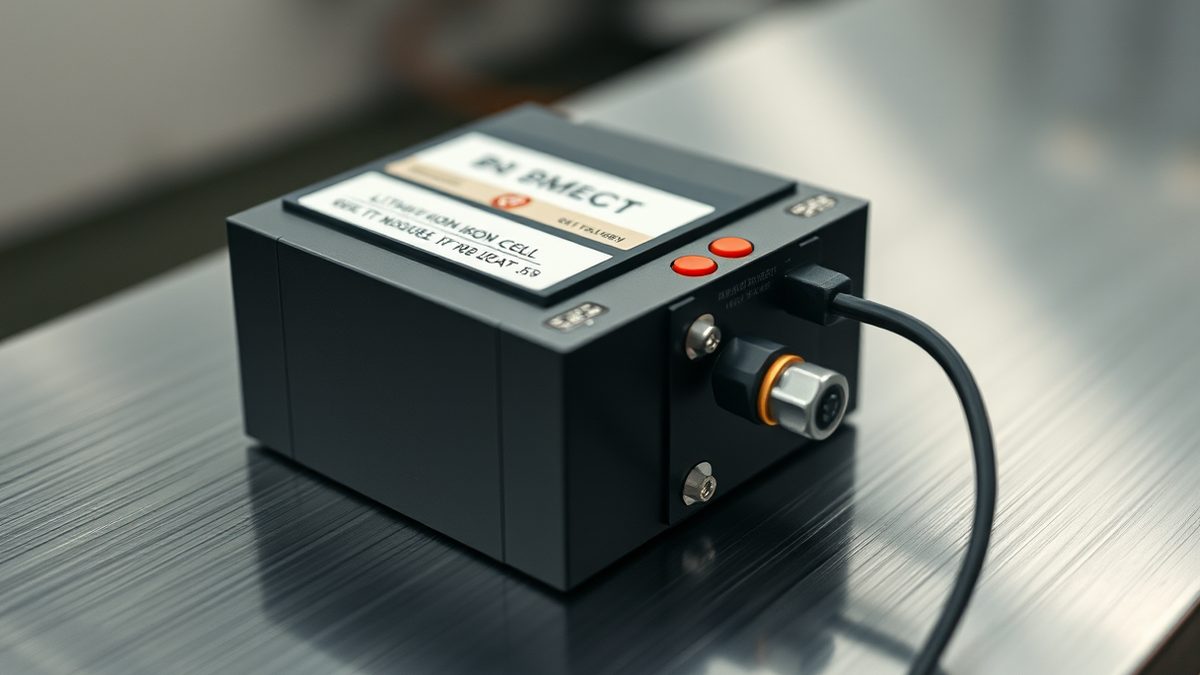
On 30 September, Geely Auto Group detailed how its new Ultra Short Blade Battery handles charging speeds above 1,000 kilowatts without the rapid ageing that usually follows. The company's pitch: you can have megawatt charging and a longer warranty. It extended coverage from eight years or 150,000 km (93,205 miles) to eight years or 200,000 km (124,000 miles), according to InsideEVs.
That warranty is the number to watch. Chinese automakers are already past the 1,000 kW mark for passenger cars while Western firms peak at 600 kW, with 750 kW chargers planned, InsideEVs reported. Geely's charger, shown off in Ningbo the previous week, can dispense 2.2 megawatts from a single gun.
In a demo, a Lynk & Co 10 charged from 10 percent to 97 percent in 8 minutes and 40 seconds. For scale, InsideEVs puts the fastest US EVs, the Lucid Gravity and Porsche Cayenne Electric, at 400 kW peak, with the upcoming Mercedes-AMG GT at 600 kW. Most mass-market US models average around 30 minutes for a 10 to 80 percent charge.
Why fast charging hurts cells
Geely's own explanation of the problem is the most useful part. The company said ageing comes down to lithium plating and extreme temperatures. Megawatt speeds accounted for 60 percent of the heat generated in the battery, mainly from current pushed through the cells' internal paths, with about 35 percent from electrochemical reactions and the rest from what Geely called entropic heat. The company did not pretend the trade-off does not exist.
"We do not advocate fast-charging technologies at the expense of lifespan," said Jerry Gan, CEO of Geely Auto Group. "If a battery frequently fast-charged is not maintained or repaired, its lifespan suffers irreversible decline."
That quote came from the Ningbo launch event and was carried by InsideEVs. It is a rare admission from a company selling charging speed as a feature. Geely's answer is engineering, not marketing: it says it has built in measures to slow plating and manage heat, though the full technical breakdown is not public.
The US answer is cheaper cells, not faster ones
On 29 September, General Motors announced that its Ultium Cells facility in Spring Hill, Tennessee will be upgraded to produce lithium manganese-rich (LMR) cells, according to CleanTechnica. GM put its combined LFP and LMR investment at $2 billion by 2030. The formula targets affordability rather than peak charge rate.
GM's vice president of battery and sustainability, Kurt Kelty, said high-nickel batteries still address markets where long range is the priority, while LMR comes in when affordability leads. The company already pulled back on EV plans after the $7,500 federal tax credit was eliminated, and pivoted into stationary storage using LFP. LMR is a bet that the EV market recovers, in a cheaper form.
Manganese is Earth-abundant and less costly than other battery materials, which is why Ford and others are also working the chemistry. The known problems are short lifespan and voltage decay, and those are exactly the issues Geely is claiming to have solved at the opposite end of the performance spectrum. Two different answers to the same question: how do you make a battery people will actually buy?
Meanwhile, the cheap chemistry race is global
Not all of it is lithium. The BBC reported on 29 September that San Diego-based Unigrid is shipping a 9 kilowatt-hour sodium-ion home battery, with the first 100 units out and 1,000 expected before the end of the year. CEO Darren Tan said demand is coming from Spain, France, Germany and the Netherlands, where homeowners want to store cheap grid power and run air conditioning during heatwaves.
Sodium-ion could be cheaper and less fire-prone than lithium-ion and works down to minus 40C, the BBC reported. Unigrid's cells currently come from China. Its cathode contains chromium-3, and Professor Dame Clare Grey at the University of Cambridge warned that under certain conditions it may form chromium-6, a toxic, cancer-causing material. Ivana Hasa of the University of Warwick said this is possible at very high states of charge but can be mitigated by voltage control, and called the reported safety tests promising. Tan said the concerns are "overblown" and that third-party tests could not produce chromium-6.
The manufacturing map matters too. China leads sodium-ion production, as it does the lithium-ion materials supply chain, the BBC noted. US startups are trying to close that gap.
Charging is not the only bottleneck
Trucks show where battery demand is actually growing. Global sales of medium- and heavy-duty electric trucks hit a record 158,000 in the first half of 2026, up 75 percent year on year, according to BloombergNEF. More than nine in ten were sold in China, and electric trucks reached about 20 percent of total truck sales. Europe sat at 5.5 percent, with Norway and Switzerland higher. The US market has slowed to a near standstill.
BNEF put Tesla's Semi at between $250,000 and $300,000 per vehicle and said it may already undercut diesel total cost of ownership in some duty cycles. Charging economics need station utilisation: operators would have to charge roughly $0.10 to $0.22 per kilowatt-hour to recover investment.
Other carmakers are still shipping new packs. BMW's cheaper i3 40 xDrive uses an 82.8 kWh battery with 300 kW charging, 209 miles added in 10 minutes, and a WLTP range of 441 miles, InsideEVs reported on 30 September. The Range Rover Sport Electric carries a 118.5 kWh pack, 350 kW charging and a WLTP range of 378 miles, but a Land Rover representative told InsideEVs it is not coming to the US as a 2027 model.
Data centres are the other half of the demand story. A study by Lighthouse Report with Trouw and other European media, reported by NL Times on 30 September, found that fewer than a quarter of larger Dutch data centres publish electricity and water usage figures, three years after the EU Energy Efficiency Directive took effect. The Netherlands Enterprise Agency has data on only 104 of 186 commercial data centres above 500 kW, with public electricity figures for 44 and water figures for 47.
In Texas, administrative law judges recommended on 30 September that El Paso Electric's 366 MW gas plant for Meta's $10 billion El Paso data centre be approved only if ratepayers are shielded from capital and operating costs, Inside Climate News reported. The judges found the utility did not adequately consider alternatives or issue a request for proposals. The five Public Utility Commission of Texas commissioners have not scheduled a vote.
Back to the cells. Geely's 8 minute 40 second demo is a benchmark, but it is a demo, and the pack's real-world ageing is unproven at scale. GM's LMR line is a cost play with the same open question. Both companies are betting that battery chemistry, not charging hardware, decides who sells cars in the next five years.
Sources
11- 01How Geely's New Battery Handles A Megawatt Of Charging Power Without Crazy DegradationEN
- 02GM Really Wasn't Kidding About Those New LMR EV BatteriesEN
- 03The start-ups hoping to return battery making to the USEN
- 04The Electric Trucking Market's Record Rise: Three Things to KnowEN
- 05Most data centers refusing to say how much water, electricity they useEN
- 06Texas Electric Utility Only Considered Gas to Power $10 Billion Meta Data CenterEN
- 07BMW's Cheaper i3 Has A Smaller Battery, But Its Range Is Still ImpressiveEN
- 08The Range Rover Sport Electric Is Here To Take On The Lucid GravityEN
- 09Range Rover Sport Electric: Price, Specs, AvailabilityEN
- 10Is The US Going To End DEAD LAST In Vehicle Electrification?EN
- 11Tesla patents 'Electric Fan Car' with 4 ducted fans ahead of Roadster revealEN
All figures and quotations in this text come from the sources listed below.
Content prepared by the editorial team with AI assistance.
Daniel Fisher
Comments
0- No comments yet — be the first.