GM upgrades Tennessee plant for LMR EV batteries as electric truck sales hit record
General Motors said on 29 September that its Ultium Cells plant in Spring Hill, Tennessee will be upgraded to build lithium manganese-rich battery cells, betting on cheaper chemistry while global electric truck sales set a record.
 Peter LindqvistSport, cars and travel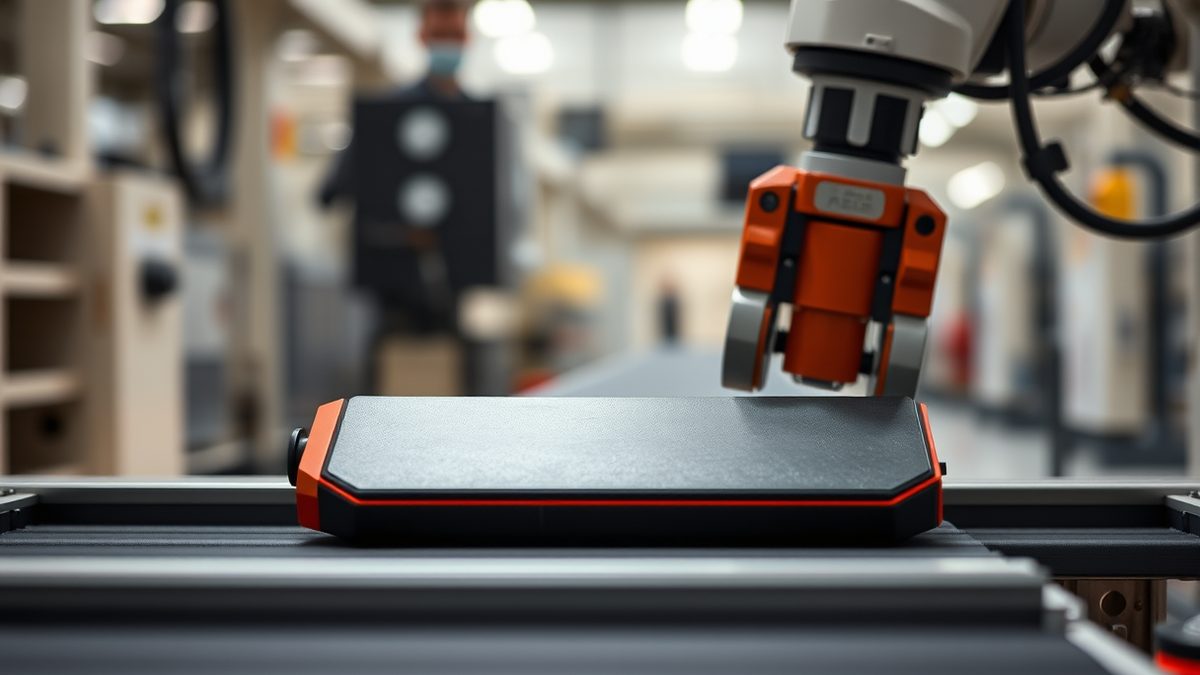
On 29 September, General Motors announced that the Ultium Cells battery facility in Spring Hill, Tennessee will be upgraded to produce cells using an LMR (lithium manganese-rich) formula. The company says the chemistry delivers improved performance at a lower cost, and it claims the output for its forthcoming electric vehicles, according to a CleanTechnica report on the announcement.
The move is notable because it comes after GM pulled back on its EV lineup last year, following the elimination of the $7,500 federal EV tax credit. In the meantime the automaker pivoted toward stationary energy storage using the low-cost LFP (lithium-iron-phosphate) formula.
GM's vice president of battery and sustainability, Kurt Kelty, said high-nickel batteries remain on the roster for markets where long range is the priority, while LMR is aimed at affordability. The company says its LFP and LMR investments will total $2 billion by 2030. The Ultium Cells venture is a joint operation with LG Energy Solution, and the announcement covers pouch and prismatic cell formats.
GM is not alone in chasing the chemistry. Manganese is Earth-abundant and cheaper than other battery materials, and Ford is among the other automakers spending on LMR research, CleanTechnica notes. The known problems are short lifespan and voltage decay, which the industry has been working to solve.
Record quarter for electric trucks, China dominates
While passenger EV policy in the US stalls, the heavy end of the market is moving. Global sales of medium- and heavy-duty electric trucks reached a record 158,000 vehicles in the first half of 2026, up 75 percent from the same period a year earlier, according to BloombergNEF. Practically all of those were battery-electric.
More than nine out of ten electric trucks sold globally in that period were in China. Electric trucks now account for about 20 percent of total truck sales worldwide. In Europe, the share was 5.5 percent of total truck sales, with higher penetration in Norway and Switzerland, and above 10 percent in Denmark, the Netherlands and Sweden, BNEF says.
The US battery-electric truck market has slowed to a near standstill, BNEF writes, citing policy and cost headwinds. Even so, industry participants interviewed by the research firm noted that Tesla's Semi appears priced competitively, at between $250,000 and $300,000 per vehicle, which could undercut the total cost of ownership of equivalent diesel trucks in some duty cycles.
BNEF also points to charging economics: operators would need to charge roughly $0.10 to $0.22 per kilowatt-hour to recover their investment in megawatt-scale stations, and utilization currently varies widely. Financing is shifting too, with transactions increasingly underwritten against a truck's contracted transport operation rather than its resale value alone, a change from diesel truck financing norms.
US battery startups look at sodium ion
On the passenger side, the battery supply chain is being rebuilt from the bottom up. The BBC reported on 29 September that San Diego-based Unigrid sells a nine kilowatt-hour sodium-ion battery for homes, and has shipped its first 100 units, expecting to ship 1,000 before the end of the year. Co-founder and chief executive Darren Tan told the BBC that demand picked up as heatwaves hit Europe, with requests from Spain, France, Germany and the Netherlands.
Sodium-ion cells are attractive because they could be cheaper to build and operate than lithium-ion, less prone to fire and able to work at temperatures as low as minus 40C. China leads the world in sodium-ion manufacturing. Unigrid currently uses Chinese-made cells, though Tan said the company could switch to US cells in future at a different cost.
There is a safety debate. Unigrid's battery uses chromium-3 in its cathode. Professor Dame Clare Grey at the University of Cambridge, co-founder of battery firm Nyobolt, told the BBC that under certain conditions chromium-3 may form chromium-6, a toxic, cancer-causing material. Ivana Hasa at the University of Warwick, who has no connection to Unigrid, agreed the conversion is possible at very high states of charge but said it can be mitigated by voltage control, and called the safety tests on the cell chemistry very promising. Tan said the concern is overblown and that third-party tests have not produced chromium-6.
Data centres, water and the grid
Battery demand is not the only electricity story. A year-long study by Lighthouse Report with Trouw and other European media found that the vast majority of data centres in Europe keep their environmental impact secret, NL Times reported on 30 September. In the Netherlands, less than a quarter of larger data centres publish data on electricity and drinking water use, despite the European Energy Efficiency Directive requiring reporting from sites with at least 500 kilowatts of installed capacity.
The Dutch Datacenter Association counted 186 commercial data centres of that size in the Netherlands at the end of last year; the Netherlands Enterprise Agency has data on only 104 of them, and public figures exist on the electricity usage of 44 centres and the water usage of 47. Statistics Netherlands says data centres used 5.1 billion kilowatt-hours in the Netherlands in 2024, 4.6 percent of national electricity consumption. Grid operator TenneT projects 10 to 15 percent by 2030.
One project shows how the load gets built. Inside Climate News reported on 30 September that administrative law judges at the Public Utilities Commission of Texas recommended approving El Paso Electric's application to build a 366-megawatt natural gas facility, called McCloud, to power Meta's $10 billion, 1-gigawatt data center in northeast El Paso, but only on condition that the utility does not pass capital and operating costs to ratepayers. The judges found the utility failed to adequately consider alternatives and did not issue a request for proposals. The five commissioners have not yet scheduled a vote.
In the background, Toyota is making its own pitch for electric trucks. On 30 September, Electrek reported that Toyota dropped a 1,675-pound caravan from 30 feet onto the roof of its Hilux BEV at Bentwaters airfield in Suffolk, after a Reddit poll, and the truck drove off. The Hilux BEV has a 59.2 kWh battery, a WLTP range of up to 160 miles, 278 horsepower and a UK base price of £42,170 before VAT.
The direction of travel, then, is uneven. GM is putting money into a cheaper chemistry in Tennessee, electric trucks are selling in record numbers in China and Europe, and US startups are experimenting with sodium ion. But the same week brought evidence that the electricity those vehicles and data centres will need is still poorly accounted for.
Sources
10- 01GM Really Wasn't Kidding About Those New LMR EV BatteriesEN
- 02The Electric Trucking Market's Record Rise: Three Things to KnowEN
- 03The start-ups hoping to return battery making to the USEN
- 04Most data centers refusing to say how much water, electricity they useEN
- 05Texas Electric Utility Only Considered Gas to Power $10 Billion Meta Data CenterEN
- 06Toyota dropped a 1,675 lb caravan on its electric truck, and it drove off unfazed [Video]EN
- 07Tesla patents 'Electric Fan Car' with 4 ducted fans ahead of Roadster revealEN
- 08Is The US Going To End DEAD LAST In Vehicle Electrification?EN
- 09Can the World Hit 35% Electrification by 2035?EN
- 10So You Think You Could Be an Electrician?EN
All figures and quotations in this text come from the sources listed below.
Content prepared by the editorial team with AI assistance.
Peter Lindqvist
Comments
0- No comments yet — be the first.