Mengxi grid passes 20 GW of storage as grid investment moves to equipment
Mengxi grid in western Inner Mongolia held 20.23 GW/70.47 GWh of operational storage on 27 October, 11.5% of installed power capacity, according to Inner Mongolia Power Group data released on 28 October. pv magazine reported the data on 4 November.
 Dr. Amara PatelEconomy, business and world
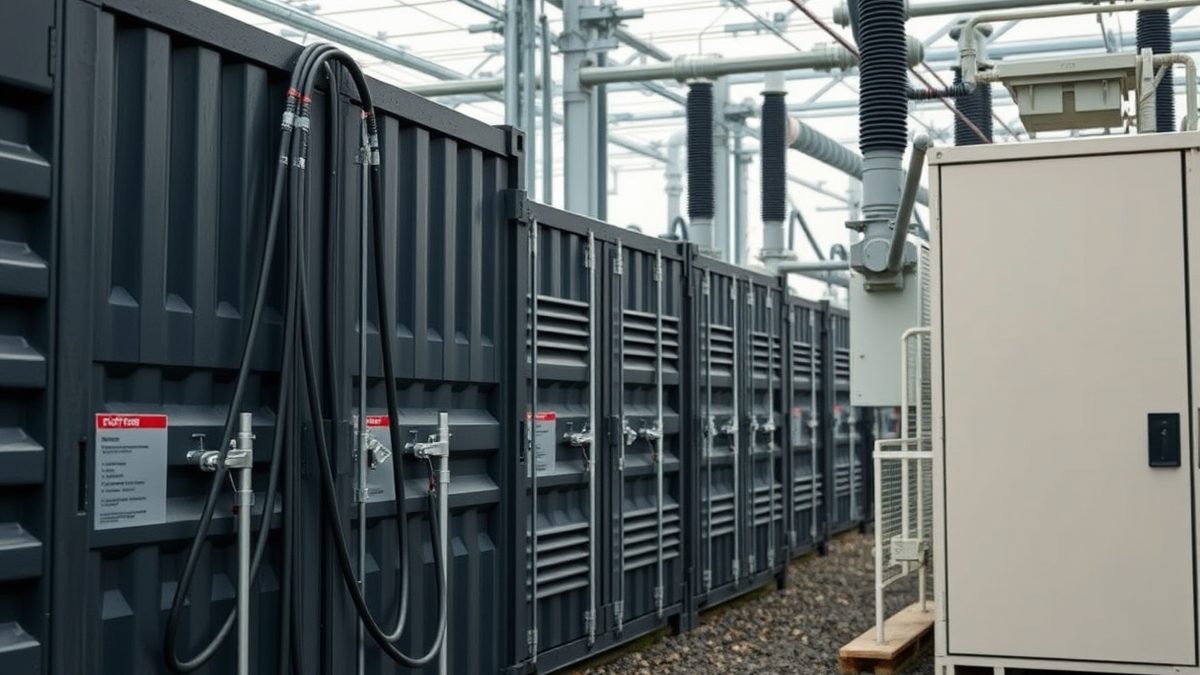
Inner Mongolia Power Group runs the Mengxi grid separately from the eastern Inner Mongolia grid that State Grid manages. It serves eight prefecture-level areas. The 20.23 GW of storage works out at an average nominal duration of roughly 3.5 hours.
That mix changes what utilities and their investors must fund. Batteries, transformers and control software now sit alongside wind and solar farms in the capital plan. No cost per megawatt for the Mengxi storage build has been published. Regulators still have to settle who pays and how quickly they approve projects.
Installations are still accelerating. New storage reached 6.555 GW in the first ten months of 2026, up 47.9% year on year.
Large independent projects drove part of that build. They include facilities in Wuchuan and Baotou. On 22 October, renewable output hit a record 720 GWh, or 60.2% of all generation that day. Wind alone contributed 560 GWh.
Storage is becoming a grid asset, not an add-on
Storage on the Mengxi grid is no longer a pilot project. Cumulative charging and discharging reached 15.78 TWh and 14.04 TWh by 27 October, both up more than 400% year on year.
Emergency dispatch is the sharper signal. The grid ran 95 emergency storage operations in the first ten months of 2026. At peak, storage delivered 12.25 GW, equal to 33% of the grid's load at that moment. Inner Mongolia Power Group has connected 126 storage stations to a central monitoring platform. It combines market-based optimization with direct intervention when supply runs short. That blend is the model most operators with high renewable shares are now testing.
The money moves into equipment and networks
The largest cheques are going to equipment. GE Vernova has agreed to buy Trench Group for $9 billion, according to a 29 October report. The deal brings high-voltage grid equipment manufacturing in house and expands its Electrification segment. The deal uses cash and debt funding, and closing is expected in late 2027. Trench adds an operational base in Europe and Asia. The purchase pulls transformers, switchgear and 765 kilovolt equipment capacity inside GE Vernova, according to the Yahoo Finance analysis.
Distribution networks tell a similar story at smaller scale. E.ON runs Hungary's largest electricity distribution network, 88,000 km long, serving about 3.4 million customers.
E.ON is carrying out grid investments worth nearly HUF 230 billion. They should create more than 2,300 MW of extra connection capacity by 2030, earmarked for renewables. The programme includes new and modernised substations and digital grid control systems. The company has invested about HUF 690 billion in Hungary's network infrastructure since 2022.
Smart meters are part of the same package. E.ON is spending HUF 13.5 billion to install 237,000 additional smart meters by the end of 2028, taking its total to nearly 600,000. Guntram Würzberg told the Budapest Business Journal that Hungary went from 20,000 solar systems to more than 330,000 in seven years. He said the priority has shifted from building capacity to integrating it. He also said EU funding covers only around a quarter of the planned grid investments. He said that for every forint received from the EU, the company adds three of its own.
Demand and policy add pressure
Demand is the other half of the equation. On 3 November, OpenAI launched a non-binding Grid Protectors Program. It aims to cut electricity demand from future data center campuses when the US grid is under strain. The company said US data center capacity is projected to exceed 100 GW by 2030. It framed the program around a "once-in-a-generation opportunity" to build campuses that can adjust their power use when communities need it most.
OpenAI's own commitments are small next to that projection. It said it will provide up to 1 GW of flexible demand response. Under a deal with Georgia Power, it has committed to paying the full cost of the infrastructure needed to serve a data center. Kim Greene, chairman, president and CEO of Georgia Power, said at the time that data centers are paying more so families and small businesses can pay less. The program is an "ambition" rather than a set policy. OpenAI said arrangements will differ by location. In January it pledged to pay its own way on the Stargate data centers.
Local politics is part of the pressure. Data center electricity use and its effect on local prices have drawn opposition across the US. The issue has featured in the midterm elections under way.
Policy signals matter as much as demand. Ahead of COP31, Fortum's Nebahat Albayrak-Edgar called for stronger investment signals, reliable low-carbon power and targeted use of EU ETS revenues. She argued that weakening carbon pricing would undermine long-term decisions on projects such as green steel and low-carbon fuels.
What happens next
Inner Mongolia Power Group plans six self-invested storage projects. They include developments at Chunkunshan, Hanhai and Erzihao. The company aims to support grid connections for nearly 10 GW of new storage capacity during 2026.
E.ON's connection capacity target runs to 2030. The smart meter rollout is due by the end of 2028.
Sources
28- 01China's Mengxi grid tops 20 GW of storage as renewables approach 60% of capacityEN
- 02OpenAI launches 'Grid Protectors Program' to reduce data center electricity demand when the US grid is under strainEN
- 03Energy Transition Puts Grid Investment, Regulatory Reform in Focus - BBJEN
- 04GE Vernova (GEV) Agrees $9 Billion Grid Equipment Deal To Expand ElectrificationEN
- 05Fortum Executive Calls for Clear Investment Signals and Strong EU Carbon Pricing to Drive ElectrificationEN
- 06Buick Electra GS appears in China regulatory filing, expanding NEV lineupEN
- 07China Truck Sales Now Majority Electric. What’s Next?EN
- 08On the pitch and on the grid, Ukraine is not waiting for the war to end and is asking the world to invest in itEN
- 09State Grid retains global leadership as world’s most valuable and strongest utilities brandEN
- 10Zero Motorcycles unveils $8K electric motorcycle, street-legal dirt bike, and much moreEN
- 11This electric microcar just got a 50 mph upgrade, plus a secret Turbo modeEN
- 12Former CAKE team is back in the kitchen with a new electric motorcycleEN
- 13Yamaha unveils new NMAX E, bringing electric power to its popular motorbike lineupEN
- 14Congress Is Cutting Off Transportation Investments that Help Families Save MoneyEN
- 15The Future of Buildings in Illinois Is ElectricEN
- 16The ETS Investment Engine: Scaling Europe’s Strategic E-fuel Market for Shipping & AviationEN
- 17Swarm Of Electric Trucks Coming To US (Battery Swapping Included?)EN
- 18Lexus is taking a page from China for its next electric SUV launching in 2027EN
- 19Electric trucks hit 50% of China’s heavy truck sales, diesel demand fallsEN
- 20OpenAI deepens Abu Dhabi foothold as Sam Altman inks deals spanning energy, government and investmentEN
- 21Eli teases the launch of a much faster electric microcarEN
- 22Yes, electric motorcycles will replace gasoline motorcycles, but not the way you thinkEN
- 23Peterbilt makes it easier than ever for government fleets to go electricEN
- 24Speeders just got lucky: the new Chevy police Silverado is NOT electricEN
- 25I imported a $2,000 electric truck from China. Five years later, here’s the truthEN
- 26Honda has dominated motorcycles for decades. Electric bikes are changing thatEN
- 27FUNAE to invest 50 million dollars in solar mini-grids construction - aimnews.orgEN
- 28Antwerp’s Electric Cranes Can Handle More Than Today’s CargoEN
All figures and quotations in this text come from the sources listed below.
Content prepared by the editorial team with AI assistance.
Dr. Amara Patel
Comments
0- No comments yet — be the first.