Mengxi grid's 20 GW storage test puts dispatch software on the spot
The Mengxi grid in western Inner Mongolia had 20.23 GW/70.47 GWh of operational energy storage on 27 October, pv magazine reported on 4 November. It had 126 storage stations connected to one centralized monitoring platform.
 Grace OkonkwoAI, models and technology
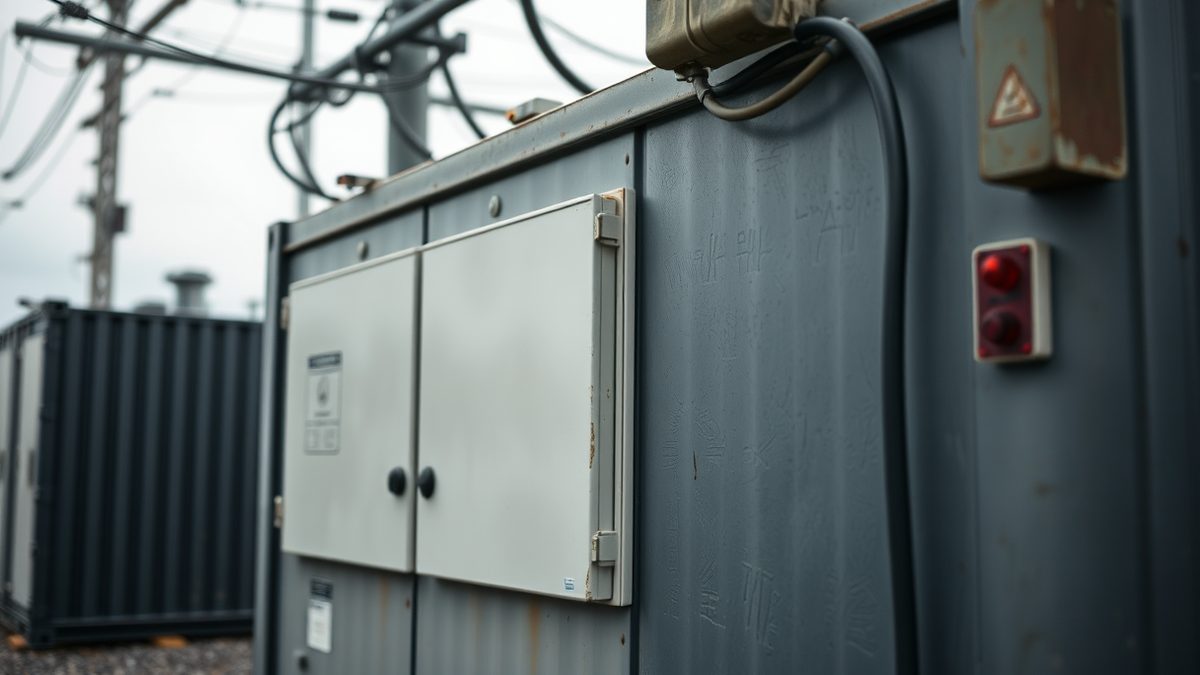
The storage fleet equals 11.5% of the grid's total installed power capacity, according to data Inner Mongolia Power Group released on 28 October. Average nominal duration is about 3.5 hours.
New installations reached 6.555 GW in the first ten months of 2026. That is up 47.9% year on year.
The control layer is the test. Inner Mongolia Power Group runs a mix of market-based optimization and centralized emergency intervention on a centralized intelligent monitoring platform. Under normal conditions, electricity market mechanisms guide charging and discharging. When supply runs short, the operator calls on storage directly. The company has not published the platform's supplier, its cost, or how third-party batteries connect to it.
Scale makes dispatch software the operational issue
Renewables are close to the majority of installed capacity. Wind and solar account for nearly 60% of the Mengxi grid's generation capacity. That makes the region a test case for running a power system on variable supply. On 22 October, renewable output hit a record 720 GWh, or 60.2% of all electricity generated that day. Wind alone reached 560 GWh.
Cumulative charging reached 15.78 TWh by 27 October. Cumulative discharging reached 14.04 TWh. Both rose more than 400% year on year. The maximum storage contribution during emergency dispatch was 12.25 GW. That equaled 33% of the grid's load at the time.
The EMS market grows, but integration stays messy
The IEA's Electricity 2025 report projects electricity demand growth of nearly 4% a year through 2027. That adds about 3,500 TWh over three years. More demand means more devices to coordinate. Many sites run equipment from different vendors and generations. A building might pair a legacy management system with new heat pumps and a battery reachable only through its vendor's cloud API. An energy management system (EMS) then needs an adapter for each system it monitors or controls.
Daily Business published a vendor comparison on 3 November. It breaks a custom EMS build into five phases: discovery and device inventory, architecture and data layer design, proof of concept on live hardware, integration rollout, and operations and handover. Engineers set latency targets for control signals in that work. That detail matters for a 20 GW storage fleet.
Data centers and virtual power plants test flexible demand
Data-center operators are meeting the same dispatch question from the demand side. OpenAI's Grid Protectors Program aims to cut power use at its campuses when local demand peaks. The company is testing it at its planned Effingham County campus in Georgia. OpenAI has signed a 3.2 GW agreement with Georgia Power that includes 1,000 MW of flexible demand response. Tom's Hardware reported on 3 November that the 1,000 MW buffer is enough to power around 800,000 households, nearly 20% of Georgia's homes.
OpenAI frames the arrangement as a grid resource rather than a concession. "Our goal is to make campus flexibility a resource that utilities can call on when communities need it most," the company said in a blog post. It added that arrangements will differ by location. It said it will share further commitments as it finalizes them.
Google is testing the same idea at larger scale. Canary Media reported on 22 October that the company plans a big virtual power plant in the PJM grid. PJM needs the batteries. Canary Media reported on 29 October that the grid operator badly needs grid batteries. It outlined a way it could get them.
What to watch: more storage, more dispatch rules
Inner Mongolia Power Group is not stopping at monitoring. It plans six self-invested storage projects, including developments at Chunkunshan, Hanhai and Erzihao. It is supporting grid connections for nearly 10 GW of new storage capacity during 2026.
Elsewhere the storage build keeps setting the pace for software. India had 308.027 GW of installed non-fossil generation capacity as of September 2026. Its Central Electricity Authority projects 73.93 GW of storage by 2031-32. That splits between 26.69 GW of pumped storage and 47.24 GW of batteries. Australia switched on nine large-scale battery projects totalling 2.3 GW/7.1 GWh in the first half of 2026. That is more than the 2 GW/5.1 GWh added during 2025, pv magazine reported from the All Energy Australia conference.
Each of those fleets needs a control layer. The Mengxi figures suggest centralized monitoring can coordinate more than a hundred independent stations at 20 GW. They do not show what happens when a second vendor, a second market or a second country joins the platform.
Sources
28- 01China's Mengxi grid tops 20 GW of storage as renewables approach 60% of capacityEN
- 02OpenAI introduces program to reduce AI data center energy demand during peak hoursEN
- 03Top Custom Energy Management Development Companies With Published ProjectsEN
- 04Introducing the Grid Protectors ProgramEN
- 05Google plans big virtual power plant in energy-strapped PJM gridEN
- 06PJM desperately needs grid batteries. Here's a way it could get some.EN
- 07Battery Energy Storage System and Pumped Storage Projects Offer Solutions for Integrating Energy Grid: A ReportEN
- 08Key takeaways from All Energy Australia 2026EN
- 09AWS appoints British Embassy advisor as manager of energy policyEN
- 10More of the Same Expensive Dependence on Fossil Fuels in TEP and APS 2026 Energy PlansEN
- 11Can Enphase Energy (NASDAQ:ENPH) Overcome Its Cautious Guidance? - Kalkine MediaEN
- 12Bringing Design Data Management into the Developer WorkflowEN
- 13On the pitch and on the grid, Ukraine is not waiting for the war to end and is asking the world to invest in itEN
- 14OpenAI deepens Abu Dhabi foothold as Sam Altman inks deals spanning energy, government and investmentEN
- 15More heat pumps would actually be good for the grid, researchers findEN
- 16Heimstaden is changing residential real estate management with AIEN
- 17Fintech platform Sageworks taken offline after suspected cyberattackEN
- 18Percepto launches Axion AI platform to unify inspection data analysisEN
- 19Electric Hydrofoils Save Energy, But Do They Earn Their Price?EN
- 205 ballot proposals that could drive or derail clean energyEN
- 21Eugene Becomes 5th Oregon City to Adopt Home Energy Score RequirementEN
- 22The Ford Escape may return as an EV based on the UEV platform [Update]EN
- 23Einstein's equations may explain the universe without dark energyEN
- 24How digital membership platforms help sports NGBs leave the spreadsheets behindEN
- 25Cloudflare’s Post-Quantum GeoKey Manager Enters Closed Beta without Attribute-Based EncryptionEN
- 26Can battery swapping and energy storage power CATL’s next phase of growth?EN
- 27U.S. Department of Energy Has Critical Role in Power System Impacts from Wildfires - Department of Energy (.gov)EN
- 28Solar Topics in Small Business Innovation Research and Small Business Technology Transfer (SBIR/STTR) - Department of Energy (.gov)EN
All figures and quotations in this text come from the sources listed below.
Content prepared by the editorial team with AI assistance.
Grace Okonkwo
Comments
0- No comments yet — be the first.