Europe's Greenland cable plan, and the chokepoints it does not fix
Ars Technica reported EU plans first direct subsea internet cable to Greenland. The route could reach Canada and Asia and bypass the United States; the EU allocated €107 million to Greenland's secure connectivity, including the Pan-Arctic Cable plan.
 Rachel NwosuAI, models and technology
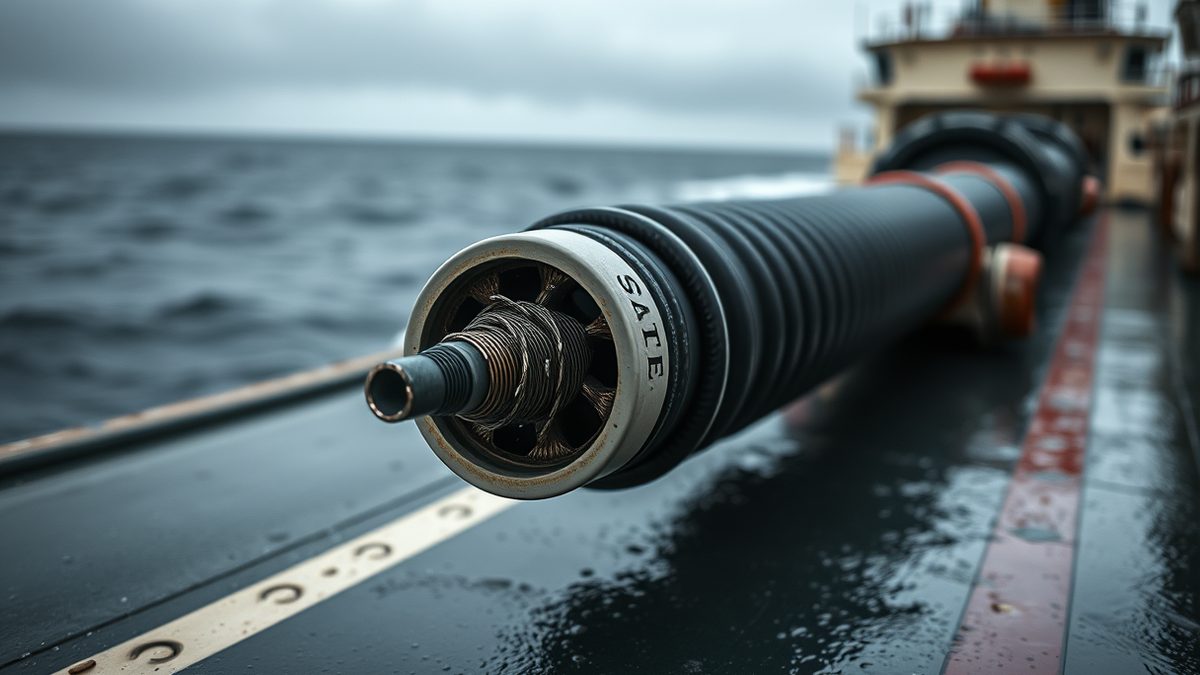
A Greenland route
The European Commission published its joint communication on 20 October 2026. It calls the Pan-Arctic Cable a flagship project. It describes a sovereign, secure and resilient submarine cable linking Greenland directly to the EU. The document says like-minded partners such as Canada could serve as a stepping stone toward Asia. Eventually the route could reach Japan and South Korea, bypassing the United States.
The strategy also sets up an Arctic Cable Hub. It will monitor, protect and support repairs in the North Atlantic and the Arctic.
Why the route matters
Distance from one chokepoint is not distance from all of them. Windward published an October 26 assessment. It found Iraq, Kuwait, Bahrain and Qatar have no submarine cable route to the outside world that avoids the Strait of Hormuz. Six operational systems cross the waterway, including 2Africa, AAE-1, FALCON, Gulf Bridge International, Tata TGN-Gulf and OMRAN/EPEG. Two more, FIG and SEA-ME-WE 6, are due in 2027. More than 90% of communications between Europe and Asia run through undersea cables in the Red Sea, according to TeleGeography.
The exposure is narrower than the headlines suggest. Less than 1% of international bandwidth passes through the Strait, according to TeleGeography. Terrestrial links offer Bahrain, Qatar and Kuwait an alternative, but capacity may not absorb traffic displaced by several cable failures at once.
Iran's threat
On October 21, Yadollah Javani warned that seven major cables beneath the Strait were potential targets. He is deputy head of political affairs for the IRGC. He said the cables were at risk if Iranian infrastructure came under attack. Two days later, two senior Iranian security officials told Reuters that Tehran had drawn up detailed plans for such attacks. One said Iran would also try to prevent repairs. Neither disclosed targets or methods.
Iranian-linked accounts circulated an AI-generated video of cable attacks. MEMRI and JFeed reported it on October 28. It is not evidence of an actual attack. No independent party has established its origin.
Iran is exposed too. Windward notes that FALCON and Gulf Bridge International land in Iran, while OMRAN/EPEG connects Iran and Oman.
China's survey ship
Tom's Hardware reported that a Chinese research vessel came close to an undersea cable in September. It ignored radio contact and broadcast a false ID before evading capture. The Philippine Coast Guard responded. Manila sent its largest vessel, spotted 37 nautical miles from Batanes. A Chinese coastguard ship intervened, and Beijing complained of harassment, according to the South China Morning Post.
A CSIS report found Chinese research ships spent more time loitering near cables than any other nation. It called the efforts disproportionate. A 2025 US congressional report said Chinese teams had published details of cutting devices. These devices can sever armoured cable at 13,000ft.
What happens next
Capacity is still under construction. Malaysia's OMS Group raised a $1.03 billion loan to expand its subsea cable fleet, Light Reading reported.
At NANOG 98 in mid-October, TeleGeography's Paul Brodsky said international bandwidth demand is growing 30% a year. Each annual increment is about 2 Pbps now and will pass 10 Pbps a year by 2035, according to the presentation. Repairs remain the weak point. Cable repair ships need access to damaged infrastructure. Maritime security restrictions, insurance costs and territorial permissions can delay that access.
Sources
23- 01As US ties fray, Europe plans first undersea cable link to GreenlandEN
- 02EU plans first direct undersea cable to Greenland — Ars TechnicaEN
- 03Iran Escalates Threats Against Gulf Undersea Internet CablesEN
- 04Iran threatens to cut undersea internet cables if war resumes, what it means for IndiaEN
- 05Chinese survey ship loitering near undersea cable ignores Philippine demands to withdrawEN
- 06Global Internet Infrastructure at NANOG 98: Growth, Ownership, and SovereigntyEN
- 07Malaysia's OMS Group raises $1.03B loan to expand subsea cable fleetEN
- 08'Cut undersea cables? Singapore’s internet could also be crippled’ – Indonesian minister - NewswavEN
- 09Google: Internetsuche gibt es für Schulen nur, wenn KI-Tools freigegeben sindEN
- 10 Voting in space: NASA astronauts cast ballots from International Space Station EN
- 11CrowdStrike launches AI kill switch that it says can stop internal agents that go rogueEN
- 12Binance breach puts custody at center of crypto infrastructure tradeEN
- 13‘Singapore also at risk’: Indonesian minister urges calm over internet cable jab - South China Morning PostEN
- 14 Robot cube explores the International Space Station | Space photo of the day for Nov. 3, 2026 EN
- 15Bull and Schwarz Digits Sign MOU to Develop European AI InfrastructureEN
- 16Cable One extends mobile to small businessesEN
- 17Launch Preview: Falcon 9 to launch USSF missions, China to launch internet satellitesEN
- 18Astronauts just gave the International Space Station a powerful upgradeEN
- 19 Astronauts deploy solar array on 100th US spacewalk by International Space Station crew members EN
- 20Cable One sets up committee to 'evaluate strategic alternatives'EN
- 21Comparing KSC, Starbase construction timelines to understand the development of Starbase, LouisianaEN
- 22What Tokayev’s Economic Agenda Means for Kazakhstan’s International PartnershipsEN
- 23Six new members to join Cable Hall of FameEN
All figures and quotations in this text come from the sources listed below.
Content prepared by the editorial team with AI assistance.
Rachel Nwosu
Comments
0- No comments yet — be the first.