Nvidia, Third Intelligence and Tencent push open speech models onto one GPU
Third Intelligence released Haas-ja-v1.0, a Japanese speech recognition model with 615.8 million parameters, under the Apache License 2.0 on 30 October. GIGAZINE reported the release on 2 November, five days after Nvidia published its own open transcription model.
 Rachel NwosuAI, models and technology
Transcription and translation have mostly been sold as per-minute cloud APIs. Vendors price them by the audio hour. Open weights that run on a single GPU change that arithmetic. A company can process recorded audio in-house and fine-tune the model on its own jargon instead of shipping files to a vendor. What is still unclear is whether the accuracy holds outside English and Mandarin benchmarks, where the published numbers are weakest.
Only one of the new releases handles live speech. Tencent's interpreter streams; Nvidia's model works on recordings.
What Nvidia actually shipped
Nemotron 3.5 Transcribe handles transcription, speaker labels, timestamps and translation in a single pass. It covers 40 languages and labels up to eight speakers. Nvidia built it as a mixture of experts. The two write-ups count its size differently: SiliconANGLE and MarkTechPost give different total and active parameter figures. The extra weight sits in a multi-token prediction module and the audio components, according to the technical report. A text instruction picks the output style for each request. The company positions the model as a transcription specialist, not a general assistant.
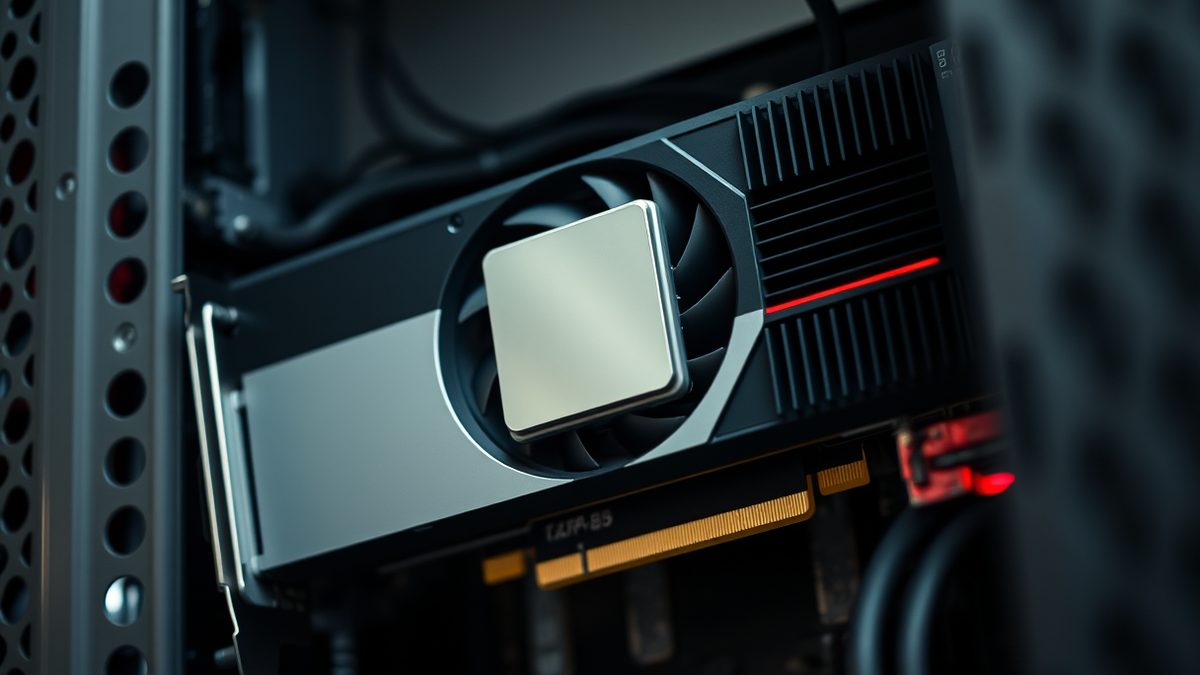
Weights ship in BF16, FP8 at about 35 GB and NVFP4 at about 21 GB. The last is small enough to run on an RTX 5090.
Nvidia says a Blackwell Server Edition GPU with NVFP4 precision and one-quarter model compression processes 100 hours of audio in under three minutes. It also runs on a Jetson AGX Thor edge computer or a DGX Spark desktop, from a robot brain to a data-centre part. Nvidia extended its Granary speech dataset to v2: 463,062 hours across 48 languages and 16 source corpora, up from 25 languages in v1. That dataset is separate from the model's training mixture, SiliconANGLE notes.
The benchmark claims, and where they stop
Nvidia reports 4.71% mean word error rate on nine public English Open ASR sets, against 4.94% for the next open model, Qwen3-ASR-1.7B. Seven commercial systems still lead that table, topped by OtterAI speech-v3.1 at 3.88%. On seven multilingual sets the model reports 4.62% mean WER versus 6.49% for Qwen3-ASR-1.7B, while ElevenLabs Scribe v2 reaches 3.56%. Every figure here is self-reported.
The weakest published number is 34.95% cpCER on AliMeeting Mandarin far-field meetings. That sits against the 4.71% English mean.
SiliconANGLE reports a different set of figures from the same launch. It cites a 30.8% out-of-box error rate that falls to 20.8% with careful prompting. It also cites 11.8% word error rate on the Eka Care Indian medical speech benchmark after fine-tuning. The two accounts do not reconcile their error rates for the same model, and neither explains the gap.
One number points the other way. Giving the model an entity list cut named-entity word error rate on ContextASR-Bench from 12.21% to 2.20%.
Small models, single languages
Haas-ja-v1.0 is a different bet: 615.8 million parameters and one language instead of 40. GIGAZINE reports it scored higher on Japanese transcription than the commercial Gemini 3.5 transcribe, and the highest among the open models that outlet evaluated. In its own test, 4 minutes 19 seconds of audio was transcribed 0.32 seconds after the upload finished, with some proper nouns needing manual correction. The weights are on Hugging Face and the inference code on GitHub.
GIGAZINE's cost chart puts Haas-ja-v1.0 at the lowest inference cost among models with comparable accuracy. The comparison uses commercial API fees and H200 inference in Japan.
Tencent's Hy-SimulMT goes after simultaneous Chinese-English interpretation, with a streaming lag of about three seconds on the RealSI long-form benchmark. Tencent says its translation-quality scores exceeded the other open-source models and four of the five commercial APIs in its comparison. The release includes weights, inference software and training tools.
On Apple platforms, the AnySpeechRecognizer package wraps Nvidia's Parakeet TDT 0.6B v3 and Alibaba's Qwen3-ASR. Parakeet covers 25 European languages. Qwen3-ASR comes at 0.6B and 1.7B and covers 30 languages and 22 Chinese dialects.
Sources
28- 01Nvidia releases all-in-one adaptable Nemotron 3.5 audio transcription and translation modelEN
- 02Haas-ja-v1.0, a high-speed and highly accurate transcription AI specializing in Japanese, has been releasedEN
- 03NVIDIA Releases Nemotron 3.5 Transcribe: An Open 30B MoE Model for 40-Language TranscriptionEN
- 04Introducing AnySpeechRecognizer and AnyDecisionModel: Open Models for Speech and Decisions on Apple PlatformsEN
- 05Tencent open-sources AI model for real-time Chinese-English interpretationEN
- 06BYD teases new model for Guangzhou Auto Show, with next-gen Han expectedEN
- 07Anthropic is working on a system to prove AI models’ identityEN
- 08Nvidia is happy to take your money whether you're using open or closed models, says Jensen HuangEN
- 09 Google reveals new Gemini 4 Carbon AI model, narrowly beating Claude Opus 5.5 EN
- 10I Checked Out Tesla’s New Model YL, Standard Y, Model 3 In Person — Here’s What Surprised MeEN
- 11heise+ | Humanoide Roboter in Deutschland: Modelle, Preise und VerfügbarkeitEN
- 12Open models can do 90% of agentic work at a twentieth of the cost of a frontier LLM: GartnerEN
- 13Jülich Hosts EVE Language Model for Earth Observation and Earth ScienceEN
- 14Tutor Intelligence raises Series B to scale model training, robot deploymentsEN
- 15Westward Ho! First Trip Cross Country with Our New 2026 Tesla Model Y & Full Self Driving V14EN
- 16Google Launches LiteRT Tensor API for Building, Customizing, and Optimizing ML Models for On-DeviceEN
- 17Red Hat Patches 9.8-Rated Linux TCP RCE Flaw While Ubuntu Releases Fixes for TestingEN
- 18Reading between the lines of AI translation - RaconteurEN
- 19[10/29 AI Summary] Google Announces 'Gemini 4 Carbon', NVIDIA Releases Free Speech Recognition, Anthropic Nears IPOEN
- 20Was I wrong about open models & cyber risks?EN
- 21China touts AI milestone: models generate more tokens than used in trainingEN
- 22Final release for the 7.2 stable seriesEN
- 23V0.5.0 of PSSA: a non-transformer language modelEN
- 24File Mover Express: AWS Releases Open-Source Tool for S3 File TransfersEN
- 25Anthropic's Claude AI blocks video game cloning and reverse-engineeringEN
- 26Spring News Roundup: First Release Candidates of Boot, Framework, Data, Security, Modulith, AIEN
- 27How brain implants turn thoughts into speechEN
- 28Hiding Capabilities in AI ModelsEN
All figures and quotations in this text come from the sources listed below.
Content prepared by the editorial team with AI assistance.
Rachel Nwosu
Comments
0- No comments yet — be the first.