Putin's 10 percent data center reserve sends Russian capacity underground and abroad
Vladimir Putin signed a decree requiring non-state Russian data centers to reserve 10 percent of capacity for the state. On 3 November, Data Center Dynamics reported he also allowed Russian companies to use foreign data centers.
 Dr. Amara PatelEconomy, business and world
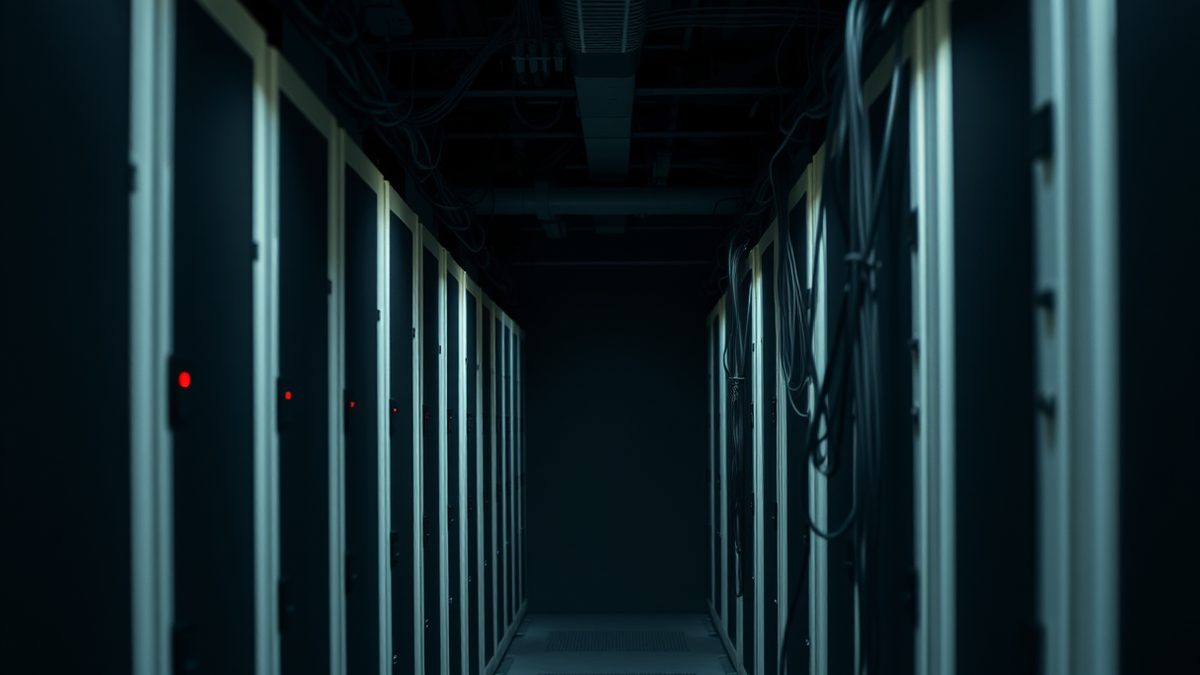
Putin's 10 percent reserve
Vladimir Putin signed the decree on 2 November. It orders data center operators to set aside 10 percent of available space and capacity for government use, Meduza reported. For Russian cloud customers, the practical effect is less certainty about where their workloads run. The decree also shifts risk onto operators. Capacity promised to the state cannot be sold twice. Enforcement is unclear. Neither the Kremlin nor the industry has said publicly how the reserve will be audited. Neither has said what happens to an operator that cannot free the space in time.
Tom's Hardware reported that the reserve covers non-state data centers. It reported that operators must make capacity available within 24 hours of a request. A day is short notice.
Racks are usually committed months ahead. A provider that has promised a customer a block of GPUs may find the state claims a tenth of its floor space before that contract runs out. The decree frames the reserve around emergency state needs, not routine procurement. That framing leaves room for interpretation. Interpretation is where operators lose sleep. A reserve called on once a year is an inconvenience. A reserve called on monthly is a redesign.
Drone strikes hit cloud providers
The decree follows a run of Ukrainian drone strikes on Russian infrastructure. Ars Technica reported that the attacks damaged facilities housing AI supercomputers. It reported they disrupted cloud services for millions of Russian users.
Yandex, Sberbank, VKontakte and the Russian Ministry of Finance all had data centers degraded or knocked out, according to Ars Technica. Ars Technica reported that the Russian military has bombarded Ukrainian cities and targeted Ukrainian data centers since late September. Ukraine has struck military and infrastructure targets inside Russia. Each side now treats computing capacity as a target.
Underground and abroad
Russian tech companies are scrambling to harden and hide their facilities. State-owned telecom Rostelecom has raised the possibility of moving some Russian data centers underground, in talks with nickel and palladium miner Norilsk Nickel, Russian newspaper Vedomosti reported. A regional governor has proposed building data centers inside open-pit coal mines, with green public parks planted above them as camouflage, according to Data Center Dynamics. A facility that cannot be seen is harder to target. Whether a mine offers the power connections and cooling a modern AI cluster needs is a separate question.
On 3 November, Data Center Dynamics reported that Putin had given Russian companies permission to use foreign data centers.
The foreign route has limits. It depends on cross-border links that the same war can interrupt. It also depends on jurisdictions that may not want the business. The decree opens the door. It does not guarantee that anyone walks through it.
What the decree changes
The reserve is not a nationalization. It applies to non-state data centers and takes a slice of capacity rather than the whole facility.
But a slice with 24 hours notice is enough to change how operators plan, sell and price capacity. It also changes how much redundancy they keep for themselves. No published figure quantifies the outages. Ars Technica described the outages as affecting millions of users.
Every contract signed at home sits under a rule the state can invoke in a day.
The state gains a strategic reserve of private computing capacity on terms it has not published. Operators gain a compulsory buyer for part of their floor space.
Russia's cloud market will adapt, because it has to. The 2 November decree pushes operators toward both at once.
The question is how it adapts. It can build smaller, more dispersed sites that are harder to hit. Or it can move load to friendlier jurisdictions and accept the latency and legal exposure that comes with it.
Sources
28- 01Ukraine's drone strikes spur hasty Russian plans for underground data centersEN
- 02Putin demands Russian data centers supply capacity to the state in wake of Ukraine drone attacksEN
- 03Putin gives Russian companies permission to use foreign data centers after Ukraine drone strikesEN
- 04Putin signs decree that non-state data centers will have to reserve 10 percent of capacity for government useEN
- 05Leonardo Cervera (EDPS): "Data protection must allow the needs of companies to be met" - DemócrataEN
- 06 OpenAI introduces program to reduce AI data center energy demand during peak hours EN
- 07OpenAI launches 'Grid Protectors Program' to reduce data center electricity demand when the US grid is under strainEN
- 08Stratos Data Center Will Emit Air Pollution That’s Linked to Premature Deaths and Health Economic Damages for Utah & States DownwindEN
- 09Data centers are turning to old jet engines as the wait for power growsEN
- 10Aluminum–Air Generators for Data Centres Face a Metal Logistics TestEN
- 11UK’s ARIA will test Lumai’s light-based AI servers in a data centreEN
- 12 8 converted jet engines are powering xAI data centers as companies look for new energy sources EN
- 13 Nvidia tells data center operators to limit business from Chinese customers with new global restrictions, report claims EN
- 14Cybersecurity compliance and personal data protection for businesses. - Vietnam.vnEN
- 15Dubai regulator fines Moody’s for data breaches - Funds Global MENAEN
- 16Fujifilm Expands Production 5x of Magnetic Data Storage Tape for Archive DemandEN
- 17 China deploys 'world's first' 800-volt DC power system for massive AI data center EN
- 18UK’s most polluting power plant could power country’s largest AI datacentreEN
- 19Behind-the-meter generation could deliver five times more grid relief than data center load shiftingEN
- 20Why batteries, not gas plants, should be data centers' first choiceEN
- 21 OpenAI considers rebranding data centers to 'AI compute campuses" as data center backlash intensifies EN
- 22 'America hates data centers' — New data highlights public sentiment EN
- 23 Google data center wins approval in Minnesota after protests delay council vote twice EN
- 24Hackers hijack cPGuard autoupdate to deploy backdoor, steal dataEN
- 25Trump Onsite Power Push Meets AI Data Center RealityEN
- 26Sponsored: Why flow measurement is emerging as a critical design consideration in liquid cooled data centersEN
- 27Fireworks contracts 5MW of Nvidia Blackwell Ultra capacity at Era4 data center in UKEN
- 28Bringing Design Data Management into the Developer WorkflowEN
All figures and quotations in this text come from the sources listed below.
Content prepared by the editorial team with AI assistance.
Dr. Amara Patel
Comments
0- No comments yet — be the first.