BYD plans Q4 mass production start at its Szeged plant in Hungary
BYD plans to begin mass production at its Szeged plant in Hungary in the fourth quarter, according to an October report, a step toward assembling cars inside the EU and avoiding the bloc's combined 27% tariff on China-built battery electric vehicles.
 Daniel FisherSport, cars and travel
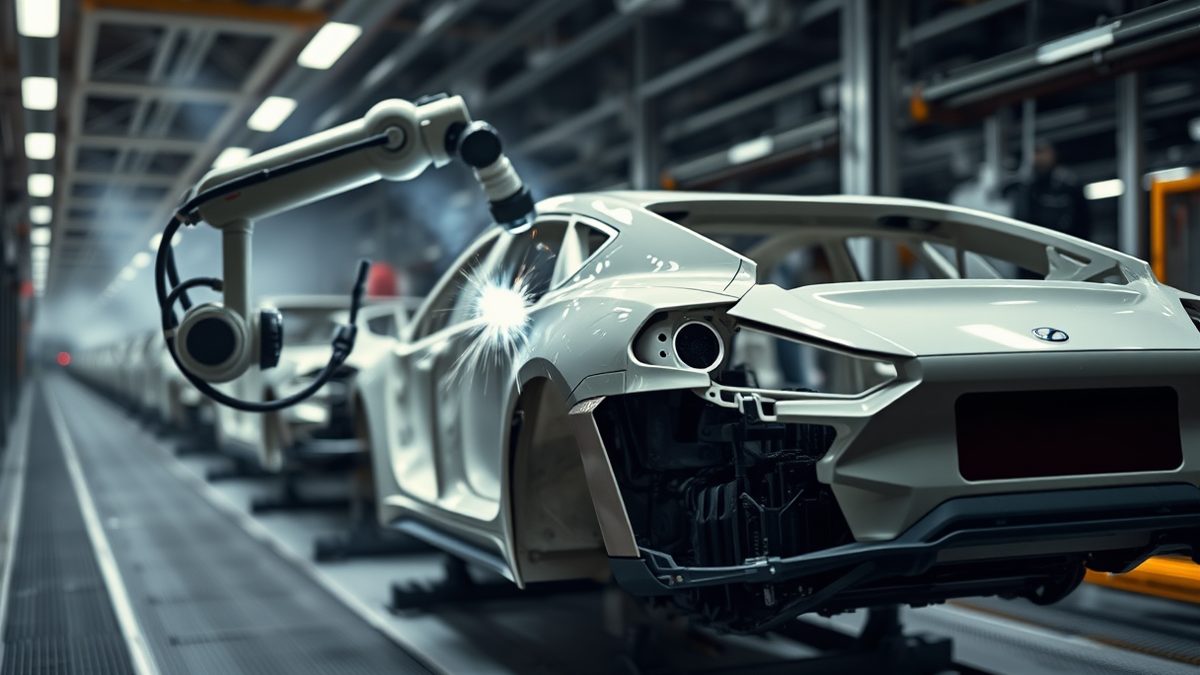
BYD said it plans to begin mass production at the plant in the fourth quarter, the October report said. Executive vice president Stella Li told Reuters in June that vehicle assembly would begin in the fourth quarter, with equipment still being installed. Management told analysts on 7 September that it expected assembly to begin in November or December.
The plant is designed for 200,000 vehicles a year at full ramp, though BYD has said output will run well below capacity for at least two years. Earlier reports described an initial annual capacity of about 150,000 vehicles. Trial production began on 29 January with 960 employees, most of them local hires plus some temporary staff from Asia, and the Dolphin Surf is expected to be the first model built there.
BYD has been in Hungary since 2016, when it opened an electric bus assembly plant at Komárom, and moved its European headquarters to Budapest last year. The Manisa plant in Turkey, announced in 2024 and sized for 150,000 vehicles a year, is on indefinite hold.
Why local assembly matters
The EU applies a combined 27% tariff on China-built battery electric vehicles, a 17% countervailing duty on top of the standard 10% import tariff. Building locally would allow the company to sidestep those levies.
Local content is the second pressure. The EU's draft Industrial Accelerator Act would set a threshold of about 70% local content for subsidies and public procurement, a figure still in square brackets when the proposal was published in February. Altavilla's case for a battery plant is simple: "It does not make sense to invest in car assembly (in Europe) but bring batteries from China," he said in September 2025. Trade pressure is widening too: the EU is seeking a negotiated limit on imports of China-made hybrids and could raise tariffs if no agreement is reached, the Financial Times reported.
Three assembly plants and one battery plant
Alfredo Altavilla, BYD's special adviser for Europe and a former Fiat Chrysler executive, said at a presentation in Turin on 16 September that the company will need three vehicle assembly plants and one battery factory in Europe over the longer term. "Over the longer term, we will need three assembly plants and one battery plant," he said. BYD expects to decide on a second European assembly site by the end of 2026, and prefers to acquire and refurbish an existing facility rather than build from scratch. Spain and France are among the preferred locations.
Italy remains a candidate but is less likely to be chosen, Altavilla said: "Italy remains a plan B". A year ago, at a conference in Milan, he told Reuters it was "hard to imagine" a plant in countries "not friendly with Chinese cars", noting that Rome had backed the EU's tariffs on Chinese electric vehicles. BYD has since been negotiating with Stellantis and other European automakers about taking over underutilised factories. Stella Li said in May that BYD would prefer to operate any acquired plants on its own rather than through joint ventures.
The overseas sales engine behind the plan
BYD needs the capacity because China is shrinking for it: sales at home fell 32.7% to 1.505 million vehicles this year. Overseas sales reached 1,162,260 in the first eight months of 2026, up 85.72% year on year. August alone set a record of 189,466, up 134.45% and 43.03% of the monthly total.
The company raised its 2026 overseas target to between 1.9 million and 2.0 million vehicles, from 1.5 million set in March, itself up from 1.3 million in January, and targets more than 2.5 million in 2027. European registrations rose 169.7% to 50,646 in the first quarter, lifting market share to 1.8% from 0.7%. In the first half it registered 174,144 vehicles across the EU, EFTA and Britain, ahead of Tesla's 170,351, with EU share up to 2.4% from 1.0%, according to ACEA data. Overseas revenue passed domestic revenue for the first time, at 53% of the total.
What happens next
After the second site is chosen, BYD must decide whether to prioritise a third assembly plant or a battery factory, with energy costs weighing heavily, Altavilla has said. Management sees shipping capacity, not manufacturing, as the constraint on exports this year, according to a Deutsche Bank note. As many as 26 Chinese-owned EV and battery plants are under construction or operating in Europe.
Sources
40- 01Chinese EV and Battery Makers Build 26 Plants in Europe, Sidestepping Tariffs for Duty-Free Market GrabEN
- 02BYD will eventually need three assembly plants, one battery factory in Europe, adviser saysEN
- 03BYD needs 3 assembly plants and 1 battery factory for long-term European expansion, adviser saysEN
- 04BYD Wants Three European Car Plants and a Battery Factory, Adviser SaysEN
- 05BYD in talks with Stellantis and other carmakers to take over underutilized European factoriesEN
- 06BYD Could Soon Be Building EVs And Batteries In EuropeEN
- 07BYD Is No Longer Just Shipping Cars to Europe, It's Starting to Build Them ThereEN
- 08BYD needs battery plant in Europe to support auto production increase, special adviser saysEN
- 09BYD to Build Four European Plants as Pakistan Assembly Line Takes ShapeEN
- 10Steering Through Uncertainty: Four future paths for Canada’s auto industry - RBCEN
- 11BYD Plots Three European Assembly Plants as E.ON Charging Deal Lands in NovemberEN
- 12EU tariffs push BYD into Hungary, with 3 more European factories plannedEN
- 13Fourthline and Veridas combine forces to take on global digital identity marketEN
- 14 Dimorphos in sight: Europe's Hera probe gets its 1st look at battered space rock (photo) EN
- 15Titan OS raises $46M to take its smart TV software beyond EuropeEN
- 16Samsung Galaxy Watch Ultra 2 review: The new standard for smartwatch battery lifeEN
- 17Sodium-ion batteries approach cost parity with LFP, with 70 GWh covered by supply agreementsEN
- 18OpenAI “catalyst” for startups, says European executive, amid startup application layer concernsEN
- 19Chinese AI lab Moonshot turned to Europe for Nvidia Blackwell access amid U.S. China curbs, sources tell CNBCEN
- 20October 2026 good for PV Production in Europe, but South of France and Ukraine missoutEN
- 21How Can Europe Accelerate Electric Trucking?EN
- 22Protesters across Europe to call for freeze on energy hungry data centresEN
- 23Janus Electric secures battery supply deal for its battery-swap semi truckEN
- 24Healthtech: Europe’s 10 most-funded companies in H1 2026EN
- 25Virtual power plants can help avoid overbuilt grid if AI boom goes bustEN
- 26Who Controls the Battery in Your Driveway?EN
- 27Why batteries, not gas plants, should be data centers' first choiceEN
- 28Europe’s Chip Industry: Perfect Storm or Perfect Timing?EN
- 29Zeekr starts pre-sales for updated 7X in China at $34,220 with battery and comfort upgradesEN
- 30China Has An Iron Grip On EV Batteries. Here's America’s Plan To Break ItEN
- 31Puerto Rico tapped Sunrun’s home batteries for 18 straight daysEN
- 32CATL, Octopus Energy and Ampace partner to explore European home energy storageEN
- 33A Michigan utility’s iffy plan to trap CO2 from its new gas plantsEN
- 34Tesla cuts FSD’s speed margin from 50% to 10% over the limit in EuropeEN
- 35Batteries Beat Norway’s Hydrogen Bulk Carriers on Cost in Two Modeled RoutesEN
- 36Under the Chassis: Why Europe’s EV Boom Risks Running on Foreign Power - Technology OrgEN
- 37Democrats win control of Congress; experts say little will change for EuropeEN
- 38Nio adds 10 million battery swaps in 88 days, taking total past 130 millionEN
- 39The ETS Investment Engine: Scaling Europe’s Strategic E-fuel Market for Shipping & AviationEN
- 40Swarm Of Electric Trucks Coming To US (Battery Swapping Included?)EN
All figures and quotations in this text come from the sources listed below.
Content prepared by the editorial team with AI assistance.
Daniel Fisher
Comments
0- No comments yet — be the first.