Robotaxi Reality Check: Tesla's Camera-Only Bet and Waymo's Edge Cases
Tesla's robotaxi service launched in Austin on 22 June with a handful of cameras and no lidar. Within days, riders had posted videos of speeding, wrong-lane driving and sudden braking. The autonomous driving experts Business Insider asked to review the footage were not impressed.
 Peter LindqvistSport, cars and travel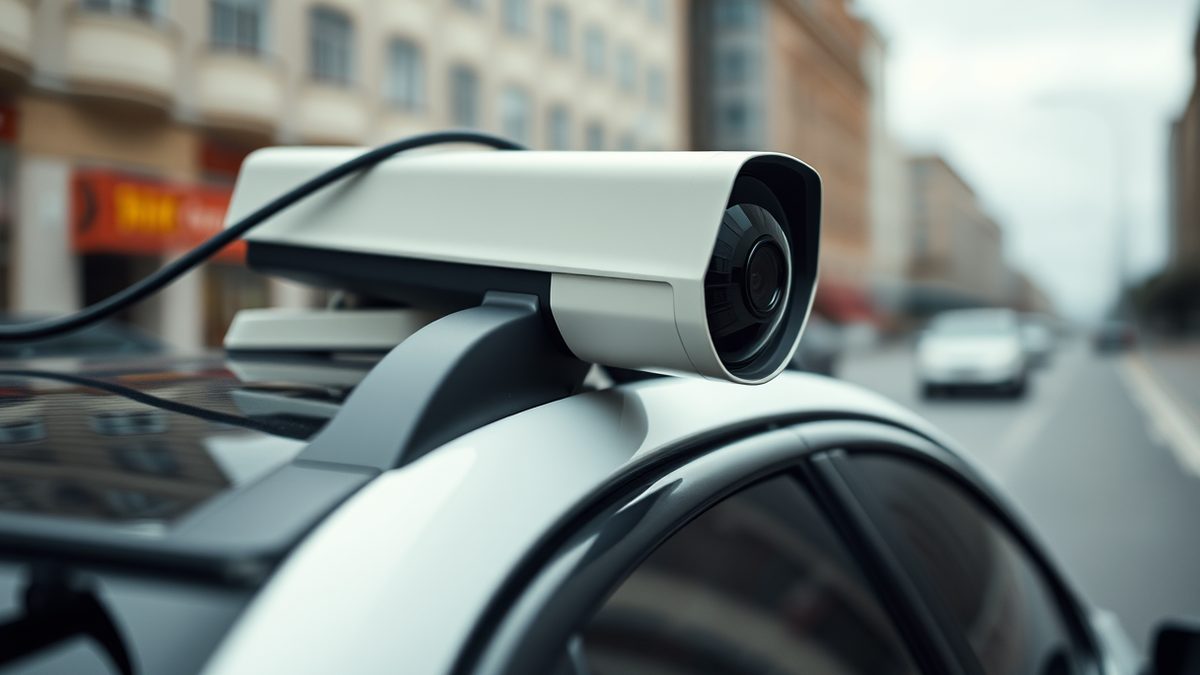
Tesla's robotaxis went live on Sunday, 22 June in a limited area of Austin. The first rides were reserved for a group of Tesla influencers and investors. Most trips appear to have gone smoothly. The exceptions are the ones that ended up on YouTube.
Business Insider asked three autonomous driving experts to review the posted clips. Their list of suspected errors includes speeding more than 10 miles above the limit, driving into the wrong lane, random braking, problems with the pullover button, and at least two interventions by the safety monitor over parking issues. Business Insider said it contacted the influencers and investors for comment and did not hear back. Tesla did not respond to a detailed request for comment.
The hardware argument
The robotaxi runs an advanced version of Tesla's Full Self-Driving software. Eight cameras around the vehicle capture 360 degree visual data. There is no radar and no lidar. Waymo's cars use several sensing methods. Lidar scans the environment with laser light pulses. Radar detects objects with radio waves. That difference is where the expert criticism lands.
Raj Rajkumar, a professor of engineering at Carnegie Mellon University, told Business Insider that pullover problems and wrong-lane driving could probably be fixed with more training data. Phantom braking is a different matter. In one video he reviewed, YouTuber Kim Java was riding in a robotaxi when, according to the video, it braked with nothing obstructing it and sent her belongings to the floor. Java has more than 250,000 subscribers and specialises in tech and clean energy. In the clip she says, "That's something that people have talked about being one of the limitations of Full Self-Driving with robotaxi."
"To process camera data, one has to use AI and machine learning," Rajkumar said. "But hallucinations are an integral part of how AI operates, and once you hallucinate, phantom braking ends up happening, so a camera-only solution will not be sufficient for a very long time."
He went further on the risk profile. "Imagine being on the freeway at 65 mph and the car suddenly brakes for a phantom object, and there is an 18-wheeler semi truck behind you, and they cannot stop," he told Business Insider. "It could be extremely dangerous, depending on what's happening around you."
Steven Shladover, lead researcher at the Partners for Advanced Transportation Technology programme at the University of California, Berkeley, reviewed the same range of mishaps, including the apparent speeding and wrong-lane incident as well as the sudden braking. He told Business Insider that automated driving needs camera, radar and lidar data combined, plus precise localisation against a high-accuracy digital map and inputs such as local road rules and speed limits. His stated concern is that a camera-only approach without lidar or radar will eventually lead to passenger injuries without intervention.
A known failure mode with a legal tail
Phantom braking is not a new complaint for Tesla. The company faces a class-action lawsuit over alleged phantom braking in its Autopilot system, which is an advanced driver assistance system and distinct from the supervised version of Full Self-Driving. In 2022, the National Highway Traffic Safety Administration opened an investigation into Tesla Model 3 and Model Y vehicles after more than 750 drivers complained that their cars suddenly slammed on the brakes at high speeds while on Autopilot. That investigation and evaluation are still ongoing.
Also in 2022, a Tesla driver who told police they were using supervised Full Self-Driving was caught in an eight-car pileup caused by sudden and unexpected braking. CNN first reported the incident in December 2022, and Tesla did not respond to its requests for comment. Elon Musk addressed phantom braking complaints in 2020 on what was then Twitter and has not commented further since. "Is the issue of phantom braking fixed in this release?" user EV-HQ asked in October 2020. "It should be," Musk replied, adding: "Meant to say that it should be fixed in the latest wide release. Won't need to wait for FSD."
The human in the passenger seat
Musk said before launch that a human safety monitor would ride in the passenger seat of each robotaxi out of an abundance of caution. The videos suggest that monitor can stop the car by pressing an "In Lane Stop" button on the touchscreen. One clip, posted by early Tesla investor and YouTuber Dave Lee, who has more than 230,000 subscribers, shows a monitor using the button to keep a robotaxi from colliding with a reversing UPS truck as the vehicle tried to park itself. The experts Business Insider spoke to are sceptical about removing that person any time soon, particularly for Tesla's fleet.
The wider pattern across the industry is that edge cases keep surfacing after deployment, not before. Waymo, which does use lidar and radar, has spent the past year demonstrating exactly that.
Sources
1All figures and quotations in this text come from the sources listed below.
Content prepared by the editorial team with AI assistance.
Peter Lindqvist
Comments
0- No comments yet — be the first.