Robotaxi safety claims hit a wall of lawsuits, leaks and court rulings
Experts who reviewed Tesla's robotaxi launch videos flagged phantom braking and lane errors. A data leak and a $243 million verdict have now put the industry's safety claims under scrutiny.
 Peter LindqvistSport, cars and travel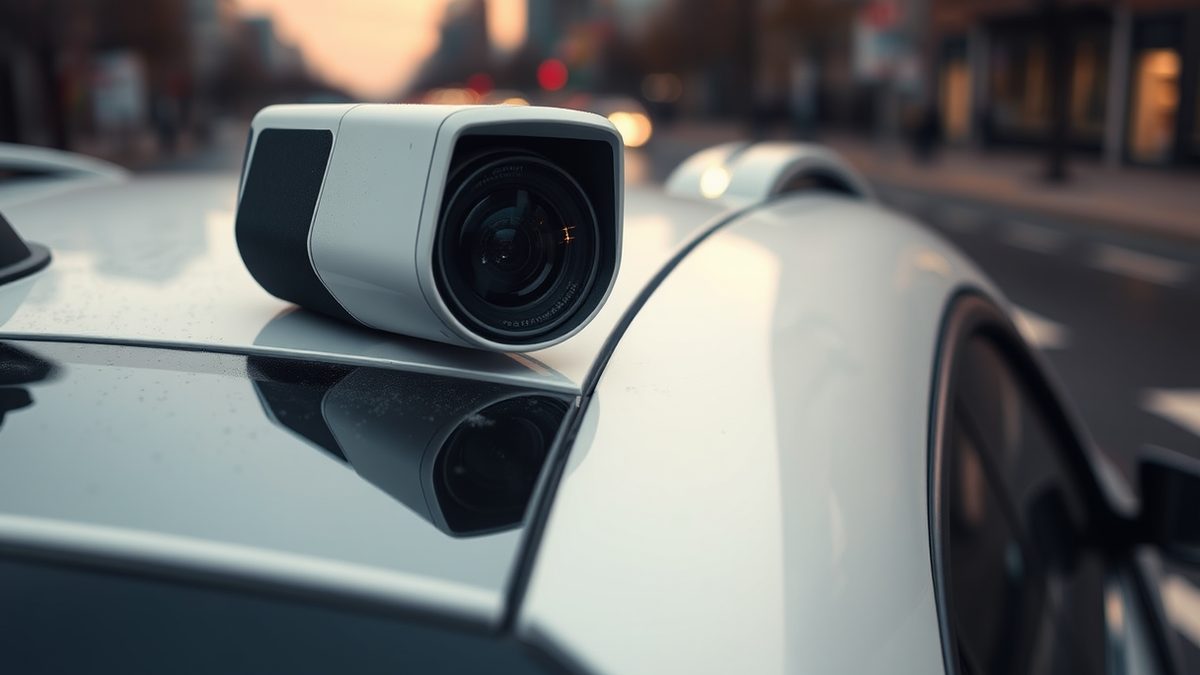
Tesla's robotaxis launched on Sunday, June 22, in a limited area of Austin. Early access rides went to a group of Tesla influencers and investors. Business Insider asked three autonomous driving experts to review videos of those rides.
Most of the rides appeared to go smoothly. The problems that did surface were enough to prompt hard questions. According to the posted videos, the robotaxis sped more than 10 miles above the limit, drove into the wrong lane, braked at random, and struggled with the pullover button. The safety monitor intervened at least twice over parking issues. Tesla did not respond to a detailed request for comment from Business Insider. The influencers and investors the publication contacted did not reply either.
Phantom braking is the problem cameras cannot train away
Raj Rajkumar, a professor of engineering at Carnegie Mellon University, told Business Insider that pullover glitches and wrong-lane driving could likely be fixed with more training data. Phantom braking belongs to a different category. In one video, YouTuber Kim Java was riding in a robotaxi when it braked with nothing obstructing it, sending her belongings to the floor.
"To process camera data, one has to use AI and machine learning," Rajkumar said. "But hallucinations are an integral part of how AI operates, and once you hallucinate, phantom braking ends up happening, so a camera-only solution will not be sufficient for a very long time." He added: "Imagine being on the freeway at 65 mph and the car suddenly brakes for a phantom object, and there is an 18-wheeler semi truck behind you, and they cannot stop. It could be extremely dangerous, depending on what's happening around you."
Tesla's robotaxi runs an advanced version of its Full Self-Driving software as the central system, with eight cameras for 360 degree visual data. No radar. No lidar. Waymo's cars, by contrast, rely on several ways to sense the environment. Steven Shladover, lead researcher at the Partners for Advanced Transportation Technology program at the University of California, Berkeley, told Business Insider that a camera-only approach without lidar or radar will eventually injure passengers unless something changes.
"Automated driving needs a combination of sensor data from cameras, radars, and lidars, as well as precise localization relative to a high-accuracy digital map of the roadway environment and other data such as the local rules of the road and speed limits."
Phantom braking is nothing new in Tesla software. The company faces a class-action lawsuit over alleged phantom braking in its Autopilot system. The National Highway Traffic Safety Administration opened an investigation into Tesla Model 3 and Model Y vehicles in 2022 after more than 750 drivers complained that their Teslas suddenly slammed on the brakes at high speeds while on Autopilot. That investigation and evaluation are still ongoing. Elon Musk addressed phantom braking complaints in 2020 on what was then Twitter and has not commented further since.
A leak, a verdict, and a black box Tesla said was corrupted
An investigation by RTS, published on 17 April 2026, reported that Tesla concealed thousands of serious incidents involving its autonomous driving systems up to 2022, some of them fatal. The reporting relies on a massive leak of internal Tesla data. The files show thousands of customer complaints, more than 2,400 concerning spontaneous acceleration, and more than 1,000 accidents. In many cases the recorded status was "unresolved."
The consequences on the road were severe. The investigation describes a system that can misread its environment, with errors turning deadly at high speed. Naibel Benavides, 22, a pedestrian, died in an accident involving a Tesla in Autopilot mode. Her partner, Dillon Angulo, survived with serious injuries.
"I did not know that Autopilot existed. When I found out, I felt like a guinea pig," Angulo told the investigation. Tesla has consistently blamed the driver, arguing he was distracted and had taken his hands off the wheel against recommendations. Investigators hit unusual obstacles. The crash data should have been available in the vehicle's black box. Tesla said the data was corrupted. Lawyers for the victims brought in experts who recovered the deleted data, which the investigation says proves Tesla knew about the failure on the evening of the accident. The car in Autopilot mode had detected the obstacles and did nothing to avoid the collision. Only an alert sounded just before impact.
A jury ordered Tesla to pay more than $243 million in damages, a first in cases tied to Autopilot. Jurors found both Tesla and the driver responsible. "It is a historic day for justice," the victims' lawyer said. Tesla tried to have the verdict overturned. In late February, a federal judge confirmed the sanction. The company can still appeal. The US Department of Justice is examining whether Tesla misled consumers, and NHTSA is running its own investigation. Whistleblowers told authorities the company prioritized speed over safety.
China tells drivers the steering wheel is still theirs
Regulators are moving too. China's Supreme Court confirmed on Friday, 13 February 2026, that humans inside vehicles equipped with driving assistance technology must remain responsible for their vehicles. The court cited a September 2025 ruling from Zhejiang province in which a driver surnamed Wang was jailed and fined for relying fully on driving assistance while intoxicated. He had installed a device to simulate holding the steering wheel, set the car to drive itself, and fell asleep in the passenger seat. The car stopped in the middle of the road before police arrived.
"Driving assistance systems cannot replace the driver as the primary operator," the Supreme People's Court stated, adding that the driver "remains the actual operator responsible for ensuring driving safety." The ruling sets a nationwide standard that lower courts must reference. Beijing had already tightened safety regulations after an accident in March 2025 in Anhui province, where a Xiaomi SU7 struck a concrete barrier at a construction site, causing a fire that killed three people.
The counter-argument has numbers too
Waymo, which has driven more than 200 million fully autonomous miles, argues in an August 2026 blog post that cameras alone are not enough. The company combines cameras, lidar, and radar, and uses high-definition maps as an additional input. It also runs an independent onboard validation layer that checks every proposed trajectory against hard physics-based constraints and traffic laws.
"This architectural choice is non-negotiable for safely scaling at L4," the company wrote. IEEE Spectrum reported in September 2026 that mounting research suggests self-driving cars crash significantly less often than people, with far fewer injuries. Waymo says its robotaxis have given 20 million paid rides over 220 million miles. An independent study in March showed 92 percent fewer fatal or serious-injury crashes versus human drivers in comparable city environments, including 92 percent fewer pedestrian injuries and 83 percent fewer crashes with airbag deployments. The Insurance Institute for Highway Safety's July study found Waymo taxis were involved in 68 percent fewer crashes overall than human drivers. The IIHS noted that roughly half of human crashes go unreported, which may skew comparisons in favor of human drivers.
Tesla has not responded to the questions raised by the RTS investigation, and Musk has not commented further on phantom braking since 2020. The gap between the industry's safety numbers and its courtroom record is now the central question for regulators in Washington and Beijing.
Sources
5- 01Autonomous driving experts to comment on Tesla's robotaxi launch errorsEN
- 02Tesla concealed fatal accidents to continue testing autonomous drivingEN
- 03China Supreme Court rules drivers remain liable despite autonomous driving techEN
- 0410 AI Lessons from Driving 200+ Million Fully Autonomous MilesEN
- 05Growing proof that autonomous cars save livesEN
All figures and quotations in this text come from the sources listed below.
Content prepared by the editorial team with AI assistance.
Peter Lindqvist
Comments
0- No comments yet — be the first.