Robotaxi Regulation Fight Moves to Minneapolis as Waymo Tops 220 Million Miles
The Minneapolis City Council votes on Thursday on a proposal to mandate human drivers in robotaxis, opening a regulatory front for autonomous driving as Waymo's own numbers show the scale problem the industry still has to solve.
 Daniel FisherSport, cars and travel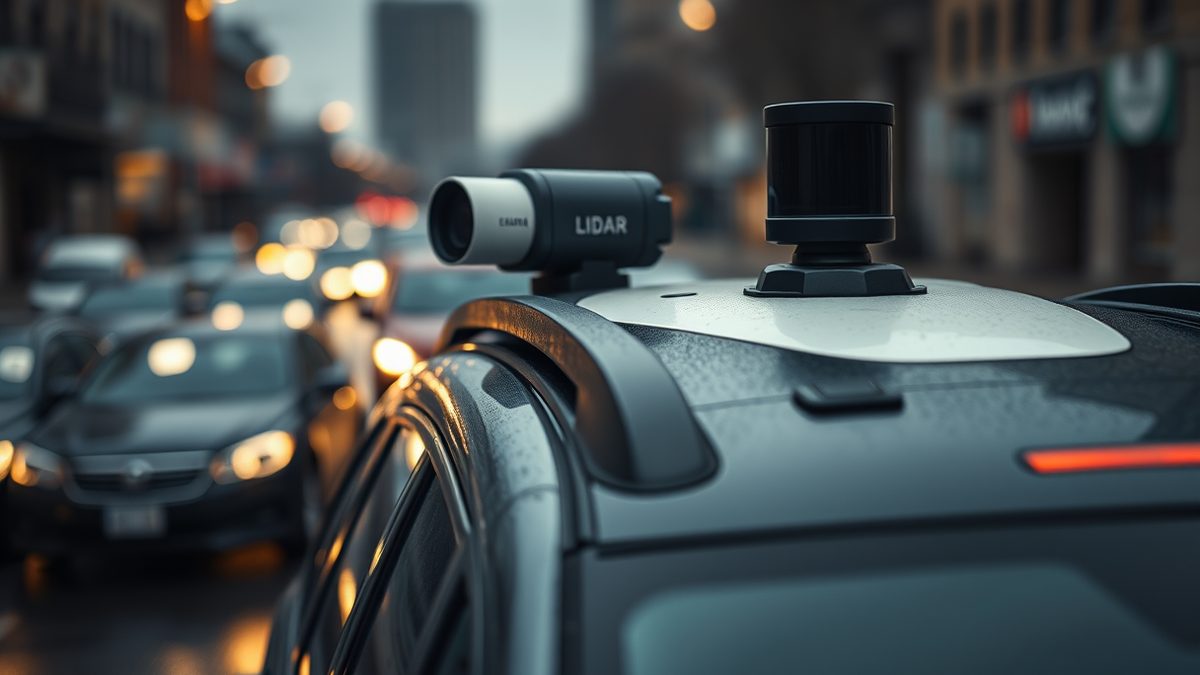
The Minneapolis City Council votes on Thursday on a proposal that would require a human driver behind the wheel of any robotaxi operating in the city, according to MPR News. The Minnesota Reformer reported on Wednesday that the council had already advanced the proposal. The vote lands in the same week that robotaxi operators announced new trials in Europe and new vehicle deals in the United States, and it puts a US city council directly against the commercial model that companies such as Waymo, Zoox and Pony.ai are betting on.
Regulation is not the only constraint on the sector. A separate argument published by The Robot Report on 26 September says the harder limit is physical infrastructure: the depots where cars are cleaned, charged and inspected between paid trips. That piece was written by Dan Keene, co-founder of Aseon Labs, a company that is building robotic servicing stations for autonomous fleets, and it carries a full disclosure of his commercial interest.
What Waymo's own figures show
The scale problem is visible in Waymo's published numbers, as cited by The Robot Report. The company has logged more than 220 million autonomous miles and says it has more than 94% fewer serious injury crashes than human drivers. It gives around half a million paid rides a week and is expanding to more cities. Waymo is in 14 cities. Uber, by contrast, is in over 15,000 and did 3.9 billion trips last quarter. According to the same piece, Uber processes Waymo's entire weekly ride volume every 17 minutes.
That gap is not a driving-software gap, the argument goes. It is a servicing gap. A robotaxi that finishes a ride, discovers a spilled latte on the back seat, and drives up to 15 miles empty to a centralized depot to be cleaned, charged and inspected has already broken the business model. Each reset costs roughly two hours. California data cited in the piece shows that of 86 million Waymo miles reported through 2025, only 54% carried a passenger. Not every empty mile is a depot run, but every depot run is an empty mile.
Then come the timelines, per city. California's regulator targets six months just to energize a standard charging site, according to the piece. A new circuit runs 1.9 years, a substation upgrade 2.8 years, a new substation 8.9 years. Multiply that across thousands of cities and the industry is looking at decades of grid work before it can claim national coverage.
The vehicle is not the hard part
The Robot Report piece also describes how the supply chain is already fragmenting. Waymo did everything itself: designed the driver, retrofitted the cars, ran the fleet, built the app, staffed the depots. Even Waymo has since shed two layers, with Zeekr building its Ojai vans and Moove, Avomo, Avis and Flexdrive running its depots. The next wave, according to the piece, is built by specialists: Wayve, Nuro and Mobileye sell brains, carmakers put those brains in their own cars, with Nissan working with Wayve, Lucid with Nuro, Volkswagen with Mobileye and Mercedes with NVIDIA. Uber supplies riders to more than 30 autonomous partners. The result is not one fleet of one vehicle but dozens of fleets of different vehicles.
"The cars can already drive themselves. They still cannot charge, clean, or inspect themselves. Somebody has to build the pit," Keene writes.
The money is moving anyway. Andreessen Horowitz raised $1.1 billion for the physical buildout of AI, Keene notes, in a line that reads as a warning about where capital is and is not going.
Outside the robotaxi lane, the same autonomy argument is being made in construction. Autonomous Solutions Inc., or ASI, and SoftBank Group announced a joint venture to commercialize brand-agnostic autonomous heavy equipment, The Robot Report reported on 30 September. SoftBank has provided $225 million in new funding to ASI. Mel Torrie, CEO of ASI, told the publication that skilled equipment operators are hard to find and coordinating mixed fleets across a large jobsite is a real bottleneck. ASI, founded in 2000 and based in Mendon, Utah, makes the Mobius fleet orchestration system. The mention matters here only as a comparison: the same servicing and coordination problem appears wherever autonomous machines have to run continuously, not just on roads.
Money, law and the robot as a party
A third piece, published by The Robot Report on 28 September, pushes into territory that regulators have not touched. It reports that analysts at the AI Robotics Alliance of America summit in June hypothesized that capital itself is a sufficient form of robot governance, on the theory that granting machines autonomy cuts transaction costs. Analyst Sergey Lonshakov is quoted raising the practical wall: in Germany, specialists still debate what cyber-physical systems actually are, because the academic definition of a robot remains vague.
The payment question is where the law currently stops. The piece notes that in 2026, John Anderson and other futurists are promoting crypto wallets for robots, on the grounds that no one will open a traditional bank account for a machine that is not a legal entity, while a wallet on the Bitcoin or Ethereum network is generated automatically. It also notes that lawyers from Baker McKenzie say no European jurisdiction will accept robot economic autonomy in contract law. If a person lays tiles badly, a judge can examine motives. With a robot, the piece argues, its goal-setting is for the court simply a breakdown. If the device is the result of dozens of teams' work, no one can be held responsible.
The two camps are described bluntly. Silicon Valley optimists: generate a wallet, launch a Twitter bot, collect satoshis. European realists: define the nature of goal-setting first, because responsibility lies neither with the manufacturer nor the robot. That split is more relevant to robotaxi operators than it first appears, because a fleet that pays for its own charging, cleaning and inspection needs a legal counterparty. Today it does not have one.
The Pentagon, meanwhile, is setting up a command with a similar structural problem. US Defense Secretary Pete Hegseth announced Autonomous Warfare Command, or AutoWarCom, on Wednesday in his annual State of the Force speech at Marine Corps Base Quantico in Virginia, according to The Next Web. Hegseth said a four-star officer would lead it, that it would be set up over several months and launched within a year, and that the services would create new military job specialties for soldiers who operate autonomous systems. Reuters notes the last new command was US Space Command in 2019. The Pentagon's budget proposal for fiscal year 2027 requests about $54.6 billion for the Defense Autonomous Warfare Group, up from about $226 million now, though Congress has not approved it. The same piece notes security experts in the US and China calling for common rules on AI in weapons systems, including nuclear weapons.
What Thursday's vote means
Minneapolis is a local decision with national read-across. If the council mandates human drivers, it does not ban robotaxis; it makes them more expensive per mile than a human-driven car in that city, which is the opposite of the pitch. The Minnesota Reformer reported the proposal advanced on Wednesday. MPR News says the vote is Thursday.
Nothing in the dossier settles whether such a rule would survive a legal challenge, and no operator has commented on the Minneapolis proposal in the material reviewed here. What the dossier does show is that the industry's constraints are stacking up in different places at once: a city council in Minnesota, a grid connection queue in California, a contract-law vacuum in Europe and, on the Pentagon's side, a budget request that has not yet cleared Congress. The driving is done. The rest is not.
Sources
5- 01From 14 cities to 15,000: What it will take to scale robotaxis?EN
- 02Tackling construction labor shortages: ASI and SoftBank partner on autonomous fleetsEN
- 03Robonomics on the threshold: Economic autonomy, smart cities, and crypto wallets for humanoidsEN
- 04Pentagon creates Autonomous Warfare Command to scale drones and AIEN
- 05Show HN: Beyond "chat with your database" – agentic data explorationEN
All figures and quotations in this text come from the sources listed below.
Content prepared by the editorial team with AI assistance.
Daniel Fisher
Comments
0- No comments yet — be the first.