Robotaxis Can Already Drive Themselves. The Problem Is What Happens Between Rides
Mazda added a LiDAR suite to its CX-6e on 27 September, giving the China-built electric SUV "advanced L2" autonomy and automated parking, as Volkswagen was reported the same day to be weighing an exit from its Moia robotaxi unit.
 Daniel FisherSport, cars and travel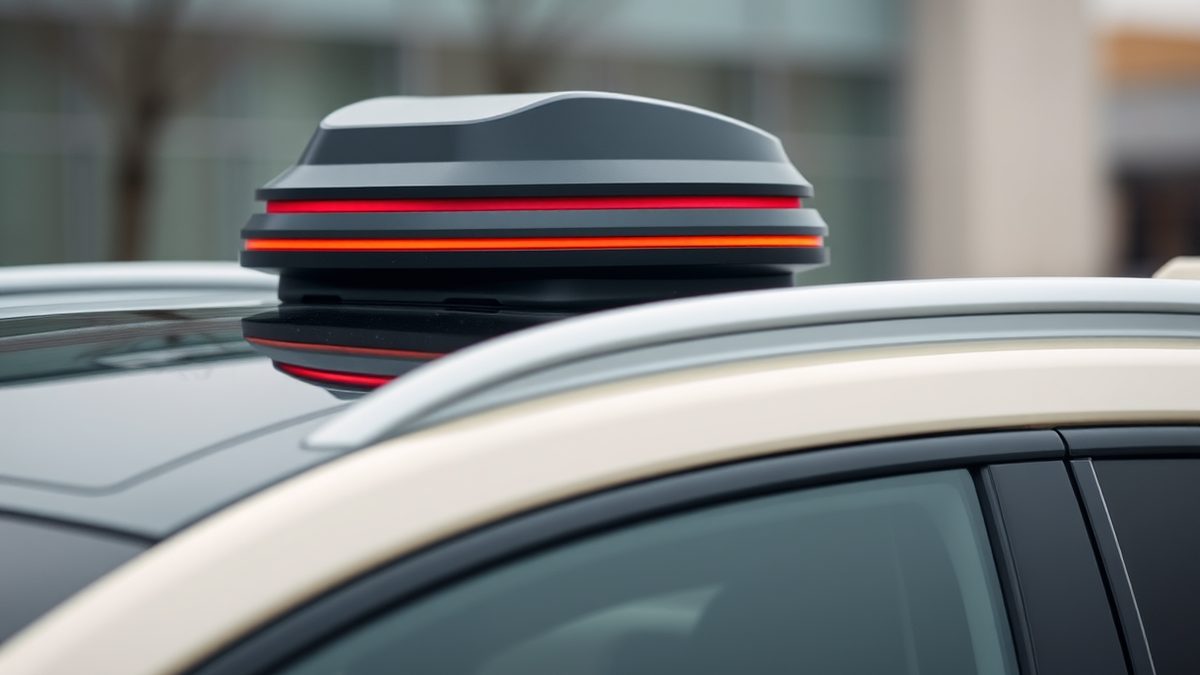
Two announcements landed within hours of each other on 27 September. Together they describe the split in autonomous driving right now.
Mazda gave its CX-6e a LiDAR suite. Volkswagen signalled it may walk away from the harder end of the business.
Electrek reported on 27 September that Mazda's CX-6e, the second EV to come out of its partnership with Changan Auto, now carries a LiDAR-equipped "EZ-60 Laser Edition" update. Mazda's system combines the LiDAR with 11 high-definition cameras, 12 ultrasonic radar sensors and three millimeter-wave radar sensors. The company says the setup delivers "full-domain" perception for highway and urban navigation, and that it handles cars, bikes and pedestrians even when visibility is poor. The car is not sold in the United States. It offers a rear-mounted motor producing 190 kW (258 hp) and 214 lb-ft of torque, and a 77.94 kWh lithium-iron-phosphate battery that Mazda says is good for up to 600 km of range.
What the Chinese system actually does
Mazda's numbers for the driver-assistance functions are specific. On highways, the system covers lane change assist, obstacle avoidance, ramp entry and exit, and service area entry and exit across a speed range of 0 to 130 km/h. In cities it relies on Tencent's lane-level navigation and what Mazda describes as an end-to-end architecture, to handle cut-ins, construction detours and narrow passages. The company says an over-the-air update will add a "follow-up tour" function for driving in convoy.
Automatic emergency braking is where the claims get most concrete. According to Electrek, the car can stop from up to 110 km/h for stationary objects ahead, from up to 90 km/h for pedestrians in its path, and will brake for pedestrians and cyclists crossing within 60 km/h. It also handles so-called ghost pedestrians and crossing vehicles at up to 50 km/h, and combines braking with steering avoidance when stopping is not enough. Mazda says the system passed government-sanctioned tests across 11 high-risk scenarios, from narrow mountain roads to rainy-night highway driving, and received a TOP Intelligence Intelligent Safety Challenge certificate from CATARC.
The naming is worth noting. Mazda's "navigation on autopilot" label sits alongside the "Tesla Assisted Driving" moniker used on Chinese-market Teslas, which are sold as "Full Self Driving" in the US. Both remain driver-assistance products, not robotaxis.
Volkswagen's retreat is the other half of the story
On the same day, heise online reported that Volkswagen's board takes a sceptical view of Moia, the ridepooling subsidiary that was meant to prove German manufacturers could compete in autonomous mobility. Citing an internal strategy paper via WirtschaftsWoche, heise said Moia no longer plays a central role in the group's 2030 target picture, and that VW wants to work through exit options by the end of 2026, ranging from a sale to new investors to a full wind-down.
The technical side is not there yet either. Moia is testing autonomous operation in Hamburg using a Volkswagen ID.Buzz with technology from supplier Mobileye, but company insiders told the magazine the hardware and software fall short of expectations for fault-free driving behaviour, which is why Level 4 autonomy has not been demonstrated. VW, under financial pressure, is also unwilling to spend the billions needed to push further, and potential investors including Uber and Lyft have pulled back from taking stakes.
Heise frames this against Waymo, the Alphabet subsidiary that has invested an estimated $27 billion in the technology over more than 15 years. Waymo alone completes more than half a million paid rides a week in the US and is preparing to expand into Europe. BMW and Mercedes hold their ground on assistance systems up to Level 3, but heise argues they lag on the artificial intelligence that robotaxis actually require.
The unglamorous constraint nobody funds
Even a company that has solved the driving problem still faces the arithmetic of everything else. Writing in The Robot Report on 26 September, Dan Keene, co-founder of Aseon Labs, laid out the numbers behind scaling from a proven system to a widespread one.
Waymo has logged more than 220 million autonomous miles and reports more than 94% fewer serious injury crashes than human drivers, and operates in 14 cities. Uber operates in over 15,000. Keene notes that Uber processes Waymo's entire weekly ride volume every 17 minutes, and that California data shows only 54% of the 86 million Waymo miles reported through 2025 carried a passenger.
Each reset costs roughly two hours.
That is where the model strains. A robotaxi that finishes a ride with a spilled drink on the back seat can drive up to 15 miles empty to a central depot to be cleaned, charged and inspected. Keene lists three obstacles to doing that at scale: industrial land wired for power is being outbid by data centre developers; California's regulator targets six months just to energise a standard charging site, with a new circuit taking 1.9 years, a substation upgrade 2.8 years and a new substation 8.9 years; and no single depot design suits Phoenix sprawl, Zurich's medieval street plan and Riyadh's heat and dust at once.
His argument is that the industry needs a standard servicing unit, the way the shipping container standardised ports, rather than a bespoke depot in every city. Full disclosure is part of the piece: Keene's own company is building a robotic charging, cleaning and inspection station designed to arrive on a flatbed and go live within a day. He writes that he is early and will not be the only one, and that the argument rests on arithmetic rather than on his product.
Hessen keeps the pilots running
Not every public-sector project is winding down. Heise reported on 27 September that Deutsche Bahn and the Rhein-Main-Verkehrsverbund are expanding autonomous transport in Hessen, with Holon shuttles due to carry passengers in parts of Darmstadt and the Offenbach district from next year. Test drives to map the area come first. The vehicles have five seats and a wheelchair space, and the manufacturer says up to 15 people fit in total. When the wheelchair space is in use, three passenger seats remain.
The shuttles drive fully autonomously but are monitored by a safety driver acting as an operator, according to Holon. They received approval for test operation in Germany at the end of 2025. They replace the existing Kira project, which has run in southern Hessen since May 2025 and, as of the end of May, had around 4,200 registered test users ordering vehicles via an app across roughly 130 stops. Kira ends at the end of the year.
The history is not encouraging. Until the end of 2024, DB ran EZ10 buses from Easymile in Bad Birnbach, a project the district says was well received, but continued financing failed and Easymile withdrew entirely from autonomous passenger transport to focus on driverless freight. The Bad Birnbach service stopped in January 2025 after seven years.
RMV chief Knut Ringat framed the goal in a statement: "Das Ziel ist es, in naher Zukunft autonome Angebote in den regulären ÖPNV zu integrieren."
What the benchmarks still show
Away from public roads, the gap between demonstration and deployment is visible in raw numbers. DrivingBench, published on 22 September, puts frontier language models behind the wheel of a real Toyota Corolla over up to three attempts in a continuous chat. GPT-6 Astra, run through Codex at medium effort, reached 100% progress and finished in 5:22 on its second attempt. Its first attempt stopped at 49%.
Claude Fable 5.1 through Claude Code reached 45% at best and did not finish, across three attempts costing $0.96, $1.35 and $1.64. Grok 4.6 peaked at 11%, GPT-5.6 Sol at 6%. Progress is measured as how far along the course centreline an attempt got while staying within 4 metres of it, and a collision keeps only the distance covered beforehand.
The comparison is not flattering for anyone expecting a general model to drive. It also underlines what the rest of the week's reporting keeps returning to: the driving itself is the part furthest along, and the economics, the depots and the politics are what decide who scales.
Sources
5- 01Mazda adds LiDAR to CX-6e, rolls out "self driving" tech in ChinaEN
- 02Autonomes Fahren: Warum VW bei Moia die Reißleine ziehen könnteDE
- 03RMV baut autonomen Nahverkehr in Darmstadt und Offenbach ausDE
- 04From 14 cities to 15,000: What it will take to scale robotaxis?EN
- 05Show HN: DrivingBench – Frontier LLMs Driving a Real Toyota CorollaEN
All figures and quotations in this text come from the sources listed below.
Content prepared by the editorial team with AI assistance.
Daniel Fisher
Comments
0- No comments yet — be the first.