Robotaxis Keep Hitting the Same Edges: Construction, Floods and Phantom Braking
Waymo recalled nearly 4,000 robotaxis on 18 June 2026 after at least 13 of its vehicles drove into closed highway construction zones. It is the sixth recall in the company's history, and the latest sign that the industry's hardest problems are the boring ones.
 Peter LindqvistSport, cars and travel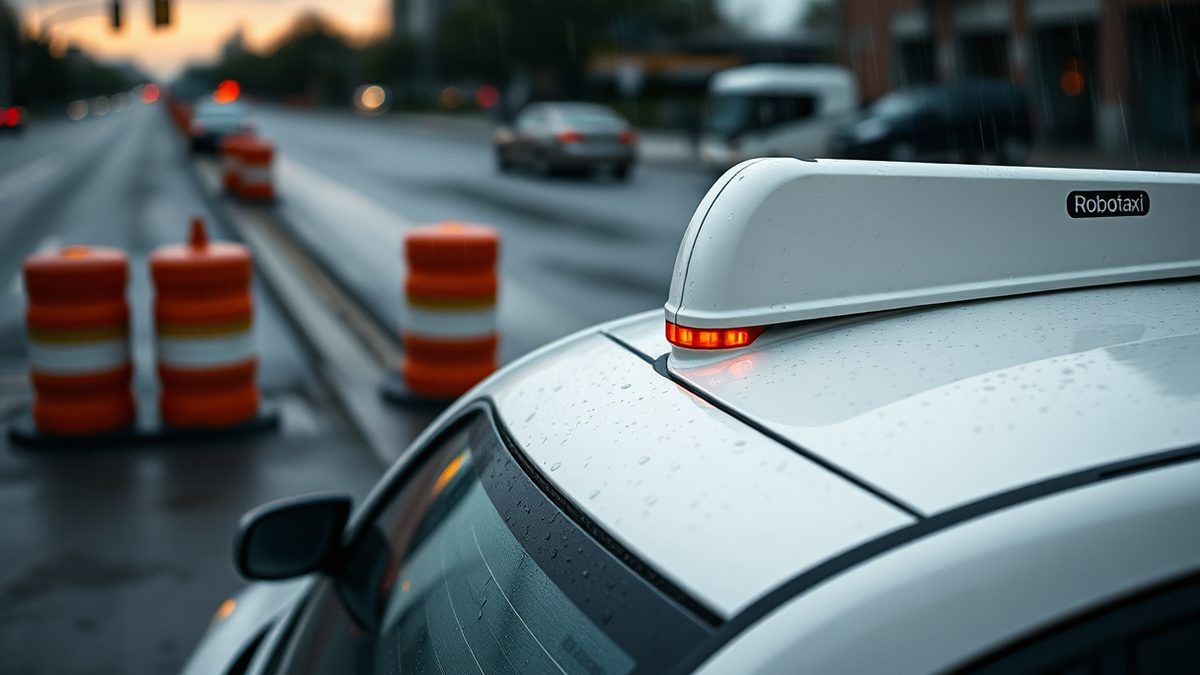
Waymo pulled its robotaxis off all highways on 19 May. A fix is "currently under development," according to filings with the National Highway Traffic Safety Administration. The company is not taking vehicles off the road, and its cars still run on surface streets.
The recall covers six incidents in Phoenix in April and seven in the San Francisco Bay Area in May. Waymo told NHTSA its robotaxis "did not recognize and drove past ramp closure signs into pre-planned freeway construction zones" in Phoenix. In the Bay Area, the company said its software was "prioritizing the avoidance of other freeway hazards and/or failing to recognize the construction zone." Waymo's safety board decided to file the recall on 8 June, three weeks after the freeway suspension began. The filing shows how narrowly the software read each scene.
This is the sixth recall Waymo has issued for its robotaxis. In May the company recalled its fleet after vehicles drove into flooded roads. In December it issued one to address illegal behavior around school buses. Earlier recalls covered low-speed collisions with chains and gates, telephone poles, and a problem with towed trucks.
A pattern of edge cases, not a single bug
The floods are the cleanest example of how hard these problems are to close. Waymo paused service in four cities, Atlanta, San Antonio, Dallas and Houston, after one of its robotaxis drove through a flooded street in Atlanta on Wednesday and got stuck for about an hour, according to local news reports and TechCrunch. The vehicle was recovered and removed from the scene.
That pause came after Waymo had already issued a software recall for the same class of problem. The company admitted it had not finished developing a "final remedy" for avoiding flooded areas. Instead it shipped an update that placed "restrictions at times and in locations where there is an elevated risk of encountering a flooded, higher-speed roadway," according to NHTSA documents. It was not enough. Waymo told TechCrunch the Atlanta storm produced so much rainfall that flooding was happening before the National Weather Service had issued a flash flood warning, watch, or advisory. Those alerts are part of a larger set of signals the company relies on to prepare vehicles for poor weather.
"NHTSA is aware of this incident, is in communication with Waymo, and will take appropriate action if necessary," a spokesperson for the safety regulator told TechCrunch.
Two open investigations, one child
The school bus problem is the subject of active investigations by both NHTSA and the National Transportation Safety Board. Waymo produced a batch of documents for NHTSA, all redacted to the public. On 15 May, NHTSA sent a second document request because the company's initial response "necessitates that [NHTSA] receive further data and information."
A second set of investigations covers a 23 January incident in which a Waymo robotaxi crashed into a child in Santa Monica, California. Waymo has said the vehicle braked to around six miles per hour before it struck the child, who suffered minor injuries.
"We identified an area of improvement regarding performance around freeway construction zones," Waymo said in a statement to TechCrunch. "We voluntarily restricted freeway operations last month while making improvements, proactively notified state and federal regulators, and decided to file a voluntary software recall with NHTSA."
None of this has slowed the expansion. Waymo says its vehicles have driven more than 170 million miles autonomously and claims a 13x reduction in serious-injury-or-worse crashes compared with human drivers. It is planning to launch in more than 20 cities this year, including London and Tokyo. That scale is exactly what keeps surfacing the edge cases. The company's own recall history suggests the fixes arrive after the incidents, not before.
Tesla's camera-only bet under scrutiny
Tesla's robotaxi launched on 22 June 2025 in a limited area of Austin, with early access rides reserved for a group of influencers and investors. Most rides appeared to go smoothly, but posted videos showed speeding more than 10 miles above the limit, driving into the wrong lane, random braking, problems with the pullover button, and at least two interventions from the safety monitor due to parking issues, Business Insider reported.
The vehicle uses an advanced version of Tesla's Full Self-Driving software with eight cameras for 360-degree visual data, and no radar or lidar, unlike Waymo. Raj Rajkumar, a professor of engineering at Carnegie Mellon University, told Business Insider that pullover and wrong-lane issues could likely be fixed with more training data, but that phantom braking may expose a design flaw. "To process camera data, one has to use AI and machine learning," he said. "But hallucinations are an integral part of how AI operates, and once you hallucinate, phantom braking ends up happening, so a camera-only solution will not be sufficient for a very long time."
Steven Shladover, lead researcher at the Partners for Advanced Transportation Technology program at UC Berkeley, told Business Insider that automated driving needs cameras, radars and lidars plus precise localization against high-accuracy digital maps. He said he is concerned the camera-only approach will eventually lead to passenger injuries without intervention.
Phantom braking is not a new complaint. Tesla faces a class-action lawsuit over alleged phantom braking in Autopilot. NHTSA opened an investigation in 2022 into Model 3 and Model Y vehicles after more than 750 drivers complained their cars slammed on the brakes at high speeds on Autopilot. That investigation is still ongoing. In a separate 2022 case, a Tesla driver who told police they were using supervised Full Self-Driving was caught in an eight-car pileup caused by sudden braking, CNN reported.
Data as the next battleground
Uber launched a division called Uber AV Labs in January 2026 to collect driving data for its more than 20 autonomous vehicle partners, including Waymo, Waabi and Lucid Motors, though no contracts were signed at launch. Uber is not returning to building its own robotaxis, which it stopped doing after one of its test vehicles killed a pedestrian in 2018 and sold off in 2020.
The division started with one car, a Hyundai Ioniq 5, with sensors still being screwed on. "We don't know if the sensor kit will fall off, but that's the scrappiness we have," Uber's VP of engineering Danny Guo told TechCrunch. Uber's chief technology officer Praveen Neppalli Naga said the company expects to grow the division to a few hundred people within a year. Partners will not receive raw data. Uber plans to add a "semantic understanding" layer and run partner software in shadow mode to flag differences between human and machine driving.
Tesla has been doing something similar for a decade, at a scale Uber cannot match: millions of customer cars collecting data worldwide. That gap is the industry's real problem. More miles produce more edge cases, and the recall record shows the fixes trail the incidents.
Sources
4- 01Waymo recalls nearly 4,000 robotaxis to stop them driving into highway construction zonesEN
- 02Waymo expands pause to four cities as robotaxis keep driving into floodsEN
- 03Autonomous driving experts to comment on Tesla's robotaxi launch errorsEN
- 04Uber launches an 'AV Labs' division to gather driving data for robotaxi partnersEN
All figures and quotations in this text come from the sources listed below.
Content prepared by the editorial team with AI assistance.
Peter Lindqvist
Comments
0- No comments yet — be the first.