Sadiq Khan calls for cap on London robotaxis
London mayor Sadiq Khan has called for a cap on robotaxis and greater Transport for London powers over them, warning about congestion and driver jobs as about 24 Baidu Apollo Go vehicles test in Brent.
 Daniel FisherSport, cars and travel
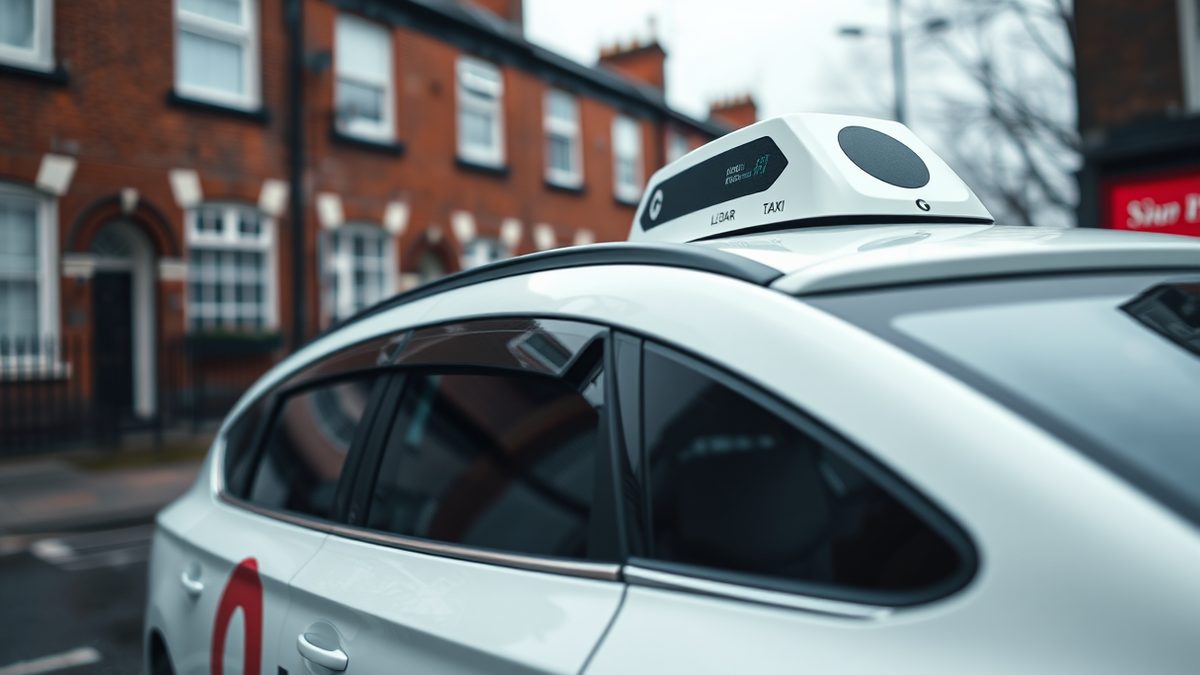
Khan called for a cap on the number of robotaxis in the capital, warning that rapid expansion could increase congestion and threaten the livelihoods of taxi and private hire drivers. He also wants Transport for London to have greater powers over how robotaxi services operate, rather than simply deciding whether they can be used in London.
Under the current framework, TfL can give or refuse consent for fully autonomous vehicles but cannot directly manage or license robotaxi services. The government is preparing to allow fully autonomous vehicles on public roads.
Khan said politicians had not grasped the pace of technological change and questioned whether the regulatory framework was ready for a large-scale rollout. "What we don't want is a situation where there's a big bang without proper regulation in place," he said.
"London isn't San Francisco," he said. "We're a city of almost 10 million, 400 villages, narrow roads, and it's really important to get this right." He also raised questions about air quality and congestion.
What is running in Brent
Freenow by Lyft and Baidu's Apollo Go are testing about 24 Apollo Go vehicles in Brent. Freenow said in a 28 July 2026 announcement that the RT6 testing programme had begun in the borough with safety operators on board.
Freenow's London information page says the trial will expand in stages and that safety validation must be complete before public rides begin. The company said it has been discussing the programme with TfL and the Centre for Connected and Autonomous Vehicles.
The partners aim to run fully driverless tests in 2027 ahead of a commercial launch that year, according to AutomotiveWorld. Danny O'Gorman, Freenow by Lyft's UK and Ireland general manager, expects "tens of vehicles in the next year or two."
The RT6 is purpose-built for ride-hailing, with a detachable steering wheel and a unit cost of around US$37,000, AutomotiveWorld reported. Baidu's Apollo Go operates in 28 cities and has driven more than 350 million autonomous kilometres, including over 240 million fully driverless, according to its second-quarter earnings report.
Why London is a hard test
London's speed bumps, narrow streets and widespread 20 mph limits make the city a demanding training ground, O'Gorman said. He described the car as "learning the rules of the road much like you would do if you're trying to pass your own driving test." Following those rules is harder in London, where other motorists do not always observe speed limits and traffic regulations.
O'Gorman said the national framework was an important factor in Freenow's decision to invest in the market, though questions about how services would be regulated once operational still needed to be resolved. Reuters reported that Freenow was positioning the initial fleet as a limited deployment rather than a replacement for London black cabs.
The wider race
Wayve and Uber launched London's first robotaxi service in September with 15 vehicles and safety drivers, while Waymo aims to launch a fully driverless service through its own app by the end of the year. Pony.ai is also testing in the city with Uber. The App Drivers and Couriers Union and the Licensed Taxi Drivers' Association are challenging driverless permits over jobs and congestion.
Regulation, not technology, is likely to decide the order of arrival. TfL has confirmed that no operator has yet registered vehicles with the Vehicle Certification Agency, the first formal step toward unsupervised service, and a Driver and Vehicle Standards Agency permit for fully driverless operation looks unlikely this year, AutomotiveWorld reported. That makes Waymo's year-end target ambitious and Baidu's 2027 timeline the more realistic of the two.
Baidu's biggest risk in London may be political. The RT6 is a China-built electric vehicle, and the UK appears to be weighing following the EU into tariffs on such vehicles, which would erode Baidu's cost advantage unless robotaxis are carved out.
Sources
17- 01Why Sadiq Khan Is Raising Concerns About Robotaxis in LondonEN
- 02Freenow and Baidu Target 2027 for London Robotaxi ServiceEN
- 03Baidu unveils Apollo World model to let AI teach AI to driveEN
- 04Baidu and Lyft target 2027 for driverless London serviceEN
- 05Baidu’s new AI simulator gives robotaxis a crash course in rare road hazardsEN
- 06Baidu’s Apollo World trains robotaxis on cyclists and dogs that never existed - Martin Cid MagazineEN
- 07Poweroad FLEX-261 series passes dual-standard large-scale fire testingEN
- 08Routes of Reasoning: Reading and Reshaping Test-Time Compute in MoE ModelsEN
- 09Readable Is Not Steerable: Pre-Registered Tests of Physical Structure in Learned Fluid RepresentationsEN
- 10London-based LO:TECH lands $12M Series A led by MMCEN
- 11Toyota & Waymo Advance Autonomous Driving Collaboration for Safer Streets and Freedom of Movement for AllEN
- 12Waymo picks Toyota bZ4X as its next robotaxi, starting in Japan in 2027EN
- 13New Research Tests Whether AI Models Know Their Own ThoughtsEN
- 14A simple blood test could reveal Alzheimer’s risk 10 years before symptomsEN
- 15Red Hat Patches 9.8-Rated Linux TCP RCE Flaw While Ubuntu Releases Fixes for TestingEN
- 16Finland investigate Google over destruction of 250k treesEN
- 17Ukrainian startup, GomSpace test satellite for future communications networkEN
All figures and quotations in this text come from the sources listed below.
Content prepared by the editorial team with AI assistance.
Daniel Fisher
Comments
0- No comments yet — be the first.