Solid-State Batteries Still Years From Mass Market as BYD Claims 2027 Head Start
BYD says it will put its first solid-state battery into a production car in 2027, while Hyundai's research and development chief warns the same technology will stay locked out of the mass market because of raw material costs.
 Peter LindqvistSport, cars and travel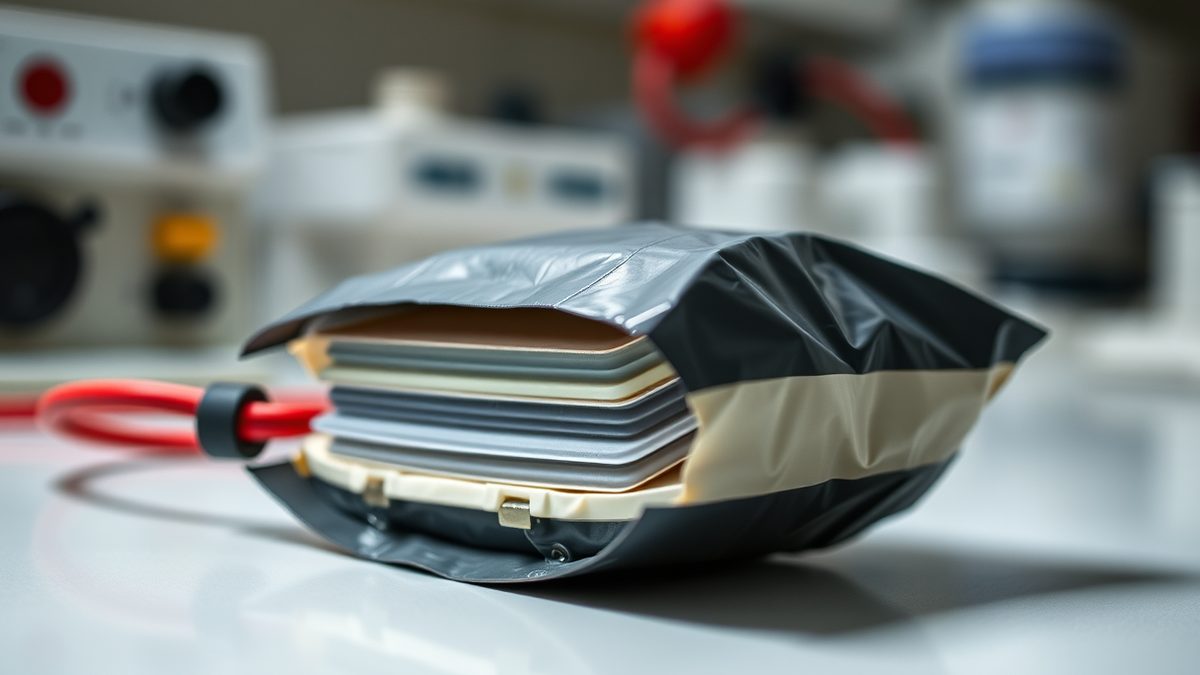
Two of the world's largest automakers spent Sunday describing the same battery technology in opposite terms. BYD executive vice president Stella Li told Carwow's Spanish outlet that the Chinese company is "in the leading position for commercialization and technology" and will release a model with a solid-state battery next year, according to Engadget's report on 27 September.
Hyundai Motor Group R&D chief Manfred Harrer told reporters that solid-state cells will appear only in small-volume halo cars within five years. The raw material problem, he said, will not be solved in that window.
Harrer was blunt about the cost barrier. "You can solve, in the end, everything, but it comes with cost, tremendous cost," he told reporters, in comments published by InsideEVs on 27 September. He also said Hyundai has no intention of walking away: "You cannot give up right now on that. That's clear. You must be in the game."
What the two timelines actually say
The gap between the two positions is narrower than the headlines suggest, and it runs through the same word: scale. BYD's first solid-state car in 2027 is a single model, not a lineup change. Li did not say what it would cost or how many units the company intends to build. The plan traces back to Sun Huajun, chief technology officer of BYD's battery subsidiary FinDreams. At a battery conference in February 2025, he said BYD would demonstrate and install solid-state batteries in 2027 before mass production around 2030, according to CarNewsChina, which Engadget cites.
BYD chief scientist Lian Yubo said at the same conference that solid-state batteries will be "mainly used in high-end models, empowering each other with lithium iron phosphate batteries, and used in vehicles of different levels." That is a two-tier strategy, not a replacement. Lithium iron phosphate stays in the volume cars.
Solid-state cells swap the liquid electrolyte in lithium-ion packs for a solid material, usually an oxide, polymer or sulfide. BYD is developing the sulfide type.
The payoff is higher energy density, which means lighter packs and more range per charge, plus better tolerance of extreme temperatures and a lower fire risk. The obstacle is manufacturing at automotive scale, which nobody has managed yet.
Harrer's five-year forecast for low-volume halo cars lines up with the wider industry. Toyota has committed to solid-state vehicles by 2027 or 2028, according to Engadget. Mercedes-Benz has tested a solid-state EQS and says it will ship the technology before the end of the decade. Stellantis began road testing a solid-state Dodge Charger in 2026. Honda has partnered with QuantumScape. Volkswagen backs QuantumScape, BMW works with Solid Power, and Hyundai is developing cells internally and with Solid Power as a partner.
Meanwhile, the boring chemistry keeps winning
The solid-state argument has to compete with hardware that already works. CATL published results on 26 September from over 50 lithium iron phosphate prismatic cells pulled from the Zhangbei Project, the world's first large-scale lithium-ion battery storage installation, which ran from 2011 until June 2025. InsideEVs reported that the 14-year-old cells retained roughly 85% of their original capacity, with anodes and cathodes still aligned and no obvious graphite aging. The cells could serve another decade in smaller or secondary storage systems, with around 1,000 more charge and discharge cycles.
That result matters for cars as well as stationary storage, because LFP is the chemistry now spreading into cheaper Western electric vehicles. It is cheaper to make and survives abuse better than nickel manganese cobalt, though it gives up energy density. Hyundai itself plans in-house NMC cells for the Santa Fe extended-range EV launching early next year, a reminder that the near-term fight is still between existing chemistries.
The commercial vehicle side is pushing LFP and lithium-ion further, not waiting for solid state. CATL unveiled the TECTRANS II platform at IAA Transportation 2026 in Hanover, with a heavy-duty configuration claiming up to 1,000 kilometers of range and 80% charge in 25 minutes on megawatt-level charging. CleanTechnica reported on 27 September that CATL puts the pack at 170 watt-hours per kilogram, with a service life of 12 years or 1.5 million kilometers at 70% capacity retention. The company also signed a memorandum of understanding with DHL Group on green freight corridors in Europe.
Volvo Trucks won International Truck of the Year 2027 at the same show for its electric heavy-duty range, the FH Electric, FM Electric, FMX Electric and the new FH Aero Electric. The flagship FH Aero Electric is rated at up to 700 kilometers per charge, and series production started on 14 September at Volvo's Tuve plant in Gothenburg, with Ghent in Belgium to follow. Volvo says about 7,000 of its electric trucks have accumulated roughly 500 million kilometers since 2019, with nearly 2,000 customers in more than 50 countries.
The money is moving elsewhere
Capital flows suggest investors are not betting on a fast solid-state transition. Growatt said it will raise prices for string inverters, hybrid and storage inverters, commercial and industrial storage cabinets, and residential storage systems by around 5% to 10% from 8 October, citing higher raw material costs and tighter supplies of core components. Sungrow had already pushed through increases of around 5% to 15% from 20 September, pv magazine reported on 25 September.
In China, Zhejiang province opened its electricity spot market to independent grid-side batteries under a notice issued on 23 September, covering 40 projects totaling 2.54 GW and 5.1 GWh, with price-and-quantity bidding planned from 1 January 2027. Twenty-eight of those projects, at 2.13 GW and 4.27 GWh, are in commercial operation and centrally dispatched. pv magazine reported the move on 26 September.
None of this settles whether solid-state batteries arrive on schedule. It does show what BYD and Hyundai are really arguing about: not whether the technology works in a lab, but who can afford to build it at volume, and how long lithium-ion packs can hold the market while they try.
Sources
7- 01BYD says its new solid-state EV battery tech is nearly ready for the open roadEN
- 02'Cannot Give Up Right Now': Hyundai's R&D Boss On The Solid-State Battery BetEN
- 03These Battery Cells Were Tested After 14 Years Of Hard Work. They're Good For Another DecadeEN
- 04CATL Unveils TECTRANS II Battery Platform at IAA Transport ShowEN
- 05Volvo's Electric Trucks Win International Truck of the Year 2027 at IAAEN
- 06Chinese PV Industry Brief: Growatt raises inverter, battery prices by up to 10%EN
- 07Chinese province moves grid-side batteries into spot marketEN
All figures and quotations in this text come from the sources listed below.
Content prepared by the editorial team with AI assistance.
Peter Lindqvist
Comments
0- No comments yet — be the first.