TakeMe2Space to launch AI computing satellite on SpaceX rocket on 1 October
TakeMe2Space will send its MOI-1A satellite to orbit on a SpaceX rideshare flight on 1 October, the company said on Monday, in what it calls India's first orbital computing satellite.
 Sofia MarchettiScience and health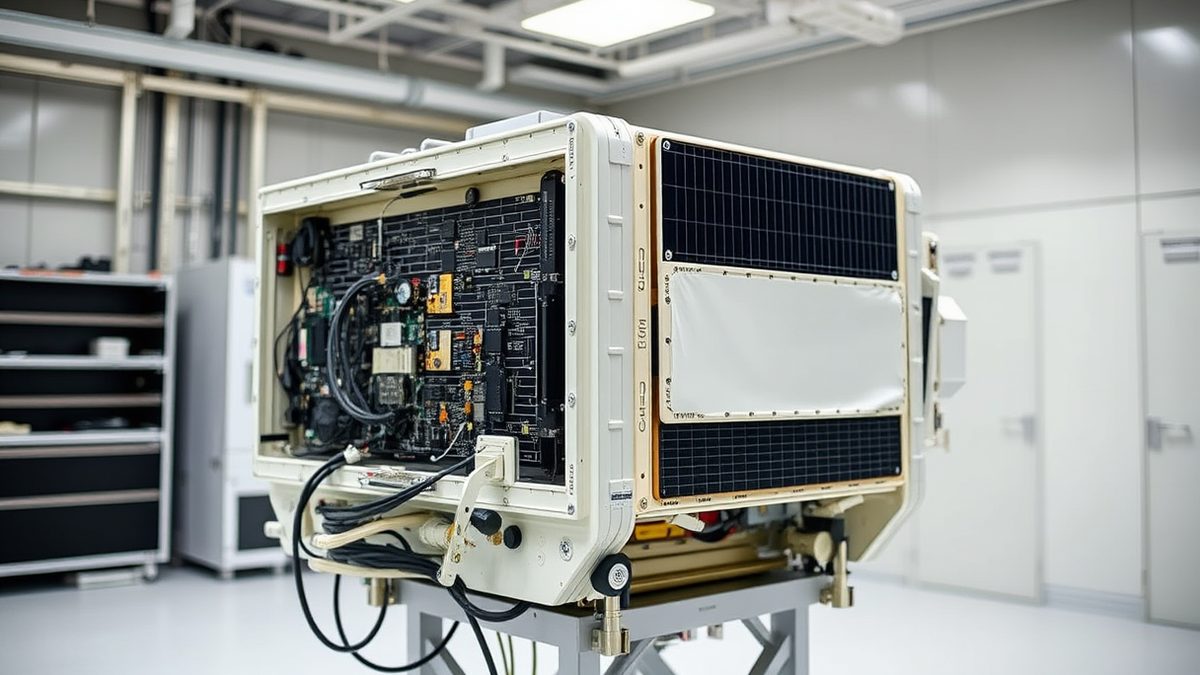
TakeMe2Space, a space startup from Hyderabad, will send its MOI-1A satellite to orbit on 1 October on a SpaceX rideshare flight, Transporter-18. Reuters reported the plan on Monday. The company calls it India's first orbital computing satellite because it can analyse data in space and send back results rather than raw files.
The satellite weighs less than 50kg and uses Nvidia's Orin NX chips, designed for edge computing. Customers will load their own AI models onto it, founder and chief executive Ronak Samantray told Reuters. When the satellite passes over an area they pick, the models process the data and send only the results down.
So far, 23 customers have booked space on the mission, the company said. They include mapping firms and schools, as well as businesses in farming, mining, supply chains and insurance. One of them is Little Place Labs, a US space data company.
With roughly 150 watts to work with, MOI-1A is a small edge computer rather than a full data centre. By contrast, Starcloud and SpaceX plan to fly the more powerful Nvidia chips used in ground data centres.
From a lost satellite to a Falcon 9 slot
MOI-1A replaces MOI-1, which was lost on 12 January when the third stage of ISRO's PSLV-C62 rocket failed. After the failure, the company took the first launch slot it could find on a SpaceX Falcon 9, ThePrint reported in May. An earlier test satellite, MOI-TD, went up from Sriharikota on 30 December 2024. The company says it ran more than 20 tests in orbit, including AI tasks on apps sent up from the ground.
TakeMe2Space designs and builds most parts of its satellites in India. However, it buys propulsion systems, chips and solar cells from other suppliers. Next, the startup plans bigger, networked satellites that serve many customers at once. It also wants to sell data storage in orbit to banks, other finance firms and defence clients as a backup to cloud providers on the ground.
The launch date lands in a busy stretch for orbital computing talk. SpaceX is preparing to send its Starship rocket to orbit for the first time. A 75-minute launch window opens at 8:15 a.m. ET on Monday from Starbase, Texas, CNBC reported. The Federal Aviation Administration told CNBC it issued a license authorization for the Starship Super Heavy Flight 14 launch and reentry operations on 26 September.
With that 14th test flight, SpaceX also plans to deploy 26 of its new Starlink V3 satellites. The company's COO, Gwynne Shotwell, said at the All-In Summit earlier this month that SpaceX plans to use Starship to put "supercompute in space," launching "AI compute satellites" into orbit in 2027, according to CNBC.
Small computers, big claims
The gap between MOI-1A and the Starship vision is the gap between an experiment and an industry. MOI-1A's 150 watts are enough to run inference on small models over a target area, not enough to replace a ground data centre. SpaceX is talking about flying data-centre-class Nvidia chips, which need far more power and cooling than a 50kg satellite can supply.
The AI demand story behind these plans is not settled either. The Decoder reported on 26 September on an anecdote from Azeem Azhar, a British tech entrepreneur and founder of the research group Exponential View, who spoke to about 160 IT vice presidents in Las Vegas. Azhar asked who could point to measurable AI results. Two-thirds stayed standing. Then he asked who has results good enough to interrupt the CEO's summer vacation. Only about eight people remained on their feet.
Azhar's takeaway is that companies are making progress, but slowly, according to The Decoder. Whether that pace is fast enough to justify current investment levels remains an open question. A Boston Consulting Group survey cited in the same piece found that about 70 percent of CEOs worldwide say AI success matters for how they're perceived in their roles, giving them an incentive to paint a rosier picture than reality warrants.
Who else is watching orbit
The military side of space is moving too. Britain's Royal Air Force has gained No. III Space Effects Squadron, tasked with protecting critical satellites the UK relies on for communications and navigation, The Register reported on 26 September. Air Chief Marshal Sir Harvey Smyth announced the new unit at an inaugural UK Space Power Conference in London.
According to the MoD, the existing No. I Space Operations Squadron and No. II Space Warning Squadron give the RAF the ability to watch and warn of threats in space, but the latest unit will have the ability to act against those threats. How, given the UK has limited launch facilities and no anti-satellite missile systems, as far as we are aware? Through "advanced technology," including electronic warfare, to "disrupt, degrade and deny hostile actions," the government says. The MoD declined to give further details, telling The Register the information is classified.
On the ground, the same squeeze on physical space is reshaping energy projects. CleanTechnica reported on 27 September that Cultivate Power's new Bowes Solar array sits on a 22-acre site in Elgin, Illinois, between two residential subdivisions, with high-voltage power lines, train tracks and a wetlands area in one corner. The company divided the installation into two arrays for a combined total of 11 megawatts (DC) and used a high-density racking system from Planted Solar, which requires only about 2 acres per MWp instead of the 5-7 acres typical for community solar projects.
Chronicle Media reported that the array will benefit ratepayers through lower electricity rates distributed by Commonwealth Edison, including 580 low- and moderate-income households. "Aimed at saving customers 20 percent on energy charges, the project will also benefit several larger customers, including three small businesses, two towns and a church," Chronicle reporter Bill Dwyer wrote. "Cultivate Power officials say that collectively subscribers will save $13.9 million on their ComEd bills during the next 40 years," Dwyer added, according to CleanTechnica.
For TakeMe2Space, the immediate test is narrower. A 50kg satellite with a 150-watt budget has to survive launch, run customer models over chosen areas and send results down. If it does, the company's pitch shifts from a claim about India's first orbital computing satellite to a service with 23 customers on the books.
If it does not, the company has already shown it can find another ride.
Sources
5- 01TakeMe2Space to launch AI computing satellite on SpaceX rocket on 1 OctoberEN
- 02SpaceX prepares to send Starship rocket to orbit for first timeEN
- 03Two-thirds of IT leaders report AI results, but few would interrupt the CEO's vacation over themEN
- 04Space Jam: UK debuts space squadron to protect satellitesEN
- 05Space Squeeze Forces Solar Developers To Get CreativeEN
All figures and quotations in this text come from the sources listed below.
Content prepared by the editorial team with AI assistance.
Sofia Marchetti
Comments
0- No comments yet — be the first.